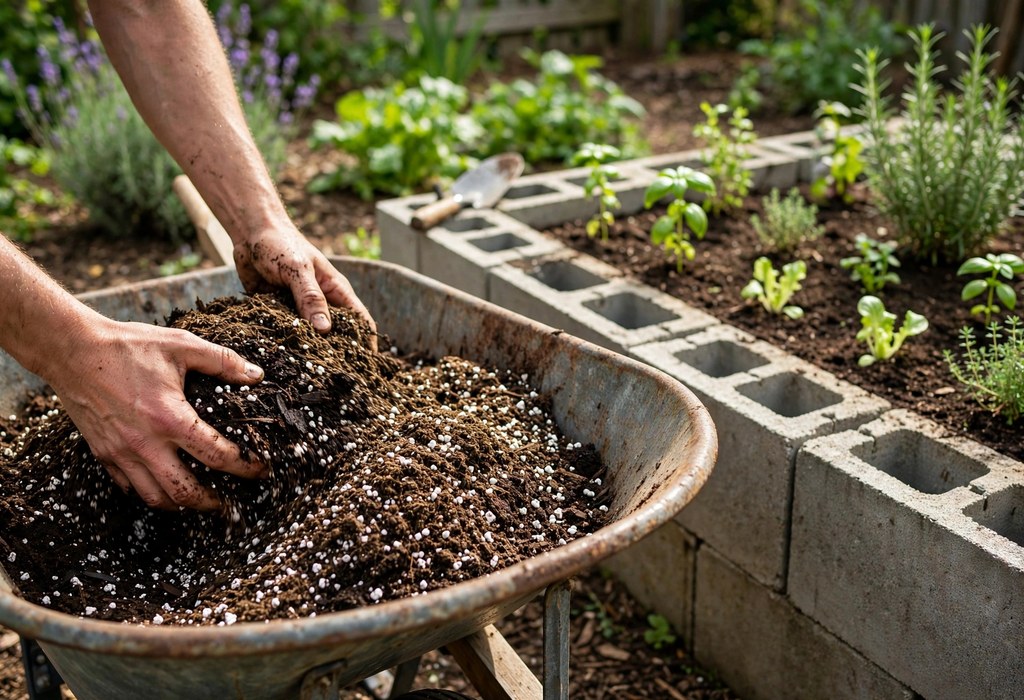
The ideal mix is 40 percent compost, 40 percent topsoil, and 20 percent perlite. This blend holds moisture, drains freely, and feeds vegetables through the whole season. It also counteracts the drying effect of porous concrete block walls.
Cinder block walls wick moisture from the soil through capillary action. Therefore, your mix needs extra water retention compared to a wooden bed. The three-part formula supplies structure, nutrition, and aeration in one blend. Consequently, roots spread evenly instead of fighting compacted soil.
You can buy these components in bulk or by the bag. Additionally, the same ratios suit any bed depth once you scale the volume. This guide covers each ingredient, volume math, pH targets, layering, and common mistakes. By the end, you will fill your bed with confidence.
Why Cinder Block Beds Dry Faster
Concrete masonry units are naturally porous and absorb water like a sponge. That porosity pulls moisture from the bed edges on hot, windy days. As a result, a standard cinder block raised garden bed dries from the outside in. The remedy is simple: boost water retention with compost and vermiculite.
Heat also radiates from sun-warmed block walls into the root zone. However, the same thermal mass extends your growing season in spring and fall. A moisture-retentive mix keeps this advantage from becoming a liability.
The Classic 40-40-20 Soil Mix
The most reliable recipe uses 40 percent compost, 40 percent topsoil, and 20 percent aeration. Each part plays a distinct role in the life of the bed. Moreover, they create a loamy texture that vegetables love.
- Topsoil: use screened topsoil for structure and mineral content.
- Compost: supply nutrients and beneficial microbes with well-aged compost.
- Aeration: add perlite or vermiculite so roots breathe and water drains.
- Blended sources: mix compost from two or three sources for broader nutrition.
Avoid cheap, unscreened topsoil because it often contains clay clumps and weed seeds. Similarly, bagged garden soil from discount racks may be mostly filler. Quality ingredients cost a little more but pay off for years.
A popular alternative is Mel’s Mix, a favorite of square-foot gardeners. It blends equal parts compost, peat moss, and coarse vermiculite. However, it costs more and suits shallow beds best. For most cinder block beds, the 40-40-20 blend remains the better value.
Perlite or Vermiculite: Which Amendment?
Perlite is a puffed volcanic rock that improves drainage while holding some water. Vermiculite is a mineral that retains even more moisture than perlite. In cinder block beds, vermiculite often wins because of the drying edges. However, either amendment beats compacted topsoil alone.
Use coarse-grade perlite for maximum air pockets in the mix. Meanwhile, fine vermiculite works best when water retention is the priority. You can even blend both for a balanced result.
How to Calculate Soil Volume
Multiply length by width by depth in feet to get cubic feet. For example, a 4 by 8 foot bed that is 1 foot deep needs 32 cubic feet. Finally, divide cubic feet by 27 to convert the total to cubic yards. Consequently, that same bed needs about 1.2 cubic yards of mix.
Bagged mixes typically hold 1.5 or 2 cubic feet per bag. Therefore, a 32-cubic-foot bed needs roughly 16 to 21 bags. Beyond about 15 cubic feet, bulk delivery usually costs less per yard. Additionally, bulk soil lets you blend the 40-40-20 ratio yourself.
- Measure first: confirm the inside dimensions before you buy anything.
- Buy extra: add 10 percent because soil settles after the first watering.
pH: Aim for Slightly Acidic to Neutral
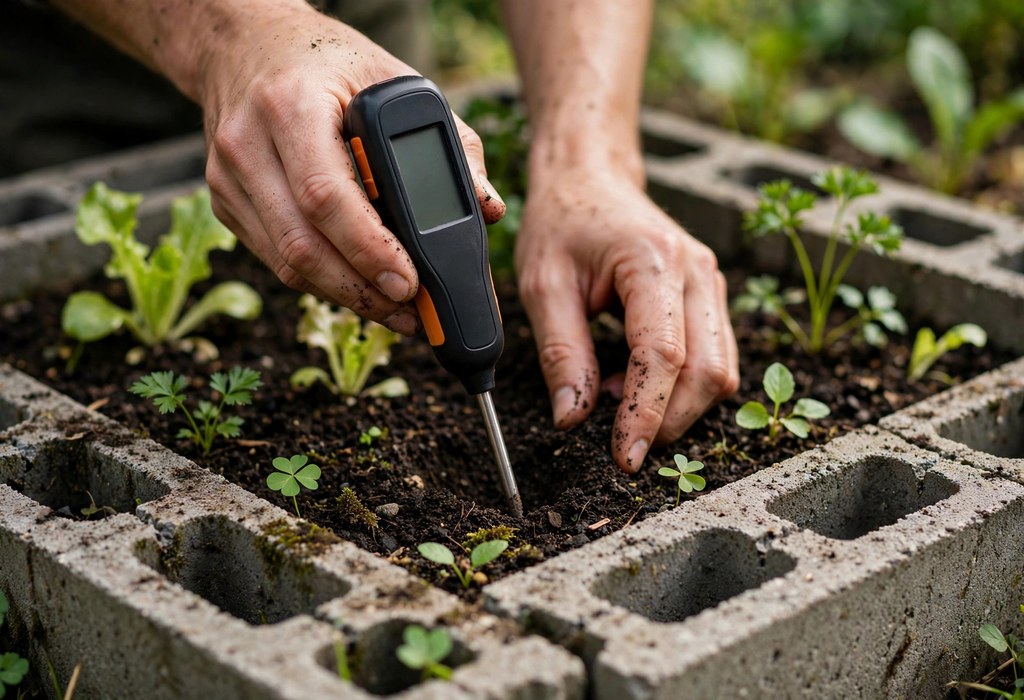
Most vegetables thrive when soil pH sits between 6.0 and 7.0. Test your mix with an inexpensive probe or a mailed soil test. For example, tomatoes and peppers prefer the slightly acidic end. Consequently, aim near 6.5 for a mixed vegetable bed.
If pH reads low, add garden lime to raise it gently. When pH reads high, elemental sulfur or peat moss can lower it. However, compost usually buffers pH toward neutral on its own. Retest after amendments before you transplant anything.
Filling the Bed in Layers
Start by lining the bed floor with cardboard or landscape fabric. This barrier smothers weeds while still letting water drain. For deep beds, add a gravel base or a layer of logs to save soil. As a result, the bottom fills cheaply and drains well.
Next, blend your topsoil, compost, and perlite thoroughly before filling. Shovel the mix in evenly, then water it to trigger settling. Finally, top off the bed with another inch of compost. The finished surface should sit one to two inches below the rim.
What to Avoid
Never fill a bed with straight garden soil from your yard. It compacts, drains poorly, and often carries weed seeds. Pure compost also fails because it shrinks, shifts, and can burn seedlings. Instead, stick with the balanced three-part formula.
- Fresh manure: burns young roots and may harbor pathogens, so compost it first.
- Construction fill: contains debris and unknown chemicals, so skip it entirely.
- Fine sand alone: turns the mix into concrete-like clumps, so choose coarse sand.
- Plastic liners: trap water and drown roots, so use breathable fabric instead.
You can line block cores with a food-safe liner. Most gardeners find standard blocks safe, and the liner adds peace of mind.
Top-Dressing and Yearly Maintenance
Compost breaks down each season, so the mix loses volume over time. Therefore, add two to three inches of fresh compost every spring. Gently fork it into the top few inches without disturbing roots. As a result, this annual feeding keeps nutrients high and structure loose.
Mulch the surface with straw to slow evaporation from the block edges. Additionally, mulch suppresses weeds and feeds soil life as it decays. Avoid piling mulch against plant stems to prevent rot.
Frequently Asked Questions
How much soil do I need for a 4×8 cinder block raised bed?
For example, a 4 by 8 foot bed at 12 inches deep needs about 32 cubic feet.
Can I use only compost in a raised bed?
No, pure compost shrinks, drains unevenly, and may burn young seedlings.
What pH should soil be for vegetables?
Most vegetables grow best with soil pH between 6.0 and 7.0.
Should I put gravel at the bottom of a raised bed?
Gravel is optional, but landscape fabric or cardboard controls weeds better.
How often should I replace raised bed soil?
You rarely need full replacement; top-dress with compost every spring instead.
Conclusion
The 40-40-20 mix gives cinder block beds the drainage, nutrition, and moisture they need. Plan your planting with the best vegetables to grow in a cinder block raised bed next. Mix it, fill it, and enjoy a productive season. Finally, water everything deeply and watch your vegetables take off.