
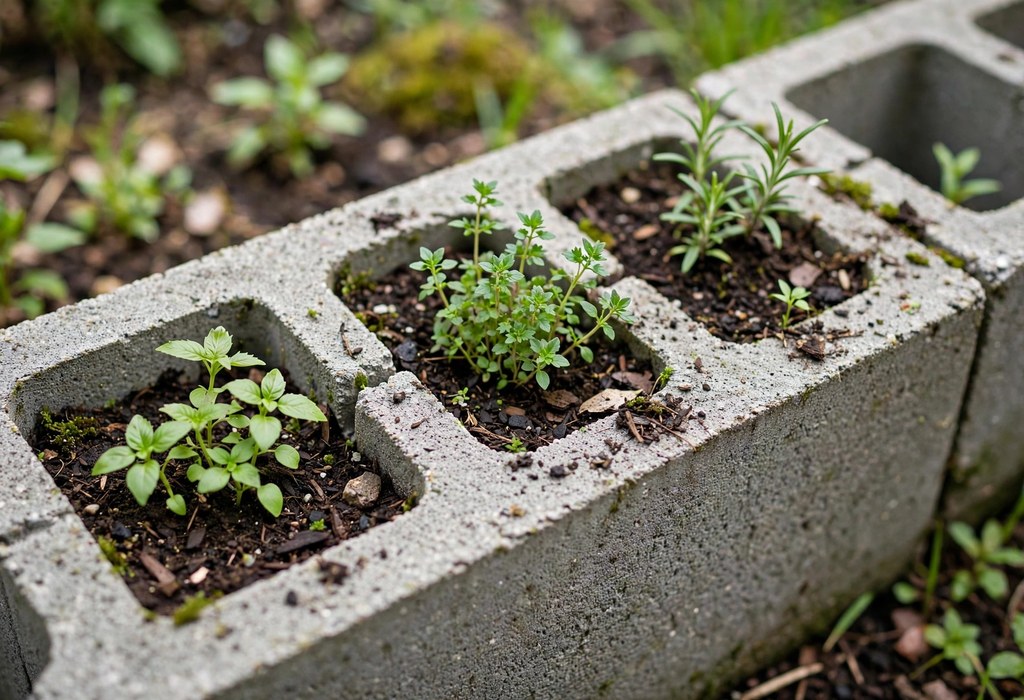
You can fill cinder block holes with soil, gravel, or plants. Soil wins when you want living borders, herb pockets, or pest-repelling companion planting. Gravel fits better when you want a tidy cap, sharper drainage, and zero extra upkeep.
Each hollow cell inside a concrete masonry unit offers a small, self-contained growing pocket. Dry stack beds stay stable because the interior soil holds every course in place. Therefore your choice affects drainage, heat, and root competition around the bed edge.
This guide compares the three options, so you match each cell to its best use. Additionally, you will learn how to manage drainage and stop weeds from colonizing empty holes. Finally, you can decide which cells to plant and which ones to cap for good.
Filling the Cells with Soil
Loose garden soil turns each block cell into a mini container with room for roots. Consequently, shallow-rooted plants thrive even though the pocket holds little volume. However, soil in cells dries faster because concrete wicks moisture outward.
Mix topsoil with compost before filling, since straight bagged mixes often sink over time. Add a handful of perlite to loosen dense mixes and improve airflow around roots. For example, this simple blend supports most herbs, flowers, and trailing plants well.
Soil-filled cells pair well with the larger planting space inside the bed wall. Meanwhile, the compact cells of a full cinder block raised garden bed warm earlier in spring. In contrast, the interior offers deeper soil for vegetables with wider root systems.
Capping the Cells with Gravel
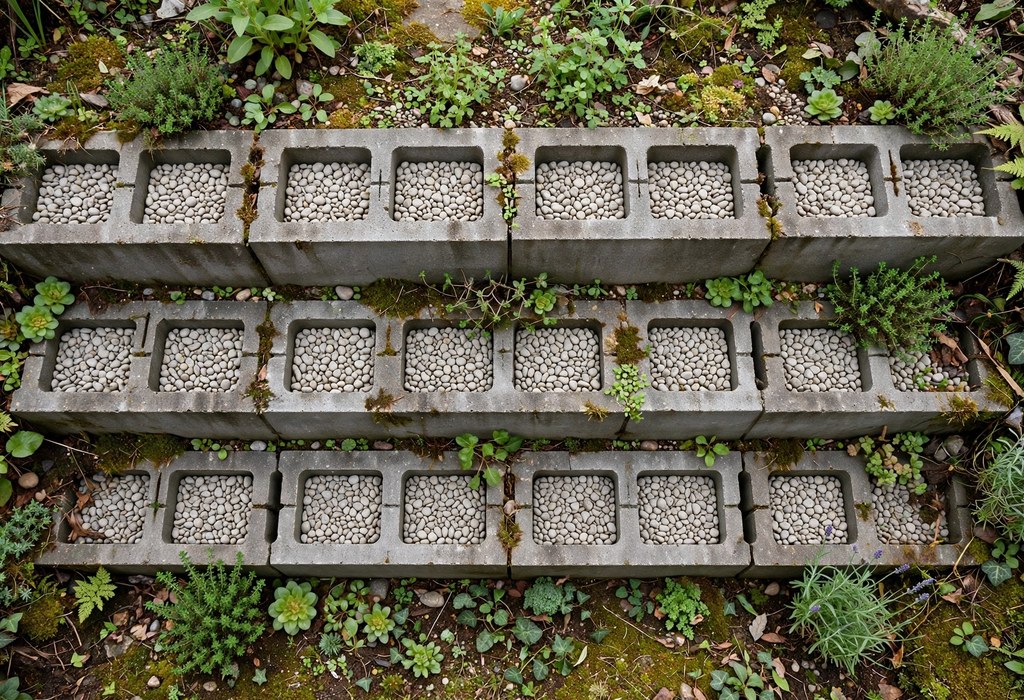
Gravel turns open cells into clean, weed-resistant caps that need almost no maintenance. Pea gravel settles tightly, locks out debris, and still lets rain drain straight through. Consequently, capped cells never grow weeds, and the wall looks crisp all season.
Fill each hole with two to three inches of pea gravel, then firm it down. For example, a single bag usually caps several cells on a standard eight-foot wall. Additionally, gravel adds weight that keeps dry-stacked courses stable in wind.
Gravel caps also provide drainage at the wall face, since water cannot pool in open cells. Therefore, frost heave poses less risk when the cells stay dry through winter. Otherwise, trapped water can freeze, expand, and crack the block over time.
Growing Plants in the Block Cells
Herbs love block cells because the tight pockets keep vigorous roots in check. Mint, chives, and oregano cannot escape these tight cells to invade the bed. In addition, the cells create a warm microclimate that encourages fast early growth.
Companion flowers also shine in cells, and marigolds repel aphids from nearby vegetables. Finally, alyssum and creeping thyme attract pollinators that boost fruit set.
Small edibles also work well, since cells suit lettuce, radishes, and green onions. However, cells dry out quickly, so check moisture daily during hot spells. Mulch the tops lightly, and water cells before the surface feels dry.
Drainage and Moisture Considerations
Concrete pulls moisture from soil, so cell plantings need more water than expected. Therefore, drip lines or careful hand watering keep small pockets evenly moist. For example, adding vermiculite to cell soil improves water retention between waterings.
Never let cells sit waterlogged, since roots rot fast in small saturated pockets. Moreover, small gaps between courses let excess rain escape instead of pooling.
Gravel base layers also help, since they move water away from the bed bottom. Similarly, landscape fabric under the bed blocks weeds while letting water pass. Consequently, both measures keep soil structure healthy throughout the growing season.
Keeping Weeds Out of Empty Cells
Empty cells collect dust and seeds, which soon sprout into stubborn weeds. Therefore, cover any cell you will not plant within the first week. For example, a quick gravel fill blocks light and denies weed seeds a foothold.
Cap stones offer another tidy option, since they sit flush and block sunlight completely. Additionally, a thick mulch layer over open cells smothers seedlings before they establish. In contrast, bare soil in cells invites weeds within days during the growing season.
Many gardeners ask how to fill cinder block holes without inviting weeds or extra chores. Consequently, the smartest move combines planting for the sunny cells and gravel for the shaded ones. Finally, inspect capped cells each spring and top up any gravel that has settled.
Caring for Cell Plantings
Cell plantings need more attention than the main bed, since their small soil volume dries quickly. Consequently, check moisture each morning and water before plants show stress. Additionally, a light mulch cap cools roots and slows evaporation in summer heat.
Fertility also fades fast, because frequent watering washes nutrients from small pockets. Therefore, feed cell plants with diluted liquid fertilizer every two weeks. For example, compost tea or fish emulsion supports steady growth without burning roots.
Watch for salt buildup too, since concrete can raise soil pH over time. However, most herbs and flowers tolerate mildly alkaline conditions without trouble. Test the cell soil yearly, and refresh it with compost when pH climbs too high.
Combining All Three Options
Most gardeners use a mix, since different wall sections face different conditions. For example, plant the sunny south face with herbs, and cap the shaded north face with gravel. Consequently, every cell serves a purpose, and none becomes a weed nursery.
Start with gravel caps while you decide, since you can always dig them out later. Additionally, temporary caps keep weeds out during the busy planting weeks of spring. Finally, swap any cap for soil once you find the perfect plant for that spot.
- Planting mix: fill sunny cells with herbs, flowers, or small edibles for harvest and beauty.
- Gravel cap: top shaded or hard-to-reach cells with pea gravel for zero upkeep.
- Trial run: cap everything with gravel first, then plant cells once your layout feels right.
Frequently Asked Questions
Should I fill cinder block holes with concrete?
No, concrete wastes money and traps moisture that can crack blocks during freeze-thaw cycles.
Can you plant directly in cinder block holes?
Yes, add a soil mix with compost and plant herbs, flowers, or small vegetables.
What do you put in the bottom of cinder block holes?
Add landscape fabric or a thin gravel layer to keep soil in and improve drainage.
Do cinder block cells drain well enough for plants?
Yes, since each cell connects to the ground below, water drains freely through soil.
How often should I water plants in cinder block holes?
Check daily in summer, since concrete wicks moisture and small cells dry quickly.
Conclusion
You now know exactly how to put every block cell to good use. Start today: fill sunny cells with herbs, cap shaded ones with gravel, and enjoy the results.


