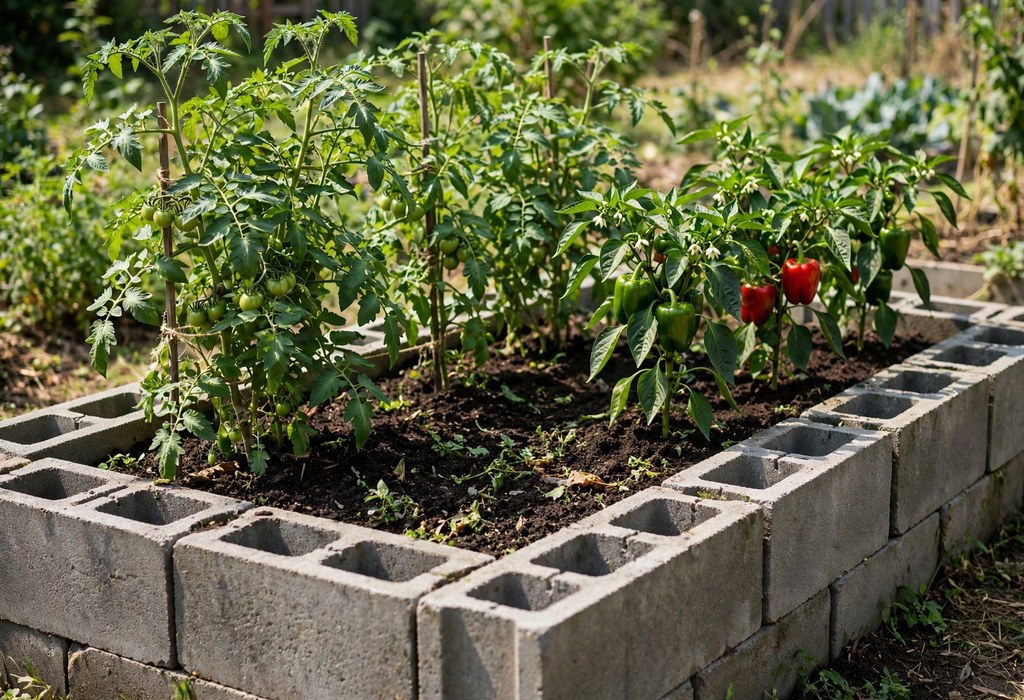
These beds grow almost any vegetable well, from tomatoes to carrots. Heat-loving crops thrive near warm block walls during the growing season. Cool-season greens, root crops, and herbs also perform reliably every year. Finally, most of these crops suit beginners and experienced gardeners alike.
Concrete blocks store daytime warmth and release it after sunset. This thermal mass extends the growing season on both ends. Therefore start seeds earlier in spring and harvest later in fall. Additionally the hollow cells add bonus planting space for herbs.
Match each crop to its root depth for the strongest results. Then space plants correctly and replant empty spots through the season. This guide shows which vegetables thrive and how to arrange them.
Why Cinder Blocks Give Vegetables a Head Start
Concrete masonry units create sturdy walls that last for decades. They warm soil faster than wooden frames in early spring. As a result, seedlings establish quickly and grow more vigorously.
The hollow cells also make excellent micro-planters along the edge. Herbs like basil, thyme, and chives thrive in these small pockets. Meanwhile the main bed stays open for larger vegetable crops. Finally, fill any empty cells with soil so weeds cannot settle there.
Match Vegetables to Root Depth
Choosing the best vegetables to grow in a cinder block raised bed starts with root depth. A bed two blocks high gives roots about sixteen inches of space. That depth suits nearly every common vegetable in the garden. For shallow beds, instead choose crops with compact root systems.
Shallow Roots: Greens and Herbs
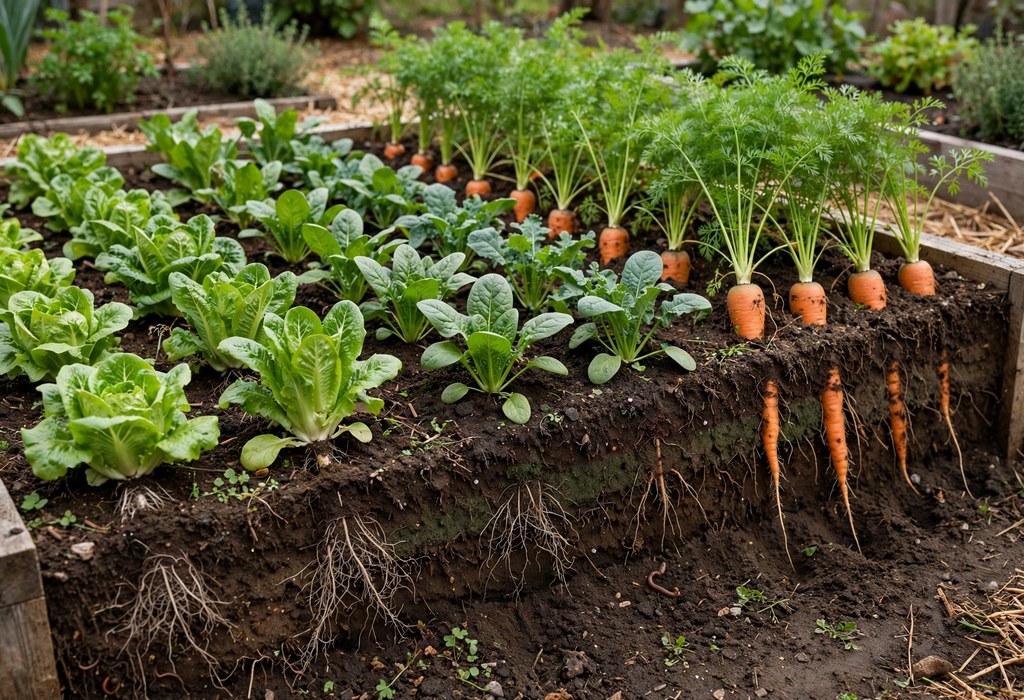
Lettuce, spinach, arugula, and kale need only six to eight inches. These greens also tolerate partial shade from taller neighboring plants. Moreover you can harvest outer leaves repeatedly for continuous yields.
Medium Roots: Nightshades and Brassicas
Tomatoes, peppers, eggplant, broccoli, and cabbage need eight to fourteen inches. These crops appreciate the steady warmth stored in block walls. However they also drink heavily, so mulch well in midsummer.
Deep Roots: Carrots, Beets, and Parsnips
Carrots, beets, and parsnips grow straightest in loose, stone-free soil. A deep cinder block raised garden bed gives them room to stretch downward. Keep soil evenly moist so roots never fork or crack.
Cool-Season Crops to Start the Year
Cool-season crops love the early warmth of block walls. Therefore sow spinach, peas, and radishes weeks before the last frost. These crops germinate quickly in soil above forty degrees. Additionally row cover over the bed adds extra frost protection.
Lettuce and arugula also thrive while temperatures stay mild. Harvest them generously before summer heat causes bitterness. Meanwhile sow a second batch in late summer for fall. As a result, cool-season beds produce from March through November.
Warm-Season Stars for Summer Harvests
Tomatoes, peppers, and eggplant demand the most heat. Block walls radiate warmth to their roots all night. Consequently transplants grow faster than in wooden beds. Give each plant generous space so air circulates freely.
Bush beans and cucumbers also perform well in summer. For example, train cucumbers up a trellis to save space. Vertical growing furthermore keeps fruits clean and easy to pick. In contrast, skip heat-sensitive spinach until fall returns.
Plan Your Layout and Spacing
Sketch your bed on paper before planting a single seedling. Place tall crops like tomatoes on the north side. That arrangement prevents shading of shorter plants behind them. In contrast, low herbs and greens belong along the sunny front edge.
- Tall crops: stake tomatoes and trellis pole beans on the north side.
- Medium crops: give peppers and eggplant eighteen inches between plants.
- Leafy crops: space lettuce heads eight inches apart for full heads.
- Root crops: thin carrot seedlings to two inches for straight roots.
Leave walking room inside wide beds so you never step on soil. Compacted soil stunts roots and reduces every harvest. Similarly, keep pathways clear so watering and harvesting stay easy. Finally, label rows with stakes so succession planting stays organized.
Handle Heat and Watering in Block Beds
Concrete walls absorb sunshine and warm the surrounding soil quickly. This heat speeds germination but dries soil faster in summer. Therefore check moisture daily during heat waves and water deeply. Similarly, light-colored mulch reflects excess heat away from roots.
A two-inch mulch layer of straw keeps roots cool and moist. Drip lines also deliver water evenly without wetting the foliage. In hot climates, afternoon shade cloth protects heat-sensitive lettuce.
Use Succession Planting for Continuous Harvests
Succession planting means sowing new crops as soon as space opens. For example, plant radishes and lettuce in early spring, then replace them with beans. Sow a fresh round of greens every two weeks through the season. Finally, keep a simple planting calendar on the fridge.
After summer crops finish, plant fall spinach, kale, and garlic. The warm blocks protect these plantings from early frosts. Consequently a single bed can feed your family across three seasons.
Companion Planting, Including the Block Cells
Companion planting pairs crops that help each other grow better. Grow basil beside tomatoes to repel pests and improve flavor. Marigolds also discourage nematodes when tucked between vegetable rows. Similarly, onions deter carrot flies when planted in alternating rows.
The hollow block cells work perfectly for compact companions. Plant chives, parsley, and nasturtiums in cells around the perimeter. These companions attract pollinators while saving main bed space. Furthermore shallow roots in cells never compete with deeper vegetables.
Healthy companions still need rich, well-drained soil beneath them. Additionally, nasturtiums lure aphids away from tender vegetables.
Rotate Crops to Keep Soil Healthy
Crop rotation prevents pests and diseases from building up. Simply move each vegetable family to a new spot yearly. For example, follow tomatoes with beans to restore nitrogen. Additionally, legumes enrich soil for the next heavy feeder.
Keep a notebook so you remember last year’s layout. Otherwise this simple habit slips away by spring planting time. Healthy rotations moreover reduce your need for added fertilizer. Your vegetables will reward the effort with stronger growth.
Vegetables That Need Extra Thought
Most vegetables adapt well, but a few need extra thought. Sweet corn struggles because it needs large blocks of plants for pollination. Sprawling pumpkins and melons also overwhelm small beds unless trellised vertically. Otherwise, plant confidently and enjoy the flexibility your bed provides.
Frequently Asked Questions
How deep should a cinder block raised bed be for vegetables?
Stack blocks two courses high so roots get about sixteen inches of depth.
What vegetables should beginners grow in cinder block beds?
Start with lettuce, radishes, green onions, bush beans, and cherry tomatoes.
Do vegetables grow hotter in cinder block beds?
Yes, the concrete stores heat, so mulch well and water consistently.
Can I plant herbs in the cinder block holes?
Absolutely, basil, thyme, chives, and parsley thrive in the hollow cells.
When should I start planting in a cinder block raised bed?
Start cool-season crops two to three weeks earlier than in ground beds.
Conclusion
A cinder block bed rewards smart crop choices with heavy harvests. Pick vegetables by root depth, space them well, and replant often. Start planning your planting map today and enjoy fresh produce sooner.