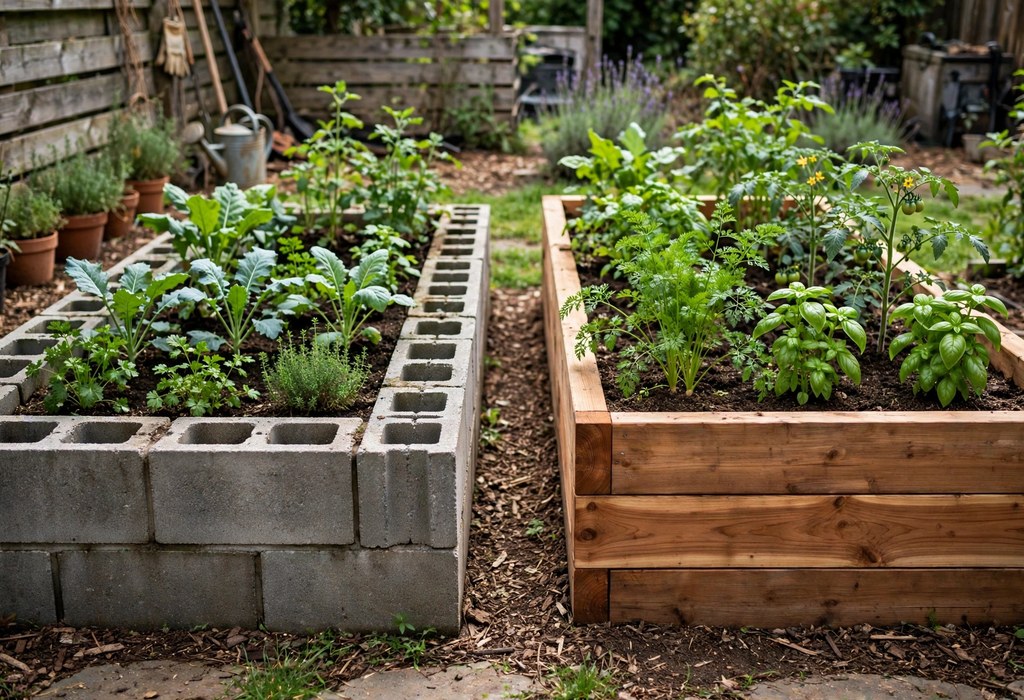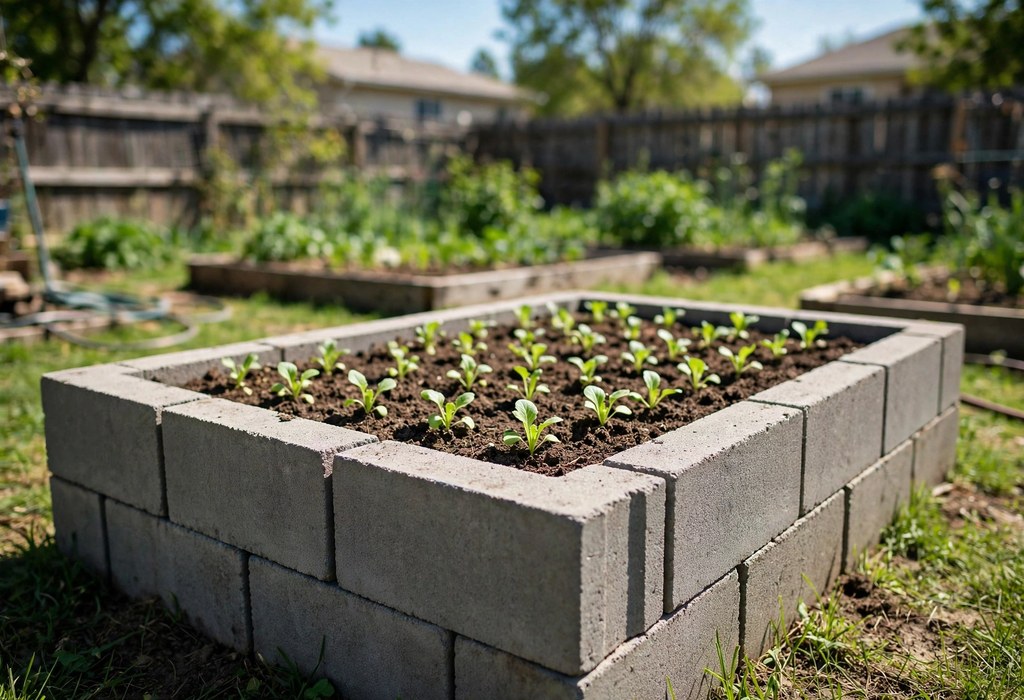
Additionally, modern concrete blocks are generally safe for growing vegetables when you take a few sensible precautions. True cinder blocks made with coal ash have largely disappeared from store shelves. The realistic concern is alkaline leaching that raises soil pH, not toxic contamination.
However, old salvaged blocks and cheap unsealed walls can still introduce unwanted minerals. Therefore, understanding what manufacturers put inside the block matters more than the name on the label. Furthermore, this guide explains the materials, the risks, and the steps that keep your vegetables safe. Finally, you will know whether your blocks need a liner, a sealant, or a replacement.
What Modern Blocks Actually Contain
People call them cinder blocks, but manufacturers usually sell concrete masonry units, or CMUs. Instead, CMUs combine Portland cement, sand, gravel, and water, then cure into a dense solid. Meanwhile, true cinder blocks used industrial cinders as aggregate, and many contained coal fly ash.
Moreover, manufacturers phased fly ash cinder blocks out of common production many decades ago. Today, most fly ash appears as a controlled admixture in poured concrete, not in standard blocks. Therefore, the block you buy at a home center likely contains no cinder at all.
The Real Leaching Risks
The main risk from concrete blocks is alkaline leaching, not heavy metals. Consequently, rain and irrigation dissolve lime from fresh concrete and carry it into the surrounding soil. As a result, soil near the walls can drift alkaline and lock nutrients away from plants.
In contrast, salvaged blocks from unknown structures carry a different risk. Old walls sometimes absorbed motor oil, paint, or lead, and cleaning cannot guarantee removal. Similarly, antique blocks from the fly ash era may hold trace metals within the material.
- Lime leaching: fresh concrete releases calcium compounds that raise soil pH. Monitor pH and amend with sulfur if readings climb too high.
- Fly ash traces: some blocks include fly ash as a cement additive. For example, ask the supplier about ingredients and choose ash-free blocks for extra caution.
- Alkaline dust: cutting or drilling blocks creates caustic dust. Wear a respirator and work outdoors when you modify blocks.
Moreover, heat buildup matters more than chemistry in hot climates. Concrete stores daytime heat and releases it slowly after sunset. Consequently, mulch the soil and water deeply to keep roots cool.
How Lime Shifts Soil pH
Fresh blocks release the most lime during their first growing season. Consequently, annual pH checks give you early warning of any drift. If readings climb, top-dress with compost and sulfur to pull levels back down.
What the Evidence Says
Gardeners have grown vegetables in concrete blocks for decades without documented widespread harm. Researchers who found dangerous metal uptake used far larger ash concentrations than any block could release. For example, studies dosing soil with twenty percent fly ash showed effects, not ordinary walls.
In contrast, small amounts of ash mixed with compost even increased tomato yields in field trials. Therefore, this evidence explains why are cinder blocks safe for growing vegetables keeps appearing in garden forums.
Practical Precautions
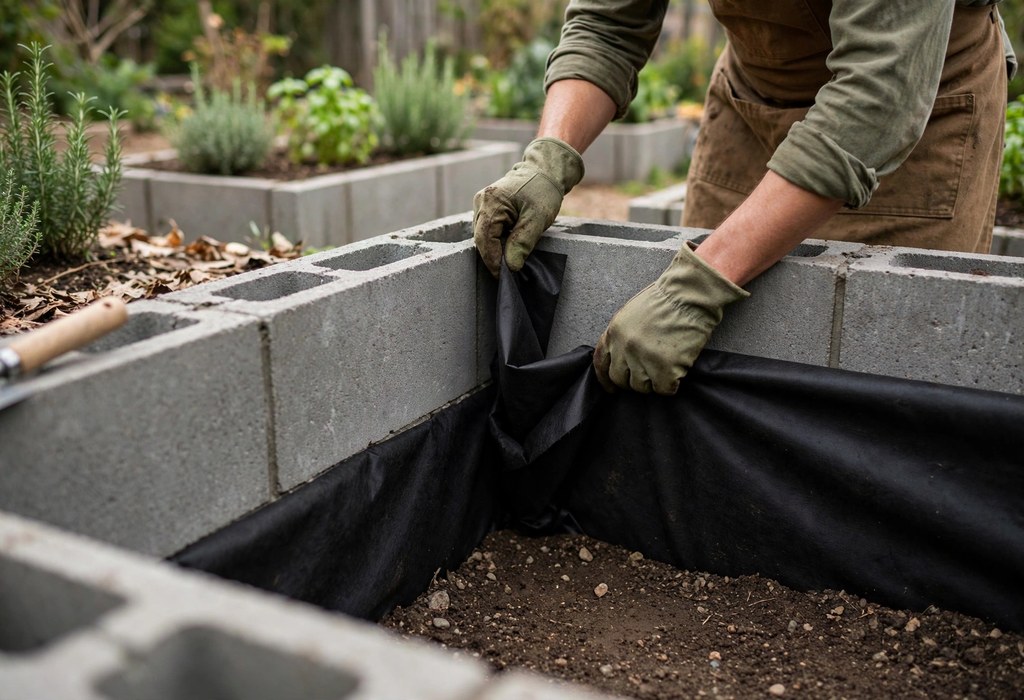
Additionally, buy new blocks from a reputable supplier instead of reusing unknown salvaged ones. Rinse new blocks with a hose before stacking to wash away loose dust and surface lime. Then line the interior faces with a food-safe barrier before you add soil. These habits keep any cinder block raised garden bed clean, stable, and safe for vegetables.
- Liner: cover the inside walls with food-grade plastic or thick landscape fabric. Moreover, a liner blocks direct contact between soil and concrete.
- Sealer: coat interior faces with a water-based masonry sealer labeled safe for food gardens. Consequently, sealers reduce lime migration during wet seasons.
- Sourcing: ask the manufacturer whether the mix contains fly ash. New CMUs from major producers usually answer this question clearly.
- Soil testing: test pH near the walls each growing season. Otherwise, amend with elemental sulfur when readings rise above neutral.
Choosing Safe Blocks at the Store
Read the product label for the aggregate type before you load your cart. Moreover, big-box retailers stock standard CMUs that meet current building codes. If the origin seems unclear, pick a different supplier rather than risk old stock.
How to Prepare Blocks Before Planting
Additionally, preparation takes an afternoon and prevents most problems before they start. Stack the blocks dry on a level gravel base for solid footing. Then fill each cavity with soil rather than leaving hollow gaps.
Water the bed deeply and let it settle for several days. Check that each wall stays plumb and tight. Finally, test the soil pH and adjust it before you transplant seedlings.
When to Choose an Alternative
Some situations deserve a different material entirely. If the blocks came from a demolished industrial site, do not gamble on unknown contamination. Similarly, growers pursuing strict organic certification may prefer wood or steel beds.
Additionally, anyone highly sensitive to alkalinity can avoid the pH battle with cedar or stone. For most home gardeners, though, lined modern blocks remain a durable and affordable option.
Frequently Asked Questions
Do cinder blocks leach chemicals into soil?
Modern concrete blocks mainly leach lime, which raises pH, so liners and soil testing keep beds safe.
What is the difference between cinder blocks and concrete blocks?
Cinder blocks used coal cinders and fly ash, while modern concrete blocks use cement and aggregate.
Should I line cinder blocks for a vegetable garden?
Yes, line the interior walls with food-grade plastic or thick landscape fabric before adding soil.
How do I lower soil pH near concrete blocks?
Add elemental sulfur and compost, then retest pH after a few weeks.
Are old cinder blocks safe to reuse for vegetables?
Avoid them, since old blocks may contain fly ash or absorbed contaminants from unknown sources.
Conclusion
Concrete block beds grow great vegetables when you buy new blocks, line walls, and watch pH. Take these precautions now, and enjoy a durable harvest for many growing seasons.