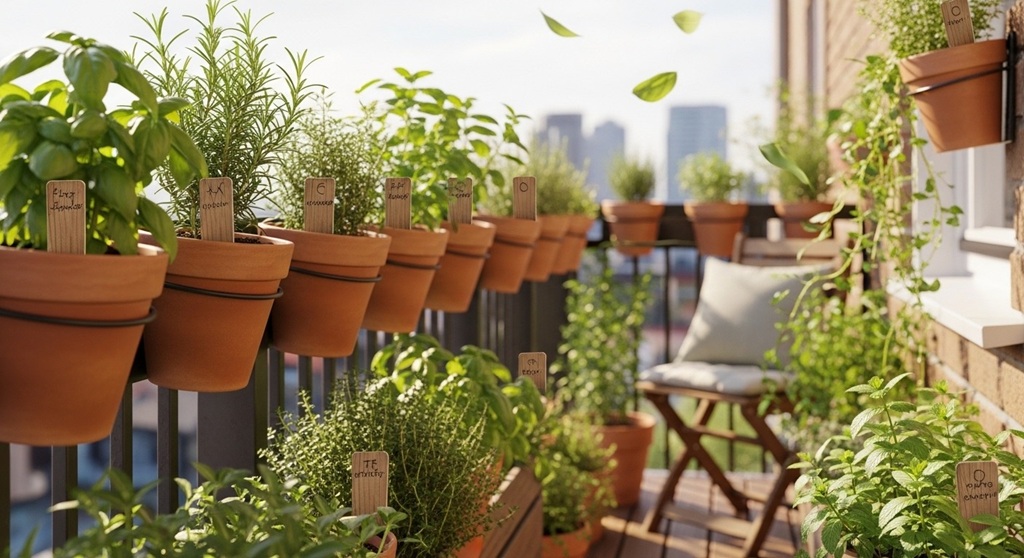
Growing herbs in containers on your balcony is a rewarding and space-efficient way to add fresh flavors to your meals. Whether you live in a small apartment or simply want to maximize your outdoor space, growing herbs in containers allows you to enjoy the benefits of gardening without a large yard. In this article, we’ll walk you through everything you need to know about growing herbs in containers on your balcony—from choosing the right plants to proper care and maintenance. Let’s dive in!
What Are the Benefits of Growing Herbs in Containers on a Balcony?
Growing herbs in containers on your balcony provides numerous benefits:
- Fresh, Flavorful Herbs: Enjoy fresh herbs at your fingertips without needing a backyard garden.
- Space-Efficient: Perfect for urban dwellers with limited space.
- Convenience: Easy access to herbs for cooking right outside your kitchen.
- Low Maintenance: Many herbs are low-maintenance, making them ideal for beginners.
What Herbs Are Best for Growing in Containers on a Balcony?
When selecting herbs for your balcony garden, consider the following:
- Mint: A hardy and fast-growing herb that thrives in containers.
- Basil: Perfect for sunny balconies with warm temperatures.
- Thyme: An easy-to-grow herb that requires minimal space.
- Oregano: A robust herb that does well in containers.
- Parsley: A versatile herb that grows well in most conditions.
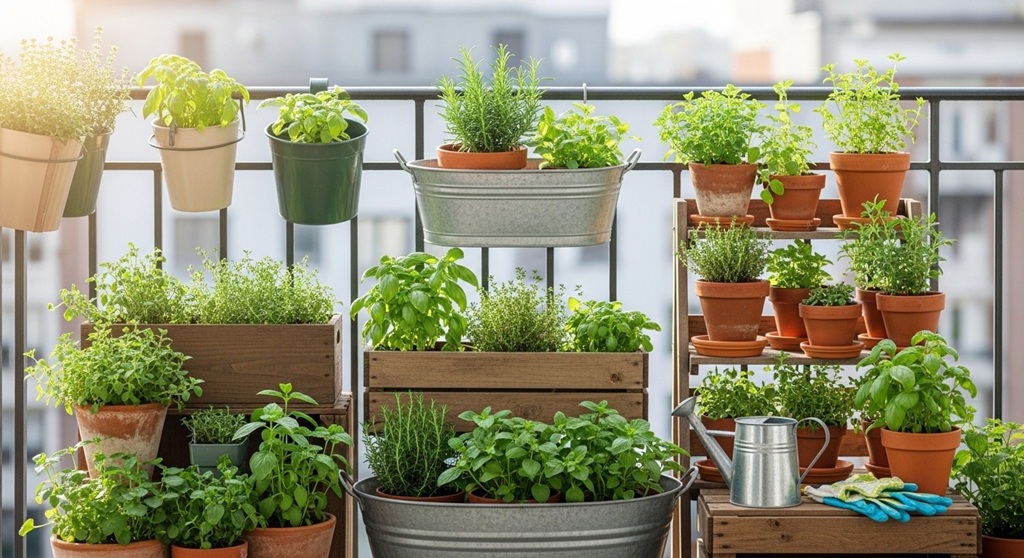
How to Choose the Right Containers for Growing Herbs on a Balcony?
The right container plays a crucial role in your herbs’ growth and health. Here’s what you need to consider:
- Size: Choose containers that are large enough to accommodate your herbs’ root systems. Generally, a 12-inch pot is a good starting point.
- Material: Opt for breathable materials like clay or terracotta for better drainage. Avoid plastic, which can retain too much moisture.
- Drainage: Ensure your containers have proper drainage holes to prevent root rot.
What Soil Should You Use for Growing Herbs in Containers?
Herbs thrive in well-draining, nutrient-rich soil. The best option is a high-quality potting mix designed for container gardening. Avoid using garden soil, as it may not provide adequate drainage and could harbor pests. A good potting mix will allow for proper airflow to the roots while retaining moisture without becoming soggy.
How Much Sunlight Do Herbs Need on a Balcony?
Herbs generally require at least 6 hours of direct sunlight per day. If your balcony receives less sunlight, consider growing herbs that are more tolerant of shade, such as mint and parsley. For sun-loving herbs like basil, thyme, and oregano, place them in spots with maximum exposure to sunlight.
How to Water Herbs Grown in Containers on a Balcony?
Proper watering is essential for healthy herb growth. Here’s how to do it right:
- Frequency: Water herbs when the top inch of soil feels dry. Avoid overwatering, as this can lead to root rot.
- Time of Day: Water in the morning to prevent the soil from staying too wet overnight.
- Drainage: Always ensure your containers drain well to avoid waterlogging.
How to Fertilize Herbs in Containers on a Balcony?
Herbs in containers benefit from regular fertilization to encourage strong growth. Use a balanced, slow-release fertilizer every 4–6 weeks during the growing season. Organic options, such as compost or fish emulsion, are excellent choices for feeding your herbs naturally. Be sure not to over-fertilize, as this can lead to excessive leaf growth and reduced flavor.
How to Prevent Pests and Diseases on Balcony Herbs?
Container-grown herbs are susceptible to pests like aphids, spider mites, and whiteflies. To keep your herbs healthy:
- Inspect Regularly: Check your plants for signs of pests, such as discolored leaves or webs.
- Natural Remedies: Use insecticidal soap or neem oil to treat pests without harming the plants.
- Good Hygiene: Remove dead leaves and plant debris from the containers to prevent disease.
What Are the Best Practices for Winterizing Your Balcony Herb Garden?
In colder climates, you may need to protect your balcony herbs during winter. Here’s how:
- Bring Them Inside: Move container herbs indoors when temperatures drop below freezing.
- Mulch: Apply a layer of mulch to insulate the roots of herbs left outside.
- Grow Indoors: Consider growing herbs like basil and parsley indoors under grow lights during the winter months.
Conclusion
Growing herbs in containers on your balcony is a simple yet rewarding way to enjoy fresh herbs year-round. By choosing the right containers, providing proper sunlight, watering, and fertilizing, you can ensure your herbs thrive. Whether you’re a beginner or experienced gardener, balcony herb gardening can be a fun and fulfilling hobby. Ready to get started? Choose your favorite herbs and begin growing today!
FAQ
Can I grow herbs indoors instead of on a balcony?
Yes, many herbs can thrive indoors. Provide them with adequate sunlight and grow lights if necessary, and make sure they are in well-drained containers.
How often should I prune my herbs?
Prune herbs regularly to encourage bushier growth and prevent them from becoming too leggy. Trim off any flowers that appear, as they can reduce the flavor of the leaves.
Are all herbs suitable for container gardening?
Most herbs grow well in containers, but some, like mint, are better suited for pots due to their spreading nature. Other herbs like basil and thyme also do well in containers.
Can I grow herbs on a shaded balcony?
Yes, some herbs, such as mint and parsley, are more tolerant of shade and can thrive in less sunny conditions.
Do I need to use a special type of soil for herbs in containers?
It’s best to use a well-draining potting mix. Avoid using garden soil, as it can lead to poor drainage and root problems.
How can I make my herbs more flavorful?
Harvest herbs regularly to encourage new growth and ensure a continuous supply of fresh, flavorful leaves. Proper care, like sunlight, watering, and fertilizing, also helps boost flavor.
Read More Also: Seven Popular Online Slots at Gaming Sites
Find out: How to Grow Leafy Greens in Small Balcony Spaces