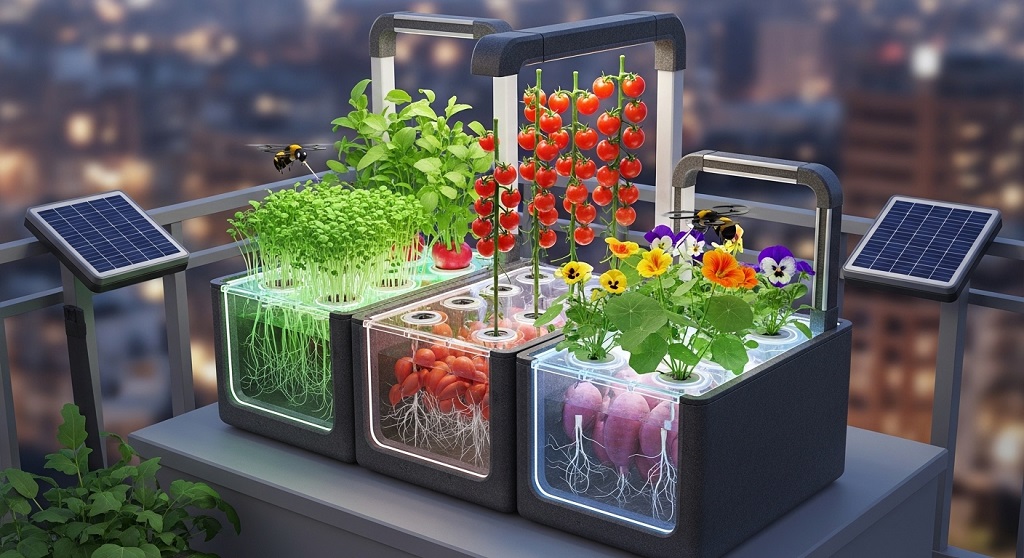
An Edible Bento balcony garden is a compact, multi-crop growing system designed to produce a complete, harvest-ready “meal box” of vegetables, herbs, and microgreens from a space as small as 4 square metres. Think of it like a Japanese bento box — every compartment has a purpose, nothing is wasted, and the whole thing is beautiful.
Here’s the problem most balcony gardeners hit: they plant one tomato, one basil, maybe some mint — and by August they’ve got more mint than they can drink and no actual dinner. Sound familiar?
The Edible Bento method flips that. You plan for diversity, not volume. You layer fast crops with slow crops, vertical growers with ground-level producers, and you harvest something every single week. In 2026, with food prices up 23% from 2022 levels according to the UN FAO Food Price Index, growing even 15–20% of your fresh produce at home is a meaningful financial and nutritional win.
This guide walks you through exactly how to do it — from choosing containers to harvesting your first full bento haul.
What Space Do You Actually Need to Grow a Full Edible Bento Harvest?
Short answer: A balcony of 4–8 square metres is enough. Even 2 square metres can work if you go fully vertical.
The most common myth in balcony gardening is that you need a garden. You don’t. A 2019 study published in Urban Agriculture & Regional Food Systems found that urban container gardens averaging 5 m² produced enough vegetables to cover roughly 20% of a household’s weekly vegetable intake when planted with diversity in mind.
Here’s how to audit your balcony before buying a single seed:
- Measure your floor space. Even awkward L-shaped balconies can be mapped into zones.
- Count your sun hours. 4–6 hours of direct sun supports most leafy crops; 6+ hours opens up fruiting crops like tomatoes and peppers.
- Check your load rating. Most modern balconies support 150–300 kg/m². Wet soil is heavy — always use lightweight potting mix with perlite.
- Assess your wind exposure. High-rise balconies above the 8th floor often need a windbreak net. Wind stress reduces yields by up to 30% in exposed sites.
Once you know your zone, you can design your bento “compartments” — each assigned to a specific crop category.
Which Crops Belong in an Edible Bento Balcony Setup?
Short answer: Choose one crop from each of five bento tiers — greens, herbs, a fruiting crop, a root crop, and microgreens.
This is the core of the system. Most balcony gardens fail because people plant too many of the same type. The Edible Bento method structures crops into five functional tiers, just like a bento box has five compartments.
| Bento Tier | Crop Examples | Container Size | Days to Harvest |
|---|---|---|---|
| 1. Leafy Greens | Spinach, rocket, pak choi, kale | 20–30 cm deep | 25–45 days |
| 2. Fresh Herbs | Basil, coriander, chives, parsley | 15–20 cm deep | 20–40 days |
| 3. Fruiting Crops | Dwarf tomatoes, chillies, mini peppers | 30–40 cm deep, 10L+ | 60–90 days |
| 4. Root Crops | Radishes, spring onions, beetroot | 25–35 cm deep | 25–60 days |
| 5. Microgreens | Sunflower shoots, pea shoots, broccoli sprouts | 5–7 cm tray | 7–14 days |
The magic is in the succession planting between tiers. While your tomatoes take 70 days, your microgreens are delivering harvests every two weeks. Your radishes fill the gap between sowing and fruiting. Nothing sits idle.
In 2026, seed companies like Botanical Interests and Real Seeds have released new dwarf varieties specifically developed for container depth under 35 cm — including determinate tomatoes like ‘Tumbling Tom Red’ and ‘Balcony Star’ that produce 1.5–2 kg per plant in a 10-litre pot.
What Containers and Growing Medium Work Best for Balcony Bento Gardens?
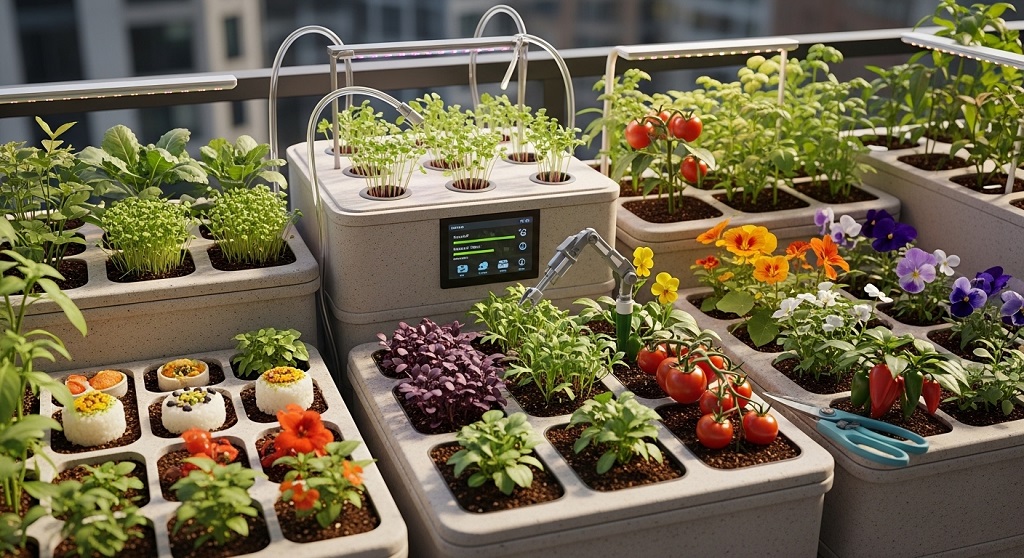
Short answer: Use fabric grow bags or lightweight plastic pots with a peat-free mix blended with 20–30% perlite for drainage and weight reduction.
Container choice directly affects yield. Here’s what works — and what wastes money:
Best Container Types for Small Balconies
- Fabric grow bags (7–25L): Air-prune roots for healthier plants, lighter than ceramic, and collapsible for storage. A 2021 trial by the Royal Horticultural Society showed fabric bags produced tomato yields 18% higher than equivalent plastic pots in the same conditions.
- Vertical pocket planters: Mount on railings or walls to grow herbs and lettuces without using floor space. A 1-metre vertical panel can hold 12–16 plants.
- Self-watering planters: Critical if you travel or work long hours. They reduce water stress — the number one cause of balcony crop failure — by maintaining consistent root-zone moisture.
- Recycled food-grade containers: 5-gallon buckets, large yoghurt tubs, and wooden crates all work. Drill drainage holes and line wood with plastic to prevent rot.
The Right Growing Medium
Garden soil is too heavy and too dense for containers. Use a peat-free potting compost (for sustainability) blended with:
- 20% perlite — for drainage and aeration
- 10–15% worm castings — for slow-release nutrients
- Optional: 5% biochar for moisture retention and microbial activity
Avoid cheap multipurpose composts alone — they compact quickly, shed water, and deplete within 6–8 weeks. Feed every 2 weeks with a balanced liquid fertiliser once plants are established.
How Do You Plan a Planting Calendar for Year-Round Balcony Harvests?
Short answer: Divide your year into three growing windows — spring (March–May), summer (June–August), and autumn/winter (September–February) — and stagger sowing every 2–3 weeks within each window.
This is where most home growers leave serious harvest volume on the table. They plant everything in May and wonder why October is barren.
2026 Edible Bento Planting Calendar
- January–February: Sow microgreens indoors, start chilli seeds under grow lights (chillis need a long growing season).
- March–April: Sow spring onions, radishes, spinach, and rocket direct in containers. Start tomatoes indoors 6–8 weeks before last frost.
- May: Transplant tomatoes and peppers outside once night temps stay above 10°C. Direct sow basil, coriander, and pak choi.
- June–August: Main harvest window for fruiting crops. Resow fast crops (rocket, radishes, microgreens) every 3 weeks for continuous supply.
- September–October: Sow autumn crops — kale, hardy spinach, winter lettuce varieties, and chives. These tolerate light frost.
- November–December: Move to indoor microgreens and windowsill herbs. Hardy kale and chard can continue outdoors under fleece down to -3°C.
A case study from community garden network Capital Growth (London, 2023) documented one participant growing from a 6 m² balcony for 48 consecutive weeks using this staggered approach — producing an estimated £680 worth of produce at retail prices over 12 months.
How Do You Water and Feed a Balcony Bento Garden Without Over-Complicating It?
Short answer: Water deeply but infrequently, check soil moisture daily in summer, and feed every 14 days with a balanced liquid fertiliser once plants show active growth.
Watering is where beginners either overwater (causing root rot) or underwater (causing bolting and stress). Here’s a simple rule: push your finger 2 cm into the soil. If it’s dry, water thoroughly until it drains. If it’s moist, leave it.
Simple Irrigation Options
- Manual watering with a watering can: Works fine for under 10 containers if you’re consistent.
- Drip irrigation timer kits: Cost £25–£60, connect to an outdoor tap, and automate watering during holidays. Set to water in the early morning — evening watering promotes fungal disease.
- Self-watering reservoir planters: Best for tomatoes and peppers, which need consistent moisture to prevent blossom end rot (calcium deficiency caused by irregular watering).
Feeding Schedule
- Weeks 1–4 after potting: No feeding needed if using pre-fertilised compost.
- Week 5 onwards: Feed leafy crops with a nitrogen-high liquid feed (e.g. seaweed extract). Feed fruiting crops with a potassium-high feed (e.g. tomato fertiliser) once flowering begins.
- Microgreens: No feeding required — they’re harvested before the initial seed nutrients deplete.
What Are the Biggest Pests and Problems on Balcony Gardens — and How Do You Fix Them Fast?
Short answer: Aphids, fungus gnats, and powdery mildew are the three most common issues. All are manageable with early intervention and good airflow.
- Aphids: Blast off with water, then apply neem oil spray (1 tsp neem + 1 tsp washing up liquid per litre of water) weekly until clear.
- Fungus gnats: Caused by overwatered compost. Allow the top layer to dry out between waterings. Yellow sticky traps catch adults; nematodes (Steinernema feltiae) kill larvae in the soil.
- Powdery mildew: Common on courgettes, cucumbers, and squash in humid conditions. Spray with a diluted bicarbonate of soda solution (1 tsp per litre) and improve air circulation. Remove affected leaves immediately.
- Leggy seedlings: Caused by insufficient light. Move to the sunniest spot available or supplement with a cheap LED grow light (£15–£30 on Amazon) in early spring.
- Bolting: Lettuce, rocket, and coriander bolt (go to seed prematurely) in heat. Shade with a 30% shade cloth in peak summer and harvest regularly to slow the process.
How Long Before You Harvest a Full Edible Bento Meal From Your Balcony?
Short answer: You can harvest your first microgreens in 7–10 days. A full bento-style multi-crop harvest is achievable within 6–8 weeks of initial sowing.
Here’s a realistic first-season timeline:
- Day 1: Sow microgreens in a tray, plant seedlings or sow radishes and spring onions.
- Day 7–10: First microgreen harvest (pea shoots, sunflower, broccoli sprouts).
- Day 25–30: First radish pull. Harvest outer leaves from rocket and spinach.
- Day 40–45: Chives ready to cut, pak choi at full size, spring onions ready.
- Day 60–70: First cherry tomatoes ripen. Basil at peak harvest.
- Day 75–80: Full Edible Bento plate possible — microgreens, salad leaves, herbs, radishes, tomatoes, spring onion.
That’s a full, diverse harvest from seed to plate in under 12 weeks. Not bad for a balcony.
Ready to Grow Your First Edible Bento Harvest This Season?
Here’s the truth about balcony food growing in 2026: the barrier isn’t space, it’s system. Most people who “tried growing veg” and gave up were planting randomly, not strategically. The Edible Bento method gives your balcony a structure — five crop tiers, staggered sowing, the right containers, and a feeding rhythm that keeps things producing week after week.
You don’t need a garden. You don’t need a big budget. The average Edible Bento setup costs £60–£120 in containers and seeds in Year 1, and delivers back far more than that in fresh produce — not to mention the stress-reducing, genuinely enjoyable ritual of stepping onto your balcony and harvesting your dinner.
Food prices aren’t going down. Urban growing isn’t a trend — it’s a practical skill set. And the best time to start is now.
Start with one tray of microgreens this week. Harvest them in 10 days. Then add a container of rocket and a bag of radishes. Build from there. In eight weeks, you’ll be eating from your balcony and wondering why you waited.
→ Download our free Edible Bento Planting Planner [link your CTA here] and map out your first season in under 20 minutes.
Frequently Asked Questions About Growing an Edible Bento Balcony Garden
Can I grow an Edible Bento garden on a north-facing balcony?
Yes, with the right crop selection. North-facing balconies receive indirect light, which suits leafy greens, herbs like mint and chives, and microgreens very well. Avoid fruiting crops like tomatoes and peppers, which need 6+ hours of direct sun. Use reflective surfaces (white walls, mirrors) to amplify available light. A single LED grow light (12–18W) can supplement light for seedlings or herbs in darker positions.
What is the cheapest way to start an Edible Bento balcony garden?
Start with recycled containers — 5-litre ice cream tubs, wooden wine crates, or food-grade plastic buckets. Drill drainage holes, fill with budget peat-free compost mixed with perlite, and sow microgreens and radish seeds. Total start-up cost can be under £15. Prioritise seeds over seedlings — a packet of rocket seeds (400+ seeds for £2) will out-produce a £3 supermarket seedling tray many times over.
How many plants can I fit on a 4-square-metre balcony?
Using a combination of floor containers and vertical wall planters, a 4 m² balcony can realistically support 30–50 individual plants. A typical layout might include two 40-litre troughs for salad leaves, four 10-litre bags for herbs and fruiting crops, one vertical panel for climbing beans or herbs, and two microgreen trays for fast weekly harvests. Succession sowing maximises that footprint further.
Is balcony container gardening actually worth it financially?
Yes — when done systematically. A 2023 study by Garden Organic (UK) found that well-managed container gardens produced an average return of £4.50 in fresh produce for every £1 invested in seeds and compost. Microgreens offer the best return: specialty microgreens like pea shoots retail at £3–£5 per 100g punnet, and a single tray produces that volume within two weeks from seeds costing pennies.
What are the best dwarf or compact vegetable varieties for balcony bento gardens in 2026?
For courgettes: ‘Patio Star’ (genuinely compact, unlike regular courgettes). For beans: ‘Hestia’ (dwarf runner bean, no staking required). These varieties have all been bred or selected specifically for container depth under 35 cm and limited root run.
Do I need grow lights for a balcony garden?
Not necessarily for summer growing. However, if you want to extend your season into winter, or start seeds early indoors in January–February, a simple LED grow light (£15–£40) makes a significant difference. Look for a full-spectrum panel with at least 2000 lumens per square foot. Position it 15–30 cm above seedlings and run for 14–16 hours per day.
How do I stop my balcony plants from drying out in a heatwave?
During heatwaves, container plants may need watering twice daily — once in the early morning and once in the evening after the sun drops. Move pots to a slightly shaded position if possible. Mulch the soil surface with compost or straw to reduce evaporation. Self-watering planters with a reservoir are the most reliable solution for heat periods. Avoid black containers in full sun — they absorb heat and can literally cook root systems in 35°C+ conditions.
Related Topics: How to Grow Herbs in Containers on a Balcony (Step-by-Step)
What Next: Top Casino Bonuses For Online Pokies in Australia