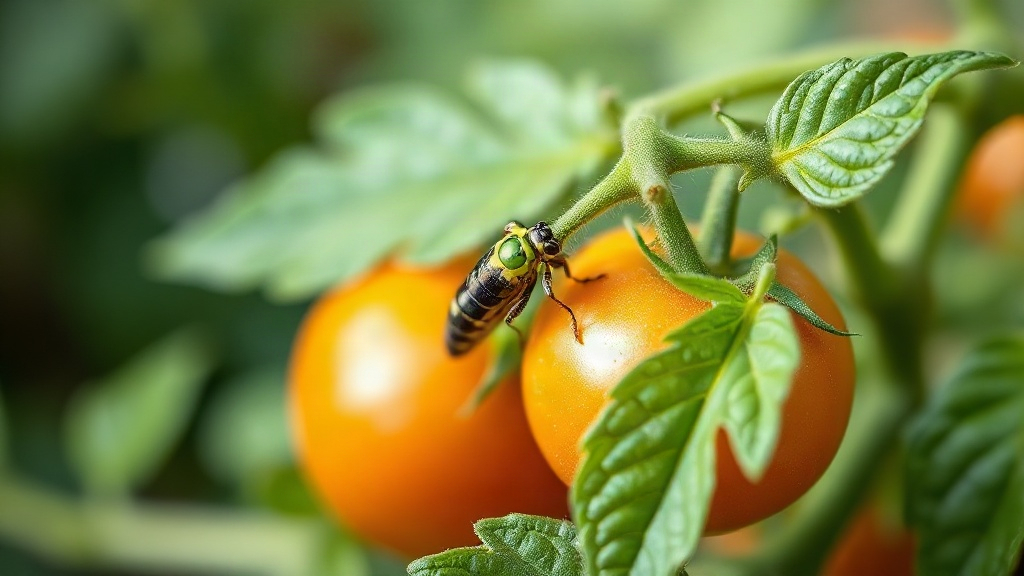
You spot bare stems and dark pellets on the soil, then find a fat green caterpillar clinging to what is left of your tomato leaves. Tomato hornworm control is one of those jobs where early action decides whether you harvest tomatoes or just stems. A single large larva can strip a plant quickly, and the damage often appears before you notice the pest itself.
Quick answer: Check your plants every two to three days in midsummer, handpick any hornworms you find, and drop them into soapy water. Leave those carrying small white cocoons alone, because they are already dying and support beneficial wasps. For heavy infestations, use Bacillus thuringiensis (Bt) on young larvae, and keep a few flowering plants nearby to attract parasitic wasps.
This guide explains the pest’s life cycle, why timing matters, the practices that actually work, and the mistakes that let hornworms win. You will finish knowing what to do this week and how to prevent a repeat next season.
What is tomato hornworm control?
Tomato hornworm control means managing the large green caterpillars that feed on tomato foliage, stems, and sometimes fruit, using a mix of scouting, hand removal, biological controls, and selective sprays. The goal is to stop larvae before they strip a plant, not to eliminate every insect in the garden. A few hornworms cause little harm; a dozen can ruin a season.
The pest itself is the larva of the five-spotted hawkmoth (Manduca quinquemaculata). A close relative, the tobacco hornworm (Manduca sexta), looks similar and attacks the same plants. You can tell them apart by the stripes: tomato hornworms have eight white V-shaped marks along the sides, while tobacco hornworms show seven diagonal white lines. Both have a soft horn at the rear.
Stripes fade and markings shift as larvae grow, so do not rely on them alone to confirm a species. Both kinds do the same damage and answer to the same controls, which keeps decisions simple. Only the caterpillar stage feeds; moths sip nectar and harm nothing. Watch for the moths at dusk, hovering near flowers, as a hint that egg laying has begun in your area.
Life cycle in plain terms
The cycle runs from egg to caterpillar to pupa and back to moth. Female moths lay single, round green eggs on the undersides of leaves, usually at night. Eggs hatch in about two to eight days, depending on temperature. The caterpillar then feeds for roughly three to four weeks and passes through five growth stages. A full-grown hornworm can reach four inches long.
When feeding ends, the larva drops to the soil and burrows several inches down to pupate. In cold climates, moths emerge once per year, usually in late spring or early summer. In warmer regions, they can produce two or more generations per season, so late summer brings a second wave of damage.
What the damage looks like
Hornworms start small and climb. Young larvae chew small holes in leaves, which is easy to miss. Older caterpillars eat whole leaflets, nip buds, and sometimes gouge shallow scars into green fruit. Their waste, dark barrel-shaped pellets, collects on lower leaves and the ground below. Those pellets are often the first real clue.
Broad hosts and regional reach
Tomatoes are the favorite, but hornworms also feed on peppers, eggplants, potatoes, and related weeds. From New England to the Midwest and down into the South, they show up wherever tomatoes grow. Their green color blends with foliage, so a still caterpillar is nearly invisible.
The horn is soft and harmless to people. Picking a hornworm with bare hands is safe, though the insect may thrash and regurgitate a bit of green fluid as a defense.
Takeaway: Know the life cycle, because each stage opens a different control window.
Why tomato hornworm control matters
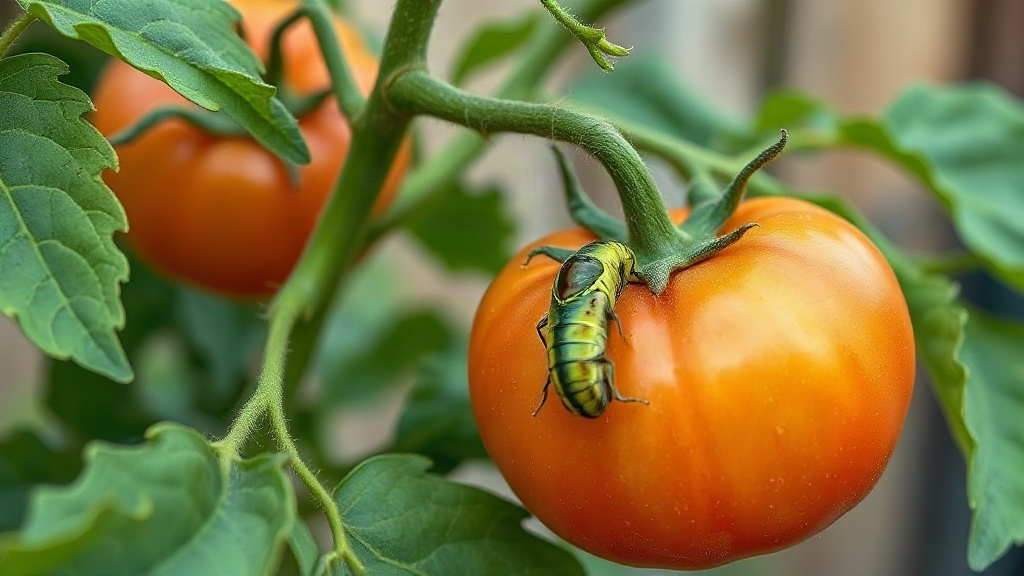
The crop losses are fast and surprising. A hornworm near the top of a young plant can consume leaves faster than the plant replaces them, and damage spreads from a single point outward. By the time patches of bare stems appear, the caterpillar may be nearly full-grown and past its most vulnerable stage. Control matters because the pest grows quickly, hides well, and returns in greater numbers when ignored.
Tomatoes rely on healthy foliage and fruit development. Leaf loss weakens plants just when they are setting fruit. Heavy feeding can leave green tomatoes exposed to sunscald, a serious problem in hot climates. Sunscalded fruit develops pale, blistered patches that never recover, which turns a strong crop into a smaller, lower-quality harvest.
The cost shows up in yield, not just appearance. Repeated defoliation reduces the plant’s energy reserves, so later fruit ripens smaller or stalls altogether. Even plants that survive heavy feeding often produce fewer clusters the following year, because the damage compounds across the season. A few minutes of scouting protects the investment you already made in soil, seed, and water.
It is a recurring pest, not a one-time event
Moths migrate north each year from warmer regions. After a female finds your garden, the next generation emerges from your soil. Rotating crops and disturbing soil at season’s end reduce that carryover. Ignoring hornworm control means the pupae stay in the garden, and next year’s moth population starts closer to your plants.
Hornworms can vector disease
A caterpillar chewing through leaves opens wounds for pathogens. Several tomato viruses spread through insects that visit damaged tissue. Early detection protects both foliage and long-term plant health.
Comparison: biological control vs. chemical spray
Handpicking and biological controls suit small gardens with steady scouting. Chemical sprays may be needed when the infestation is heavy, but they also kill beneficial insects and require careful timing.
| Approach | Best for | Main trade-off |
|---|---|---|
| Handpicking | Small gardens, 1–5 plants | Requires frequent scouting |
| Bt spray | Heavy infestations | Works only on young larvae |
| Beneficial wasps | Long-term prevention | Takes time to build |
| Insecticidal soap | Light pressure | Poor results on large caterpillars |
Notice the pattern: biological methods suit light infestations, while heavy pressure calls for careful timing if you spray. Timing beats strength.
Takeaway: Treat control as a season-long habit. Each ignored caterpillar becomes a moth that lays hundreds of eggs.
Best practices
Scouting comes first, because you cannot control a pest you cannot find. Walk your rows in the morning or evening, when caterpillars move and feed. Inspect the undersides of leaves and the stem joints near the top of each plant. Check every two to three days from midsummer onward.
Handpicking is the most reliable method for home gardens. Drop the caterpillar into soapy water instead of tossing it away. A quick squirt of insecticidal soap for large larvae or a pair of gloves works well. Check undersides of leaves and the stems near the top of the plant, where caterpillars favor new growth.
Keep a small bucket of soapy water at the end of each row so picking takes seconds. Pick it up gently near the rear horn and drop the caterpillar straight in; avoid handling the white cocoons on its back. Wear gloves if the green fluid bothers you. Carry a light so an evening check stays practical even when the light fades.
Choose the right spray at the right time
Bacillus thuringiensis (Bt) is a bacterium that stops young caterpillars from feeding. It works best when applied in the evening and aimed at foliage, and it must be reapplied after rain to stay effective. It does little to full-grown larvae, so target small ones. Spinosad is another option, and it is toxic to bees when wet, so spray after sunset.
Support natural enemies
Braconid wasps lay eggs inside hornworms, and the white cocoons look like small grains of rice on the caterpillar’s back. Leave those caterpillars alone. The wasps that emerge will attack others nearby. Planting flowers such as sweet alyssum and dill brings adult wasps close to your crop.
Manage the soil and the season
Till the topsoil in fall to expose pupae to birds and cold. Rotate tomatoes away from last year’s beds. Keep weedy edges in check, because related weeds can host larvae. Clean up debris at the end of the season rather than leaving it in place.
Never apply broad-spectrum insecticide as a default. It kills predators and parasitic wasps that do the quiet work of keeping hornworms in check.
Takeaway: Scout often, pick by hand, and let biology do the rest. Spray only when it changes the outcome.
Common mistakes to avoid
The first mistake is waiting for visible defoliation. Hornworms reveal themselves through chewed leaves and dark pellets before entire stems are stripped, so start checking when plants are half their expected size. Delay costs production.
A second mistake is killing every caterpillar you find. Those with white cocoons are already dying. Removing them destroys a wasp population that will attack dozens more. Learn the difference before you pick.
A third mistake is using the wrong spray on the wrong stage. Bt and insecticidal soap rock young larvae but do little to a four-inch caterpillar. Directing bug spray into dense foliage may also leave coverage limited. Match the product to the size of the pest.
Another slip is scouting once and then giving up after a single pass. Hornworms often feed in bursts and rest during the hottest hours, so a single walk misses them. Move slowly and scan from the top of the plant downward, since larvae climb upward to reach tender growth. A second look later the same day catches what the first missed, and a flashlight after dark works if your schedule allows it. Small habits like these close gaps that sprays never fix.
Treating a plant and forgetting nearby weeds leaves a reservoir untouched. Nightshade and other volunteer plants harbor larvae that move back in once the spray wears off. Pull those weeds before you treat the crop, and check the compost pile for discarded vines that still hold eggs or caterpillars. Cleaning the edges of the bed first makes the treated area mean something.
Ignoring the soil and the calendar
Many growers remove caterpillars but never touch the soil. Pupae stay underground and emerge as moths that lay hundreds of eggs. Tilling in fall and rotating crops interrupts the cycle.
A fifth mistake is overreacting on a single pest. Finding one hornworm does not justify treating the whole garden. Spot treatment preserves beneficials and reduces waste.
Takeaway: Precision beats persistence. Use the right method for each stage.
FAQ
How much does tomato hornworm control cost?
Handpicking costs nothing. A bottle of Bt concentrate is inexpensive and lasts for many applications, while spinosad costs a bit more. Beneficial wasps and flowers are a small investment with long-term value.
What is the best time to start treating for hornworms?
Begin scouting when summer heat arrives, before larvae grow large. Midsummer is the window to watch. Check plants twice weekly and treat young caterpillars as soon as you spot them.
Can I just leave hornworms alone?
Sometimes, yes. A few caterpillars on a large, healthy plant rarely cause serious loss. A heavy infestation is different. It can strip a young plant in days, so monitor and act early.
Do hornworms attack peppers and eggplants too?
Yes. They feed on related nightshade plants, including peppers, eggplants, and potatoes. Check those beds alongside tomatoes. Control works best across the whole garden.
Are there resistant tomato varieties?
No tomato variety resists hornworms completely. Cultural practices matter more. Crop rotation, fall tillage, and attracting wasps reduce pressure regardless of the variety.
Conclusion
Tomato hornworm control comes down to a few habits: scout often, pick by hand, respect the parasitic wasps, and use Bt only when young larvae demand it. The pest is large and fast, but it is also easy to see and easy to stop if you act before leaves disappear. Rotation and fall cleanup keep next season quieter.
Start this week. Walk your tomatoes, check the undersides of leaves, and carry a bucket of soapy water. That small routine protects the harvest you have worked for all summer.