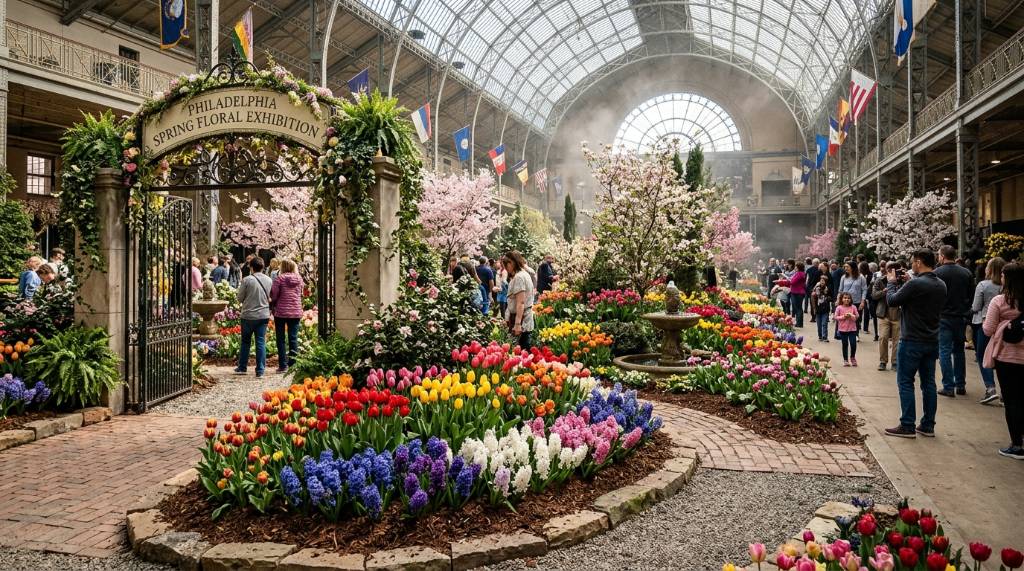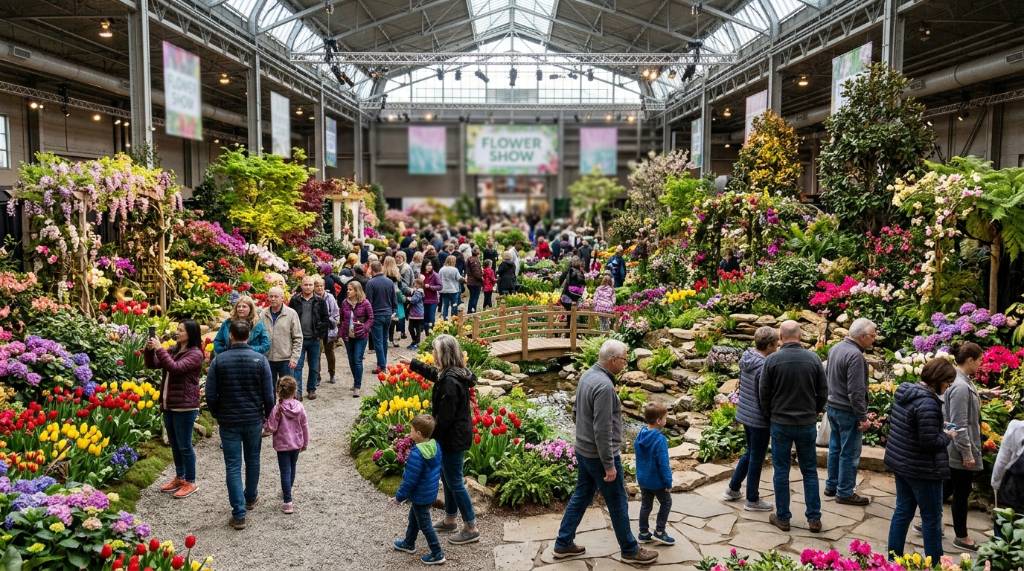
Every March, a giant indoor garden blooms in the heart of a busy city. Visitors stroll past towering trees, rushing waterfalls, and walls of colorful petals. This is the Philadelphia Flower Show, and it ranks as the oldest and largest event of its kind in the United States. However, few guests know how small it was at the start. Additionally, many do not realize how much history grows beneath each display. This article follows the story from 1829 to 2027. You will see how a modest plant exhibit became a national tradition. You will also find key dates, helpful tables, and answers to common questions.
Where the Story Begins: Philadelphia Gardeners in the 1820s
In the 1820s, Philadelphia buzzed with new ideas. The city led the nation in science, trade, and farming. Wealthy families kept large gardens and greenhouses. Meanwhile, professional growers hunted for new plants and better methods. These people shared one problem. They had few places to swap knowledge.
Therefore, a group of local gardeners and plant lovers decided to form a club. In 1827, they started the Pennsylvania Horticultural Society, which people now call PHS. Their goal was simple. They wanted to spread good gardening practices and improve local growing. Two years later, they took the next big step. They invited the public to see what Philadelphia growers could do.
The First Exhibition in 1829
The first exhibition took place at Masonic Hall on Chestnut Street. Members brought their finest plants, fruits, and vegetables. Visitors came to admire the displays and to learn. Judges studied each entry and gave prizes to the best growers. Furthermore, the event gave neighbors a rare chance to trade tips face to face.
Nothing about this first show looked like today’s grand spectacle. There were no rushing waterfalls or full-size cottages. Instead, tables held pots, cut flowers, and fresh produce. Still, the idea worked. People loved it. The society kept the tradition going, and the exhibition returned again and again.
Growth and Glamour in the 1800s
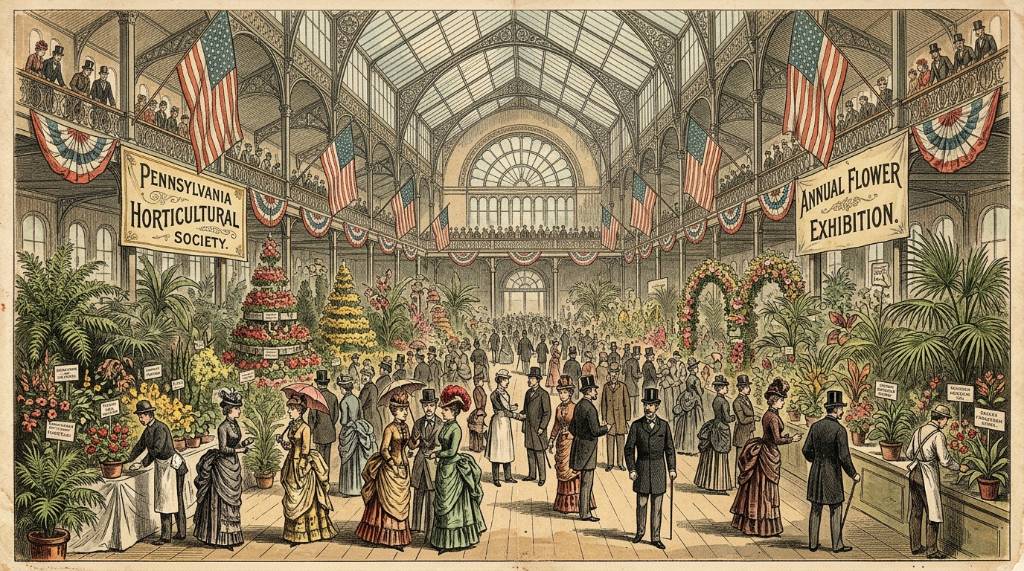
As the century moved on, the show grew with the city. Crowds got bigger. Exhibits got fancier. Gardeners showed off exotic plants that arrived from faraway lands. Greenhouses let growers raise tropical species, so visitors gasped at palms and orchids they had never seen before.
By the 1860s, the society had its own hall on Broad Street. This gave members a steady home for meetings, lectures, and displays. In addition, the growing interest in gardening pushed the society to dream bigger.
The Centennial Boost
In 1876, the nation celebrated its 100th birthday with the Centennial Exhibition in Fairmount Park. Millions of people traveled to Philadelphia for the event. A glass-and-iron Horticultural Hall rose on the grounds as a showpiece for plants and flowers. Consequently, the city earned a reputation as a center of American gardening. That reputation still shapes the show today.
A Show on the Move: The Early 1900s
In the early 1900s, the show roamed across the city. Organizers booked armories, museums, and exhibition halls. Each venue offered a different amount of space. However, the show kept growing, so it needed bigger homes again and again.
During these years, a major change took place. Designers began to build full gardens indoors. They added paths, ponds, and small bridges. This shift turned the show from a plant contest into a design spectacle. Commercial florists and nurseries joined in. Garden clubs entered friendly contests, and their members spent months preparing.
Wartime Gardens
The world wars changed daily life. During those years, the society leaned toward practical gardening. Victory gardens helped families grow vegetables at home and ease pressure on food supplies. Therefore, exhibits of the era stressed useful skills as well as beauty. After the wars ended, crowds returned, and the show regained its sparkle.
Mid-Century Crowds and Convention Hall
In the decades after the war, the show grew into a major civic event. For many years, it filled the big halls at the Philadelphia Civic Center in West Philadelphia. The huge floor space gave designers room to experiment. As a result, landscape firms built larger and bolder gardens. Visitors walked through scenes that looked like faraway countries, quiet woodlands, and sunny patios.
Moreover, the show became the society’s biggest fundraiser. Ticket sales paid for education programs, lectures, and community projects. This link between flowers and public good stayed strong, and it still defines the event.
Timeline at a Glance
The table below highlights the most important moments in the long history of the show.
| Year | Milestone |
| 1827 | Local gardeners start the Pennsylvania Horticultural Society |
| 1829 | First public exhibition at Masonic Hall on Chestnut Street |
| 1876 | Centennial Exhibition brings Horticultural Hall to Fairmount Park |
| 1974 | PHS launches Philadelphia Green to renew city neighborhoods |
| 1996 | The show moves to the Pennsylvania Convention Center |
| 2021 | An outdoor edition at FDR Park replaces the usual indoor event |
| 2026 | Theme: Rooted: Origins of American Gardening |
| 2027 | The 198th show, themed Iconic, marks 200 years of PHS |
A New Home in 1996
In 1996, the show moved to the Pennsylvania Convention Center in Center City. This was a big step forward. The new space offered modern lighting, wide halls, and easy access for visitors. Additionally, hotels, restaurants, and train lines sat close by, so travelers could plan trips with ease.
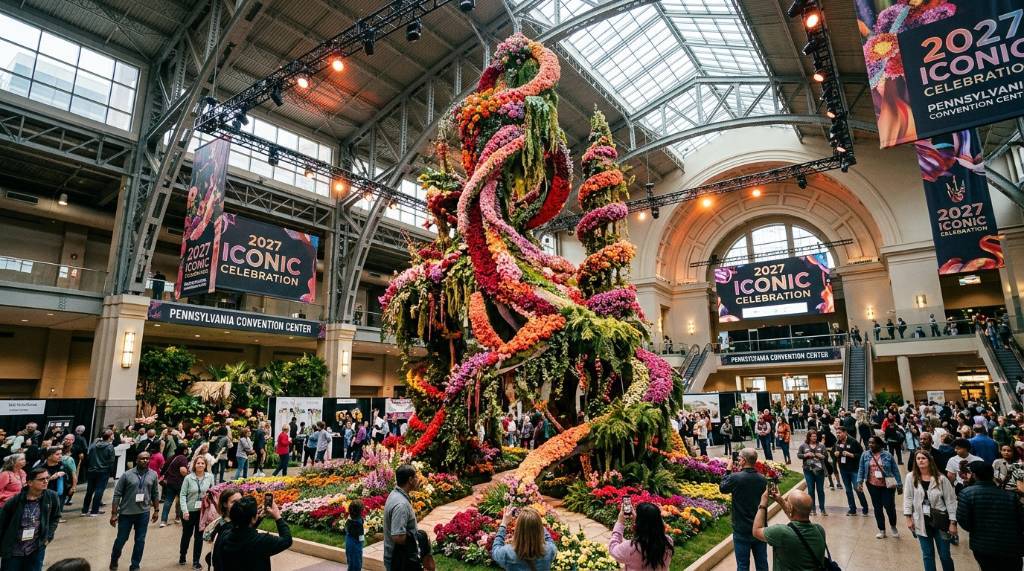
The move also changed what designers could do. They built taller trees, deeper ponds, and longer walkways. Some displays even stretched across entire halls. Therefore, guests felt as if they had stepped into a real landscape instead of a trade fair. Since then, the show has drawn visitors from across the country and from overseas. In busy years, attendance has reached roughly a quarter of a million people.
More Than Flowers: Giving Back to the City
Beauty alone does not explain the show’s long success. Purpose matters too. For generations, the event has funded gardening and greening work across Philadelphia.
The Rise of Philadelphia Green
In 1974, PHS launched a program called Philadelphia Green. Volunteers and staff cleaned vacant lots, planted trees, and built community gardens. They worked in neighborhoods that needed care the most. Over time, the program grew into one of the best-known urban greening efforts in the country.
Show proceeds help support this kind of work. Consequently, every ticket sold has a second life beyond the exhibit hall. Neighbors gain green space, and children gain places to play. In addition, community gardens give families fresh food and a sense of pride.
Contests, Classes, and Creativity
The show also offers hundreds of competitions. Home gardeners, students, and professionals enter their best blooms, arrangements, and miniature gardens. Judges award ribbons in many categories. Visitors can also join workshops, watch cooking demos, and listen to expert talks. Thus, the event welcomes beginners and experts alike.
Challenge and Renewal: 2020 to 2026
The past few years tested the show like never before. The 2020 event opened in early March, just before health concerns closed public spaces across the country. Soon after, plans for 2021 changed. Organizers could not safely host crowds inside the convention hall.
However, they refused to cancel the tradition. Instead, they moved the event outdoors. In June 2021, the show took place at FDR Park in South Philadelphia. Visitors walked through open-air gardens under a summer sky. This unusual edition proved that the event could adapt without losing its spirit.
In 2022, the show returned to its traditional indoor home. Since then, it has rebuilt its crowds and its energy. Each year brings a fresh theme and new ideas. In 2026, the theme Rooted: Origins of American Gardening explored the deep history of growing in North America. That choice fit well, because it set the stage for an even bigger milestone.
The 2027 Celebration: A Show Worth 200 Years
The year 2027 carries special meaning. PHS turns 200, and the Philadelphia Flower Show will mark the occasion as its 198th edition. Organizers announced the theme in October 2026. They chose a single bold word: Iconic.
What the Iconic Theme Means
The theme honors the many ways that artists, makers, and other creative people have found inspiration in plants. Painters have captured gardens on canvas. Designers have copied leaf shapes in fabric and jewelry. Architects have borrowed curves from vines and petals. Therefore, the theme invites visitors to see familiar flowers in a new light.
In addition, the theme celebrates famous gardens and bold garden ideas. Designers will turn well-loved landmarks and classic images into living art. Expect striking floral sculptures, hanging structures, and giant bouquets.
A First-of-Its-Kind Garden Showcase
The 2027 show also brings a special feature. Displays from Longwood Gardens, Chanticleer, and three other public gardens will fill the hall. Each garden will share its own style and story. As a result, guests can sample some of the region’s best gardens in a single afternoon. Furthermore, the lineup links the show to the wider garden community that helped it grow.
2027 Quick Facts
| Detail | Information |
| Theme | Iconic |
| Public dates | Saturday, March 13 to Sunday, March 21, 2027 |
| Members Preview Day | Friday, March 12, 2027 |
| Venue | Pennsylvania Convention Center, 1101 Arch Street, Philadelphia |
| Edition | 198th show |
| Special occasion | 200th anniversary of PHS |
Tips for Planning Your Visit
A little planning makes the day smoother. Consider these simple steps:
- Buy tickets early, because popular days fill fast.
- Arrive in the morning, since crowds usually grow after lunch.
- Wear comfortable shoes, because the halls cover a lot of ground.
- Bring a small bag for plants and treats from the market.
- Check the official PHS website for ticket prices, hours, and member perks.
Conclusion
The story of this event reaches back almost two centuries. In 1829, a small group of gardeners shared their best plants in a single hall. Over time, the exhibit grew into a city-wide tradition. It survived wars, moved from venue to venue, and found a lasting home at the Pennsylvania Convention Center in 1996. It also stayed true to a bigger purpose by supporting community greening through programs like Philadelphia Green. When challenges arrived, the team adapted, even moving outdoors in 2021.
Now the 2027 Philadelphia Flower Show brings the story full circle. With the Iconic theme, PHS celebrates 200 years of gardening, creativity, and community. Whether you are a lifelong gardener or a curious first-timer, this milestone year offers a perfect chance to see history bloom.
Frequently Asked Questions
1. When did the show begin?
The first public exhibition took place in 1829 at Masonic Hall on Chestnut Street.
2. Who runs the event?
The Pennsylvania Horticultural Society, also called PHS, organizes and runs it.
3. When is the 2027 show?
Public days run from Saturday, March 13 to Sunday, March 21, 2027. Members Preview Day falls on Friday, March 12.
4. Where will the 2027 show take place?
It will fill the Pennsylvania Convention Center at 1101 Arch Street in Center City.
5. What is the 2027 theme?
The theme is Iconic. It honors the way artists and creative people have drawn ideas from plants.
6. Why is 2027 so special?
PHS reaches its 200th anniversary in 2027, and the event will mark its 198th edition.
7. When did the show move to the Convention Center?
The move happened in 1996, and it remains the main home today.
8. Why did the 2021 edition take place outdoors?
Health concerns made large indoor crowds unsafe, so organizers chose FDR Park instead.
9. Where does the money go?
Proceeds help fund PHS programs, including community gardening and neighborhood greening work.
10. How can I buy tickets?
Visit the official PHS website. Book early, and check for member discounts and special days.