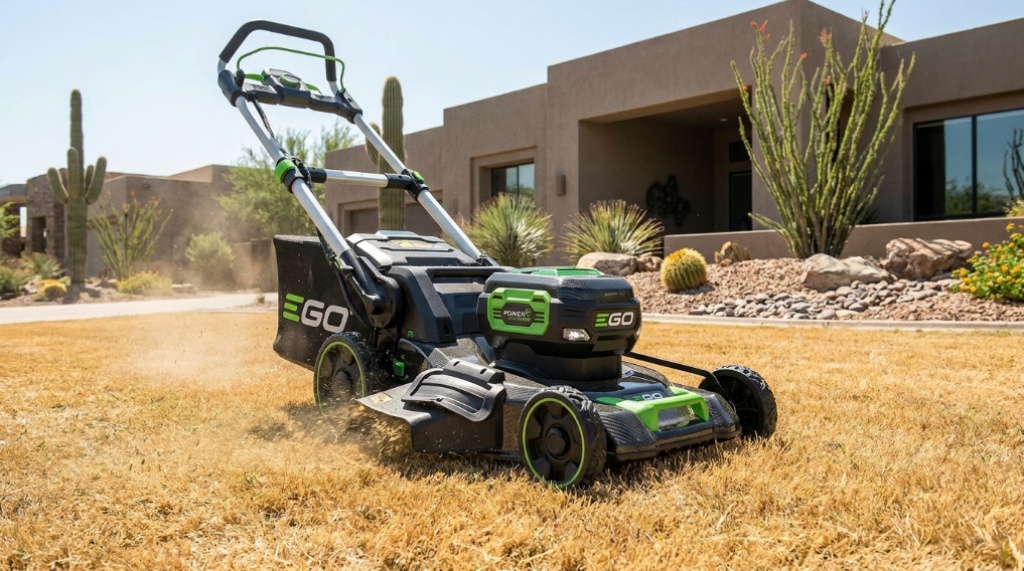
If you have a small Arizona lawn, you already know the challenge: thin turf, hard caliche soil, and summer heat that punishes both grass and equipment. A gas mower feels like overkill for a 1,500-square-foot yard, and dragging an extension cord across gravel isn’t appealing either. That’s why an electric mower for small yards has become the practical default for desert homeowners. This article explains what actually matters when choosing one in Arizona conditions, where the BLACK+DECKER 3-in-1 fits, and when a different option makes more sense.
Key Takeaways
- Battery-powered mowers make more sense than corded models for most Arizona small yards because outlets are often far from the lawn and heat degrades extension cords.
- Mulching is the single most valuable mowing function in Arizona — it returns moisture and nutrients to stressed turf instead of removing them.
- Cut height and mowing frequency matter more than brand in desert heat; scalping Bermuda or fescue in summer causes rapid dieback.
- The BLACK+DECKER 3-in-1 design (mulch, bag, side discharge) suits simple, flat small yards but has real limits on thick, overgrown, or rocky terrain.
- Battery capacity, not motor size, usually determines whether a mower finishes your yard in one charge.
Why Electric Mowers Fit Arizona Small Yards
Electric mowers are a strong match for Arizona small yards because the yards are typically small, flat, and low-fuss — the exact conditions where battery mowers perform best and where gas mowers waste money and maintenance time.
The case is straightforward. Arizona lawns are often modest: front yards of Bermuda or artificial turf, small back patios with a strip of fescue, or gravel-and-plant landscapes with a defined grass patch. You rarely need the cutting width or raw torque of a gas machine. What you do need is something you can start in 100°F heat without pulling a cord, that won’t gum up from ethanol fuel sitting unused for months, and that you can store in a garage without smelling like gasoline.
There’s also a maintenance angle specific to the desert. Small gas engines suffer in extreme heat and from fuel that varnishes during long off-seasons. Battery mowers eliminate both problems. If you’re weighing options, a well-reviewed electric mower for small yards typically costs less to own over several years than a comparable gas unit once you factor in oil, filters, spark plugs, and fuel stabilizer.
Battery vs. corded in Arizona
Battery wins for most desert homeowners. Corded mowers are cheaper and never run out of power, but Arizona yards are frequently far from an outdoor outlet, and running a 100-foot cord across hot concrete or gravel is both a tripping hazard and a wear risk — heat softens cord insulation over time. Corded models make sense mainly for very small, gated, shaded patches right next to a GFCI outlet.
What to Look For in an Electric Mower for a Small Arizona Lawn
Focus on five things: deck size, battery voltage and capacity, mulch capability, cut-height range, and wheel size. Everything else is secondary for a small yard.
- Deck size: 13–16 inches is fine for tight yards with obstacles. A 20-inch deck cuts faster but may not fit through narrow side gates common in Arizona subdivisions.
- Battery: Higher voltage generally means more cutting power, but amp-hours determine runtime. For a yard under about 2,000 square feet, a single charged battery on a mid-range model is usually enough.
- Mulching: Essential in Arizona. Mulched clippings shade the soil surface and return moisture, which matters when you’re watering under restrictions.
- Cut height: You want at least a 1.5–3.5 inch range. In summer, you’ll mow high; in winter, lower.
- Wheels: Larger wheels roll over Arizona’s uneven, sometimes rocky ground more easily than small plastic ones.
The 3-in-1 function, explained
A 3-in-1 mower lets you mulch, bag, or side-discharge clippings. In practice:
- Mulch is your default. It’s best for regular, light cuttings in dry heat.
- Bag is useful when grass is long, wet from monsoon rain, or you’re dealing with weeds you don’t want spread.
- Side discharge is the fallback for thick, overgrown patches when mulching would clog the deck.
The trade-off: 3-in-1 systems add a bit of complexity, and mulch plugs can happen if you cut too much at once. Mow more often, and the mulching mode stays reliable.
How Arizona Conditions Change Your Mowing Strategy
Arizona’s heat, low humidity, and caliche soil demand different habits than mowing in the Midwest or Southeast. The mower itself matters less than how you use it.
Mow higher in summer
Raise your cutting height during the hot months. Taller grass shades its own root zone, reduces evaporation, and tolerates heat stress better. Scalping in July is one of the most common reasons a lawn turns brown within days, if you are dealing with wear and tear on your equipment while maintaining your yard, learn how to recover a lawn mower seat.
Mow more often, cut less
Avoid the “one-third rule”: never remove more than a third of the blade height in a single pass. In peak growing season, that may mean weekly mowing. Cutting too much at once stresses turf and jams mulching decks, especially with thick Bermuda.
Mind the terrain
Caliche and rocky patches are hard on mower blades. Check your blade every few mows, and don’t push a lightweight mower through gravel-edged borders. If your “lawn” is mostly decomposed granite with a small grass area, a string trimmer and a small mower — or artificial turf — may be the better combination.
Where the BLACK+DECKER 3-in-1 Fits — and Where It Doesn’t
The BLACK+DECKER 3-in-1 line is a reasonable fit for flat, modest Arizona yards with regular maintenance. It’s less suited to large properties, thick overgrown grass, or rough terrain.
What works in its favor:
- Lightweight and easy to maneuver around trees, planters, and patio edges.
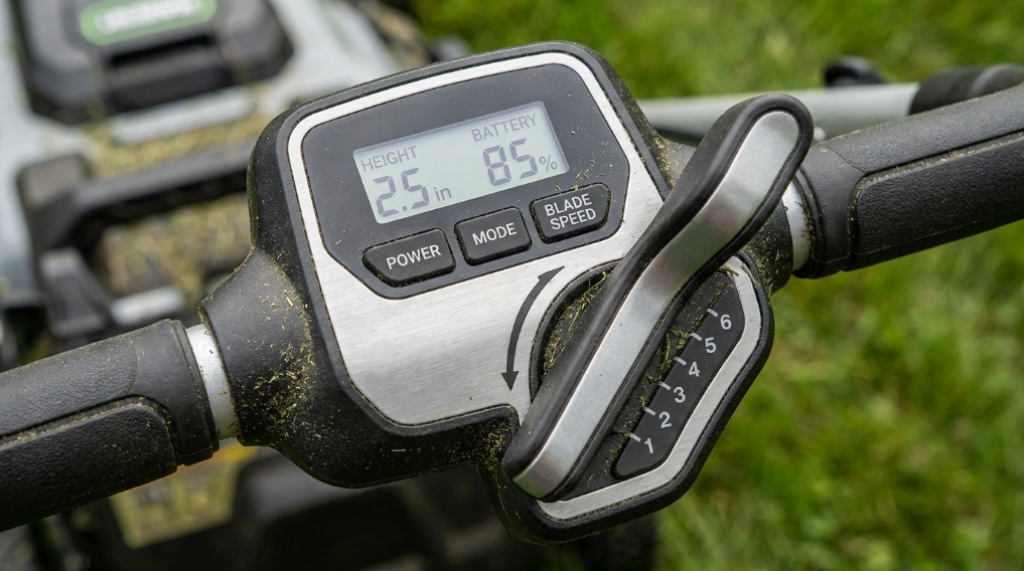
- Simple controls and quick height adjustment — useful when you’re changing cut height seasonally.
- Mulch, bag, and side-discharge modes cover most small-yard situations.
- Compact storage for garages that already hold pool equipment and tools.
Where it struggles:
- Long-neglected grass that’s too tall for one pass.
- Uneven or rocky ground that catches small wheels.
- Larger yards that exceed a single battery charge.
If your yard matches the first list, it’s a sensible choice. If it matches the second, consider a higher-voltage battery mower with bigger wheels, or budget for a lawn service for the heavy cuts.
Practical Setup Checklist for Your First Cut
- Fully charge the battery the night before — heat reduces effective runtime, so start fresh.
- Set cut height high if it’s summer; lower it one notch in winter.
- Install the mulch plug. Keep the bag handy for monsoon-season cuts.
- Walk the yard first and remove rocks, toys, and debris that can damage the blade.
- Mow in early morning or evening to reduce heat stress on grass and on you.
- Clean the underside of the deck after mowing — dry Arizona clippings still cake up over time.
Frequently Asked Questions
Is a battery mower strong enough for Arizona Bermuda grass?
Yes, for regular maintenance cuts. Bermuda is tough, but a mid-range battery mower handles it well if you mow frequently and don’t let it get overgrown. For thick, tall Bermuda, side-discharge mode or a higher-voltage model helps.
How long does a battery last in Arizona heat?
You’ll typically get less runtime in extreme heat than in mild conditions, and storing batteries in a hot garage shortens their lifespan. Charge indoors or in shade, and don’t leave batteries in direct sun.
Can I use an electric mower on gravel or artificial turf?
Don’t mow gravel — it damages blades and throws debris. Artificial turf doesn’t need mowing, though some homeowners use a blower or brush attachment to clean it. Keep an electric mower for real grass only.
Do I need to bag clippings in Arizona?
Usually not. Mulching returns moisture and nutrients and is better for stressed turf. Bag only when grass is long, wet, or full of weeds you don’t want to spread.
How often should I mow a small Arizona lawn?
Weekly during peak growing season, less often in winter dormancy. Follow the one-third rule rather than a fixed schedule, since growth depends on watering, temperature, and grass type.
Conclusion
For most small Arizona yards, a battery-powered 3-in-1 mower is the practical choice — lightweight, low-maintenance, and well-suited to flat, modest lawns. The BLACK+DECKER 3-in-1 fits that profile, provided you mow regularly, mulch clippings, and keep cut height high in summer. Match the mower to your yard’s real conditions, not to the biggest model on the shelf, and adjust your mowing habits for desert heat. Start with the checklist above, and your first season will tell you whether you need more battery capacity or a different deck size.