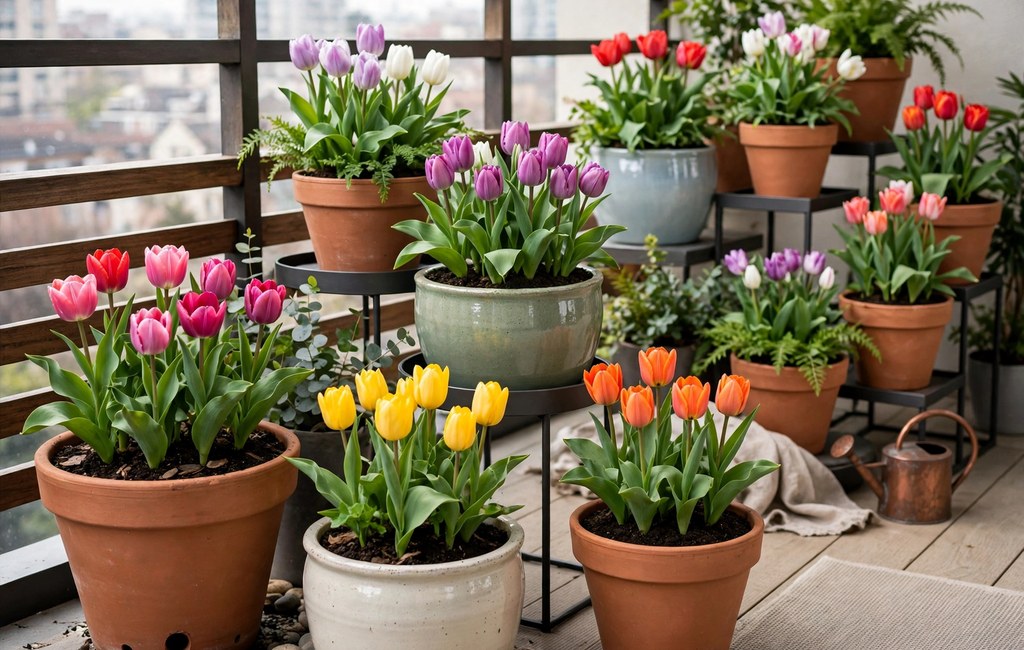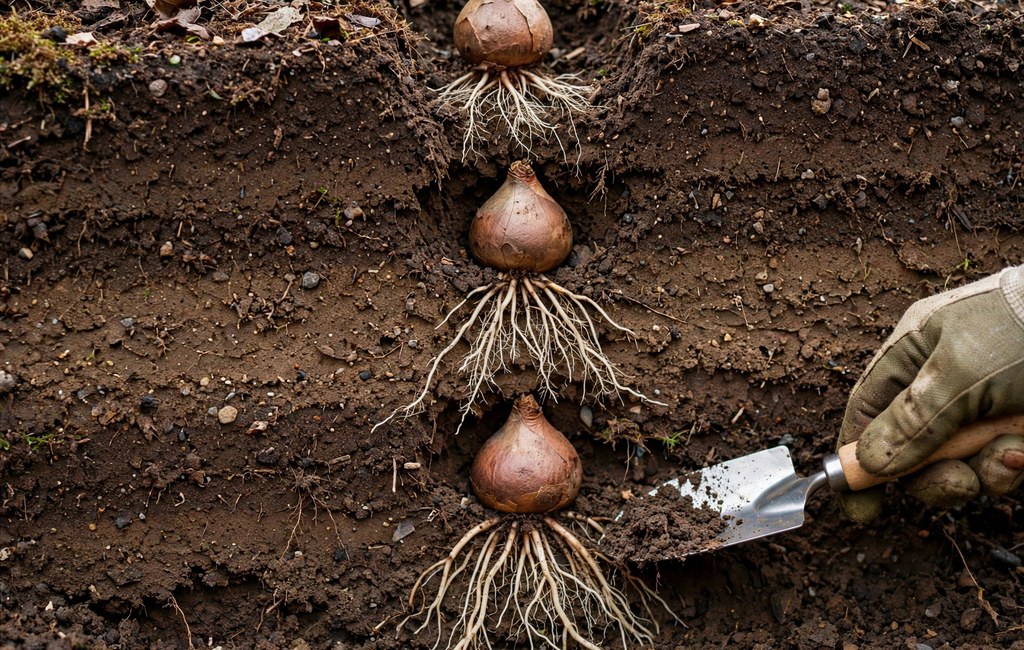
Correct tulip bulb planting depth starts at six to eight inches for standard bulbs. Measure that depth from the flat base of each bulb. In practice, this depth equals about three times the bulb height.
When you set bulbs at this depth, roots anchor firmly below. Stems also stand straighter, and flowers open on stronger, steadier growth. Still, soil type and bulb size can shift the target slightly.
For example, sandy soil often needs a slightly deeper placement. Heavy clay, by contrast, usually rewards a slightly shallower placement. Once you understand those adjustments, you can plant with real confidence.
The Three-Times Rule for Tulip Bulb Planting Depth
If you still need the full planting sequence, follow how to plant tulip bulbs before you dig. This guide then focuses only on depth, spacing, and soil adjustments. As a result, you can check each hole quickly and consistently.
First, hold a typical bulb beside a small ruler. Most standard bulbs measure about two inches from base to tip. Next, multiply that height by three for your digging depth. A ruler confirms tulip bulb planting depth before you backfill any hole.
So a two-inch bulb sits six inches below the surface. Larger bulbs often need seven or eight inches of cover. Smaller species bulbs, meanwhile, often thrive at four or five inches.
- Standard hybrid bulbs: Set the base six to eight inches deep.
- Species tulip bulbs: Set the base four to five inches deep.
- Large Darwin bulbs: Set the base seven to eight inches deep.
In fact, depth also protects bulbs from sudden temperature swings. Soil at six inches stays cooler and steadier than topsoil. Over time, that stability supports stronger roots and healthier bulbs.
How to Measure Tulip Bulb Planting Depth From the Base
Always measure from the basal plate, the flat bottom end. Roots emerge from that plate, so gardeners count depth from there. If you measure from the tip, you will plant too shallow.
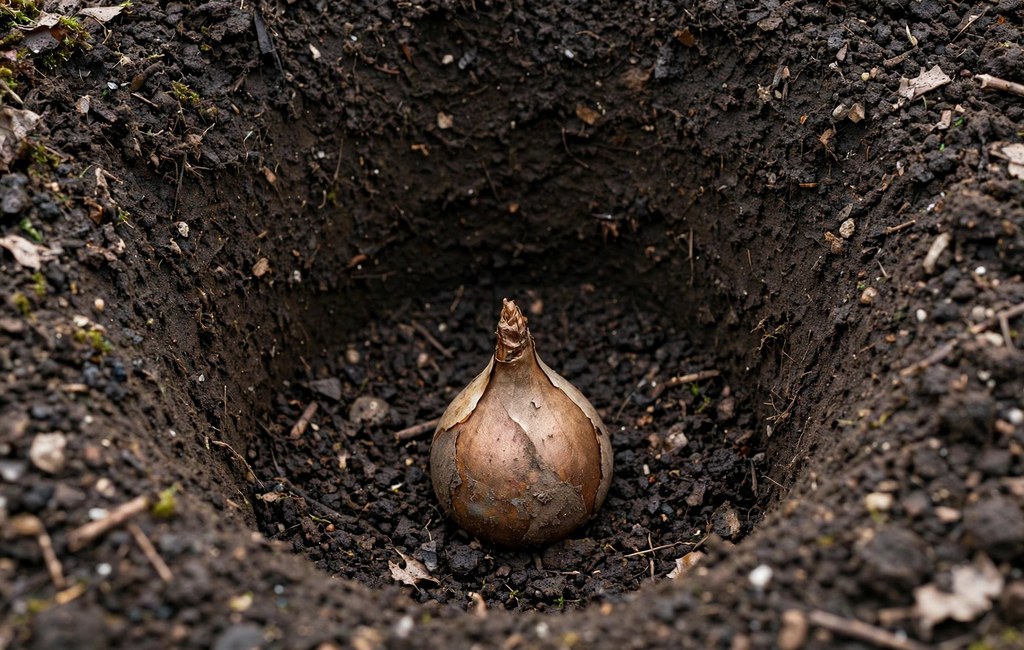
First, dig the hole slightly deeper than your target depth. Then loosen the soil at the bottom for easy root growth. Finally, set the bulb with its pointed end facing upward.
After placing the bulb, check the depth with a ruler. The surface should sit six to eight inches above the base. When the measurement looks right, backfill gently and firm the soil. Sandy soils change tulip bulb planting depth slightly in dry gardens.
A Simple Check Before You Backfill
In practice, a marked trowel handle makes checking much faster. You can also use a bulb planter with depth markings. Still, a plain ruler gives the most reliable reading.
If you plant many bulbs, dig a wide trench instead. A trench lets you set every base at one level. As a result, the whole group emerges evenly in spring.
How Soil Type Changes Tulip Planting Depth
Soil texture changes how water moves around a planted bulb. In fact, drainage matters almost as much as depth itself. So you should adjust depth slightly for your soil type.
- Sandy soil: Plant one to two inches deeper than standard.
- Heavy clay soil: Plant one inch shallower and improve drainage first.
- Loamy soil: Keep the standard six to eight inch depth.
In sandy soil, extra depth holds moisture near the roots. By contrast, clay holds water and raises the rot risk. Over time, poor drainage weakens bulbs more than slight shallowness. Most guides set tulip bulb planting depth near eight inches.
If your clay stays wet, mix grit through the planting area. Compost also opens heavy soil and improves its loose structure. Yet you should never set bulbs into standing water.
Meanwhile, raised beds drain faster than flat garden ground. You can plant at standard depth in most raised beds. Still, check drainage after rain before you commit the bulbs.
What Happens at the Wrong Depth
When Tulip Bulbs Sit Above Planting Depth
Shallow bulbs face frost heave during repeated freezing and thawing. Stems then grow shorter and often flop without firm anchorage. Squirrels also find shallow bulbs easily and dig them up.
When Bulbs Sit Too Deep
Very deep bulbs push shoots through extra soil each spring. As a result, emergence slows and flowering can arrive late. In wet soil, excessive depth also increases the rot risk.
When in doubt, choose the deeper end of the range. Deep bulbs usually return better and resist disturbance from above. By contrast, shallow bulbs rarely improve a display over time. Correct tulip bulb planting depth also protects stems from flopping.
However, tulips forgive small errors better than large ones. A half-inch difference rarely changes the spring display noticeably. Once you stay within the range, consistency matters most.
Tulip Bulb Spacing at the Right Planting Depth
Space standard bulbs four to six inches apart, center to center. This spacing gives foliage room and keeps air moving freely. In practice, crowded bulbs compete and produce smaller flowers.
For a full display, plant bulbs in groups rather than rows. Groups of ten or more create a natural, generous effect. Meanwhile, wider spacing suits bulbs you hope will return.
When you plant in pots, set bulbs closer together instead. Still, leave a small gap between each bulb and neighbor. Then water thoroughly after planting to settle soil around roots.
Frequently Asked Questions
Does mulch count toward tulip planting depth?
No, measure depth in soil only and add mulch above the surface afterward.
Is four inches deep enough for tulip bulbs?
Four inches suits only small species bulbs, while standard bulbs need more cover.
What should I do if I planted bulbs too shallow?
Add soil or mulch above shallow bulbs and replant deeper next fall.
How deep should tulip bulbs go in pots?
In pots, keep six inches of soil above each standard bulb base.
Should I plant tulip bulbs deeper in cold gardens?
In cold gardens, use the eight-inch end for extra winter insulation.
Conclusion
Before you plant, measure one bulb and set your target. Then dig, check each depth, and adjust for your soil. Measure your bulbs today, dig to the right depth, and plant this fall for stronger spring tulips.