You protect tulip bulbs from squirrels best with wire mesh laid over freshly planted beds. Barriers block digging paws while shoots still grow through the openings in spring. Cleanup, deeper planting, and companion bulbs also reduce losses when squirrels feed heavily.
Squirrels often find new plantings within hours by watching digging and smelling disturbed soil. As a result, protection works best when you install it on planting day. In practice, one barrier plus tidy habits saves more bulbs than sprays alone.
First, learn which signs point to squirrels rather than voles or deer. Then, match each protection method to your bed size, pots, and pressure.
Why Squirrels Target Fresh Tulip Beds
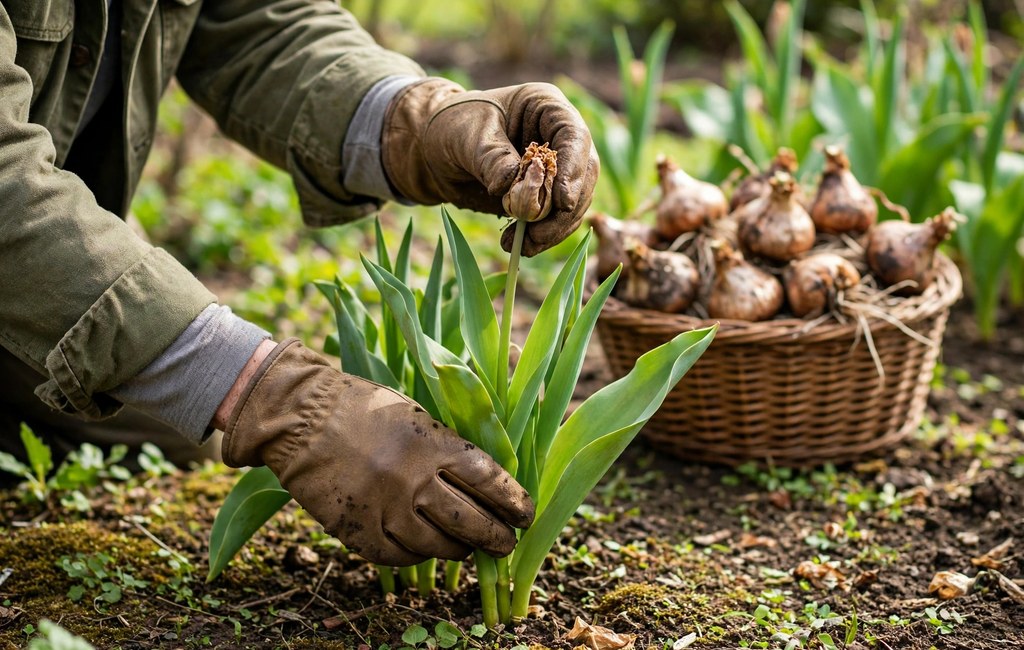
Tulip bulbs store starch and offer squirrels an easy, energy-rich autumn meal. Unlike daffodils, tulips lack bitter compounds that discourage animals from eating them. So squirrels return repeatedly once they find one uncovered planting hole. Understanding how to plant tulip bulbs helps gardeners anticipate this autumn threat.
Correct depth then helps barriers work much better. Shallow bulbs sit within easy reach of digging paws.
Small shallow holes usually signal squirrel digging in a tulip bed. Meanwhile, tunnels under soil point more often to voles than squirrels. A discarded bulb with bites also confirms squirrels visited your planting.
Cover Beds With Wire Mesh After Planting
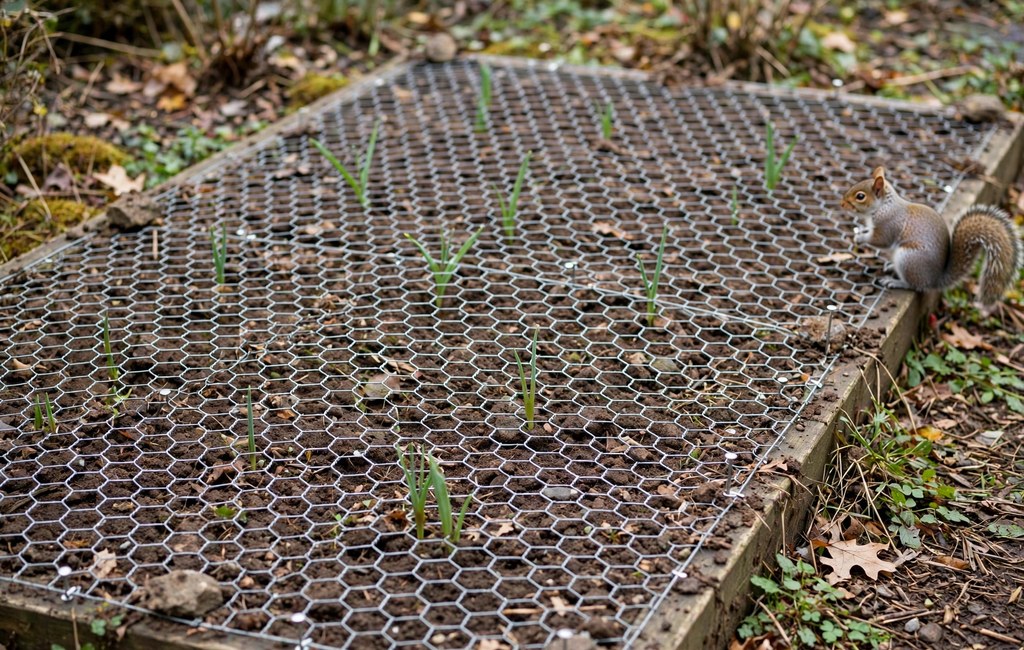
First, lay chicken wire or hardware cloth flat over the planted area. Next, pin every edge firmly with landscape staples, bricks, or heavy stones. Squirrels then cannot slip underneath or lift a loose corner easily.
Afterwards, hide the mesh under a thin layer of mulch or soil. Shoots still push through openings around one inch wide in spring. However, half-inch hardware cloth resists chewing better than wider chicken wire.
For large beds, surface mesh protects many bulbs with little daily effort. You can also leave mesh in place until shoots reach several inches.
Meanwhile, check edges weekly, because frost and rain loosen staples over time. If you spot fresh digging nearby, press mesh flat and restaple immediately.
Plant Valuable Bulbs Inside Wire Cages
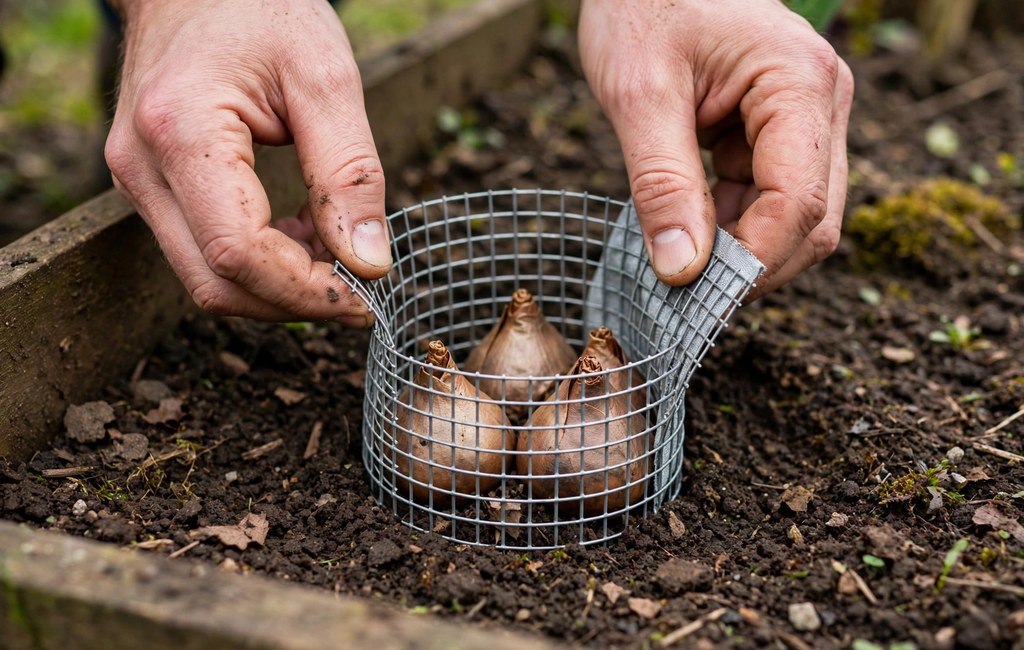
When squirrels persist, bury each group of bulbs inside a hardware-cloth cage. First, fold mesh into a basket with a fitted lid on top. Then, set bulbs inside, close the lid, and bury the cage.
Roots grow through the bottom while stems grow through the top. In practice, cages suit small clusters and prized varieties especially well. By contrast, surface mesh suits broad drifts and long bulb borders better.
Ready-made cages also save time when you plant only few bulbs. Still, label cage locations carefully, so you avoid disturbing them later.
Hide New Plantings With Tidy Planting Habits
Plant standard tulips six to eight inches deep in drained soil. Deeper bulbs challenge squirrels, because most squirrel digging stays fairly shallow. Still, avoid excessive depth, since weak soil drainage can rot bulbs.
Next, clear every papery husk and bulb skin from the soil surface. Squirrels smell loose skins and freshly turned soil very quickly indeed. As a result, firm the soil and water the bed after planting.
- Skip bone meal: Bone meal can attract digging animals to new beds.
- Add sharp grit: Coarse gravel around bulbs makes digging less pleasant for paws.
- Cover disturbed soil: Fresh mulch hides scent and removes obvious digging cues for squirrels.
Interplant Bulbs That Squirrels Usually Avoid
Daffodils contain lycorine and taste bitter, so squirrels usually leave them alone. Alliums, hyacinths, and fritillaries also draw far less interest than tulips. When you mix these bulbs among tulips, you confuse foraging squirrels somewhat.
In fact, a ring of daffodils around tulips adds a useful buffer. Still, companions only reduce risk and never replace a physical barrier. Gardeners often combine companions with mesh when squirrel pressure stays high.
Plant companions at similar depths, so spring flowers open in sequence. Over time, mixed plantings look natural and protect tulips without extra hardware.
Use Repellents Carefully and Expect Mixed Results
Retailers sell granular and spray repellents with strong scents or tastes. Gardeners also try chili flakes, garlic, and blood meal around plantings. However, evidence for these home deterrents remains anecdotal rather than proven.
Rain washes many products away, so gardeners must reapply them frequently. Hungry squirrels may also ignore smells once they learn food lies below. In practice, treat repellents as backup support, never your only defense.
Similarly, fake owls and ultrasonic devices lack reliable proof for bulbs. Over time, squirrels habituate quickly and resume digging in quiet beds.
Protect Tulip Bulbs Growing in Pots
First, cover each pot with wire mesh immediately after you plant bulbs. Next, weigh the mesh down or clip it securely to rims. Squirrels otherwise dig freely in soft potting mix during autumn afternoons.
You can also top pots with coarse grit or slate chippings. Grit makes the surface harder and hides the scent of bulbs. Once shoots emerge strongly, you can remove temporary pot covers safely.
For balconies, move pots against walls and cover them every night. As a result, squirrels find fewer easy entry points around containers.
Frequently Asked Questions About Squirrel Protection
Do squirrels actually eat tulip bulbs?
Yes, squirrels eat tulip bulbs and also carry some away for caching.
What mesh works best over tulip beds?
Half-inch hardware cloth works best, because squirrels cannot dig through it.
How long should I leave wire over bulbs?
Leave wire in place until shoots stand several inches tall in spring.
Does chili powder stop squirrels digging up bulbs?
Chili powder remains unproven, and rain quickly weakens any deterrent effect outdoors.
Will planting daffodils protect my tulips completely?
No, daffodils only reduce interest, so combine them with wire mesh protection.
Conclusion
Start protection on planting day, before squirrels discover your fresh beds. Cover beds with mesh, tidy husks away, and cage prized bulbs underground.
Choose one barrier method today and install it before evening feeding begins. Then, check beds weekly and repair loose edges before squirrels exploit them.