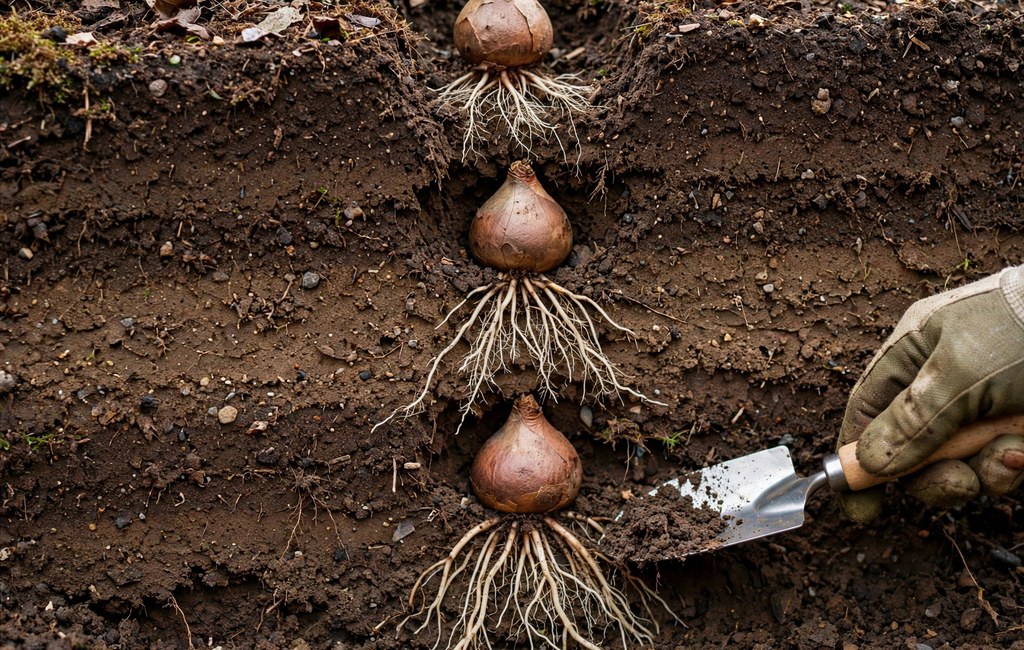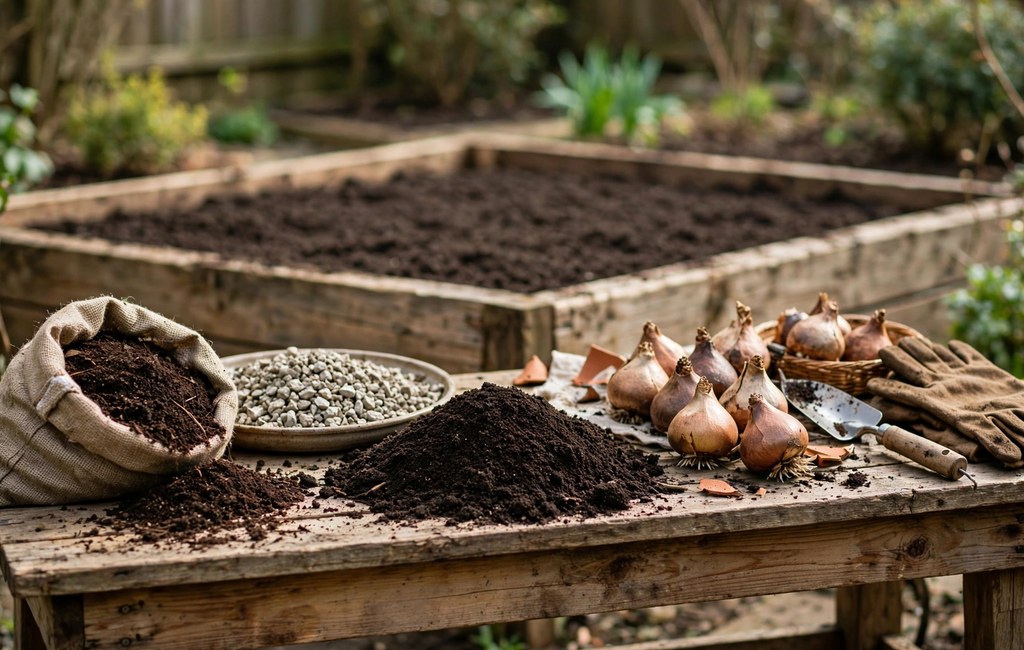
The best soil mix for tulip bulbs combines sandy loam, mature compost, and coarse grit. This blend stays crumbly, drains freely after rain, and still holds enough moisture for roots. Also, a crumbly bed protects the bulb base, where roots emerge and moisture collects first.
When you understand how to plant tulip bulbs, you see why soil preparation matters more than fertilizer. In practice, bulbs rot quickly in wet, compacted ground, yet they thrive in open, airy beds. Also, a simple test before planting reveals whether your bed needs grit, compost, or both.
What Tulip Bulbs Need From the Best Soil Mix
First, tulips need drainage above everything else, because standing water suffocates bulbs and invites fungal rot. However, they also need soil that holds brief moisture, so roots can drink after watering. Finally, the texture should stay loose enough for roots to spread without hitting hard, compacted layers.
In fact, sandy loam blends sand, silt, and clay in a naturally balanced, crumbly texture. By contrast, heavy clay holds too much water, while pure sand drains moisture away too fast. So, aim for that middle ground, even if your native soil needs serious amendment first. Most beds thrive with the best soil mix built from loam and compost.
A Reliable Soil Mix Recipe for Garden Beds
In practice, blend two parts loosened native soil with one part coarse grit. Next, add one part mature compost and mix everything evenly through the full planting zone. Meanwhile, keep fresh manure out, because it can burn roots and encourage soft, floppy growth.
- Native soil: Break up compacted clumps, so roots and water move freely below the bulbs.
- Coarse grit: Choose sharp horticultural grit, because coarse particles create lasting air pockets and drainage channels.
- Mature compost: Use well rotted compost, since finished material feeds soil life without overwhelming young roots.
- Perlite for pots: Also add perlite in containers, where a lighter mix prevents soggy, heavy compost pockets.
Once you mix the bed, rake it level and let it settle before planting day. Still, avoid piling extra compost directly inside each planting hole at planting time. In fact, concentrated pockets can hold moisture against bulbs and attract hungry digging animals.
How to Test Drainage and pH Before Planting
Run a Simple Drainage Test
First, dig a hole twelve inches deep and fill it completely with water. Then, refill it after draining and time how quickly the second filling disappears. If water still sits after four hours, your bed needs more grit or height.
However, water that vanishes almost instantly signals sand that needs more compost for retention. So, repeat the test after amending, because guessing often leaves the worst pockets untouched. Gardeners test drainage before trusting the best soil mix fully.
Check pH and Adjust It Slowly
Tulips grow best when soil pH stays between 6.0 and 7.0, slightly acidic to neutral. Use a basic soil test kit first, since amendments work poorly without a starting reading. Next, add garden lime to raise low pH, following the test kit directions carefully.
By contrast, elemental sulfur lowers high pH gradually, so apply it sparingly and retest later. Still, most garden soils sit near the target range and need no correction at all.
How to Fix Heavy Clay With a Better Soil Mix
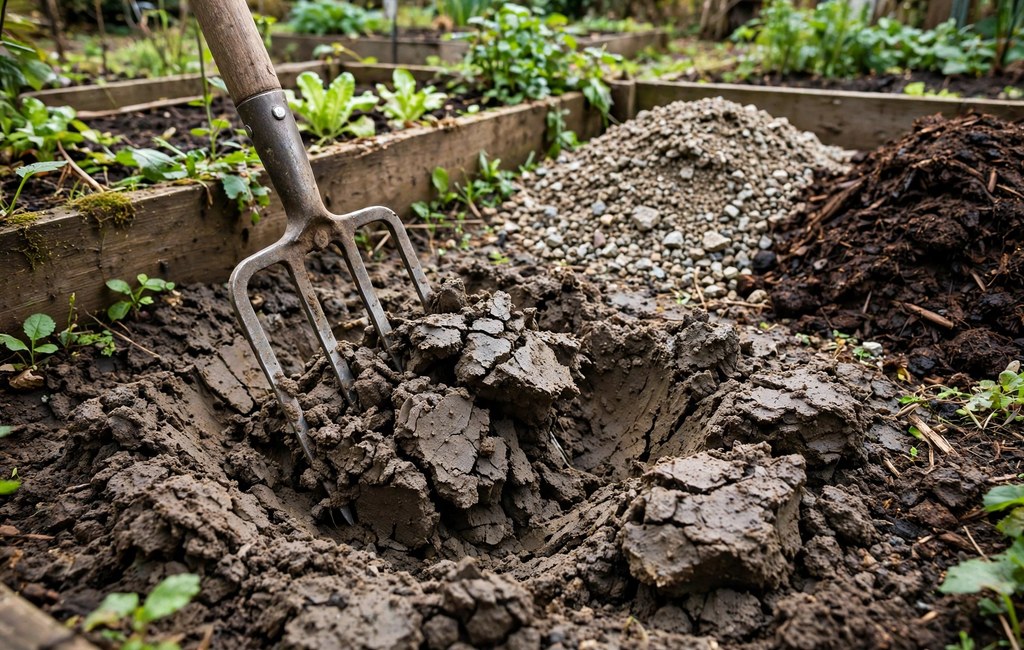
Clay feels sticky when wet and forms hard clods when the surface dries out. In practice, tiny clay particles pack tightly, trapping water around bulbs through cold, wet weather. As a result, rot often starts in clay beds long before spring growth appears.
First, fork the clay deeply and mix grit through the whole bed thoroughly. Next, work in mature compost, because organic matter separates clay particles and improves crumbly structure. Yet avoid fine builders sand, since small grains can bind clay into a denser mass. Clay beds need coarse grit inside the best soil mix.
If drainage still fails after amending, build a raised bed above the clay instead. Meanwhile, gypsum can help some clay soils flocculate, although it never replaces physical drainage.
How to Improve a Sandy Soil Mix Without Ruining Drainage
Sandy soil drains beautifully, yet it often dries quickly and holds very few nutrients. So, mix in leaf mold or mature compost to slow water loss between rains. Also, loosen the full bed first, so amendments blend evenly rather than forming layers.
Over time, repeated compost additions build the spongy structure that sandy beds usually lack. However, stop before the mix feels rich and heavy, because tulips dislike overly fertile ground. In fact, excess nitrogen pushes leafy growth while flowers become smaller and weaker.
Preparing the Best Soil Mix Step by Step
First, clear weeds, stones, and old roots from the bed before you start digging. Next, loosen the soil deeply with a fork and break every large clump apart. Then, spread your grit and compost evenly across the surface before mixing them in. The best soil mix stays crumbly, never soggy, around resting bulbs.
Once amendments disappear into the soil, rake the bed smooth and check its level. If low spots remain, fill them now, because puddles later collect directly above bulbs. Finally, plant promptly in fall after the soil cools, setting each bulb pointed end up.
Mistakes That Cause Bulb Rot
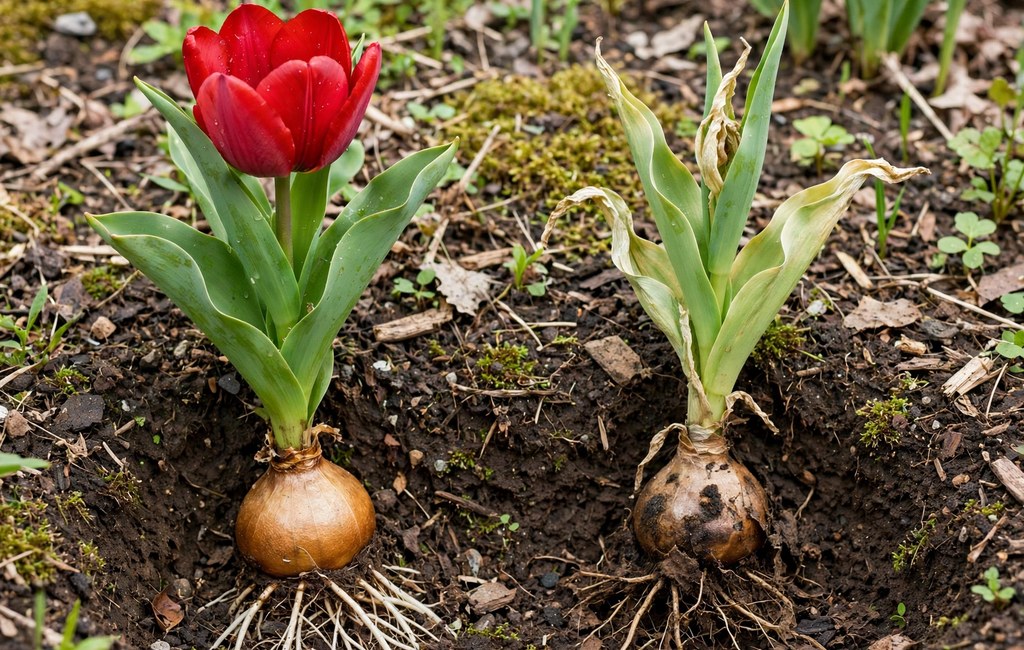
In practice, the commonest mistake involves planting into a low spot that collects winter rain. However, even good mix fails there, because water has nowhere to escape during storms. So, move tulips to higher ground whenever puddles linger after a normal rainfall event.
Another mistake involves watering beds heavily after planting, when bulbs need only settled, damp soil. Still, soggy soil during dormancy does the damage, long before leaves signal any problem. Yet gardeners often blame cold first, while hidden rot quietly destroys the bulb interior.
Frequently Asked Questions About Tulip Soil
What is the best soil texture for tulip bulbs?
Tulips prefer sandy loam, because it drains freely yet holds enough moisture for roots.
Can tulips grow well in heavy clay soil?
Yes, tulips can grow in clay once you add grit, compost, and better drainage.
What pH level do tulips prefer in soil?
Tulips prefer slightly acidic to neutral soil, so test first and adjust only when needed.
Should I add fresh manure to a tulip bed?
No, fresh manure can burn roots, so use mature compost instead for safer feeding.
How do I know if my soil drains well enough?
First, dig a test hole, fill it with water, and watch how quickly it empties.
Conclusion
Overall, good tulip soil feels crumbly, drains promptly, and never stays soggy around dormant bulbs. So, test your bed, fix its texture, and mix amendments through the whole bed. Start preparing your tulip bed this week, and give every bulb its best spring start.