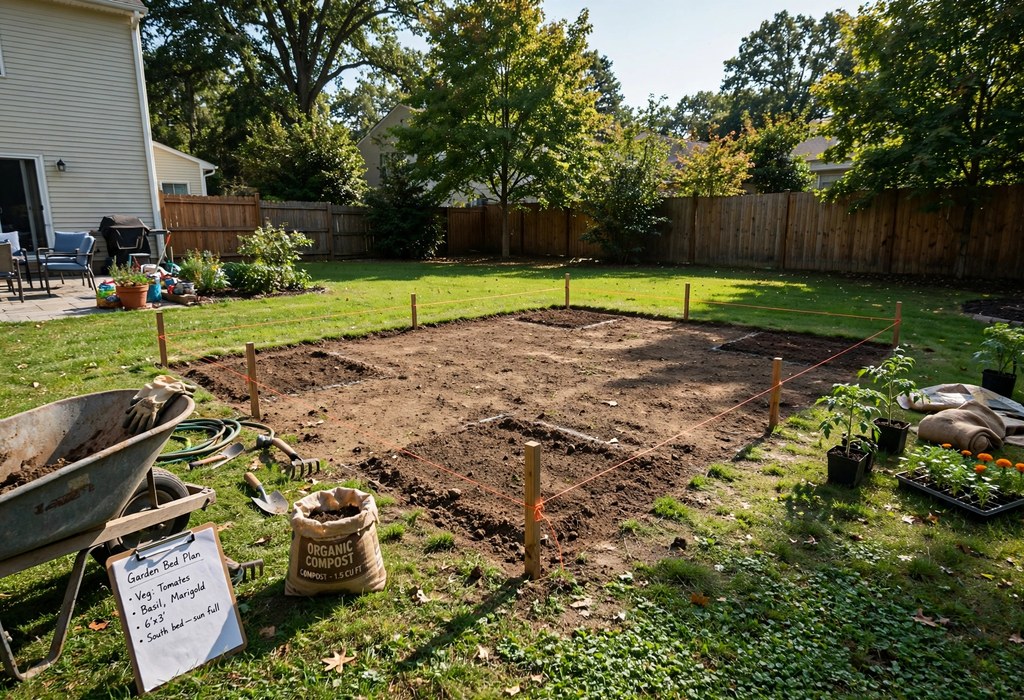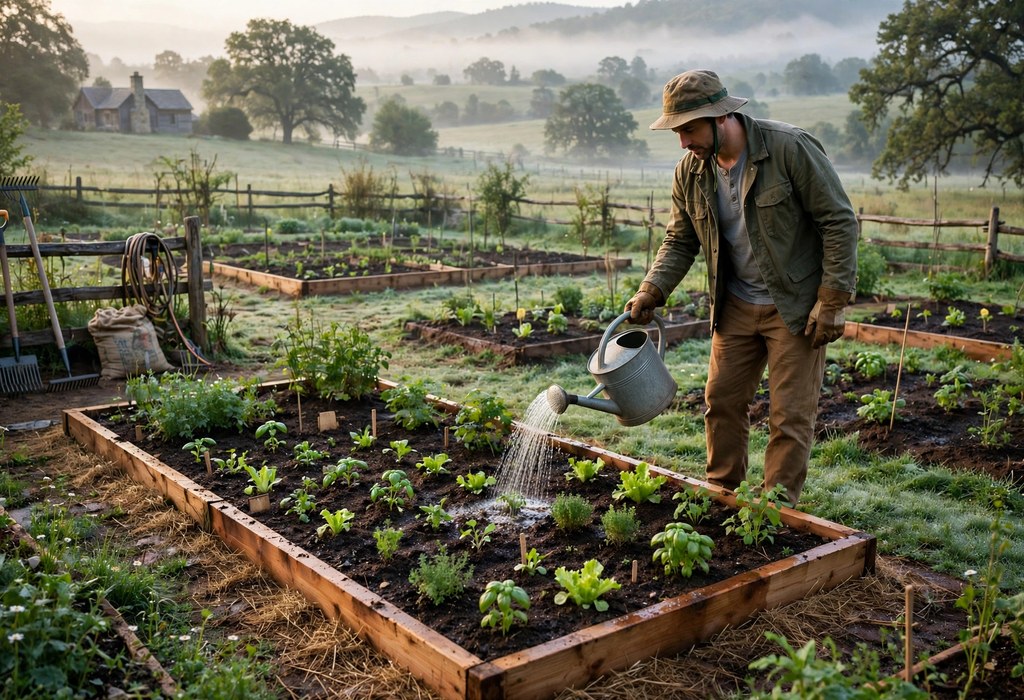
Watering new garden bed seedlings daily during the first week builds strong roots. Then shift toward deep watering every two to three days. Seeds need steady surface moisture, while transplants need deeper root soaking.
Watering well is one of the first skills in how to start a garden bed. First, check the soil each morning before you decide anything. A new bed dries faster than an established bed. Therefore, short daily checks protect young roots from sudden stress. Additionally, weather, soil type, and mulch change the ideal rhythm.
This guide explains a simple first week routine for beginners. Next, you will learn moisture checks, deep watering, and mulch basics. Finally, you will spot common mistakes before they harm young plants.
First Week Watering New Garden Bed Routine
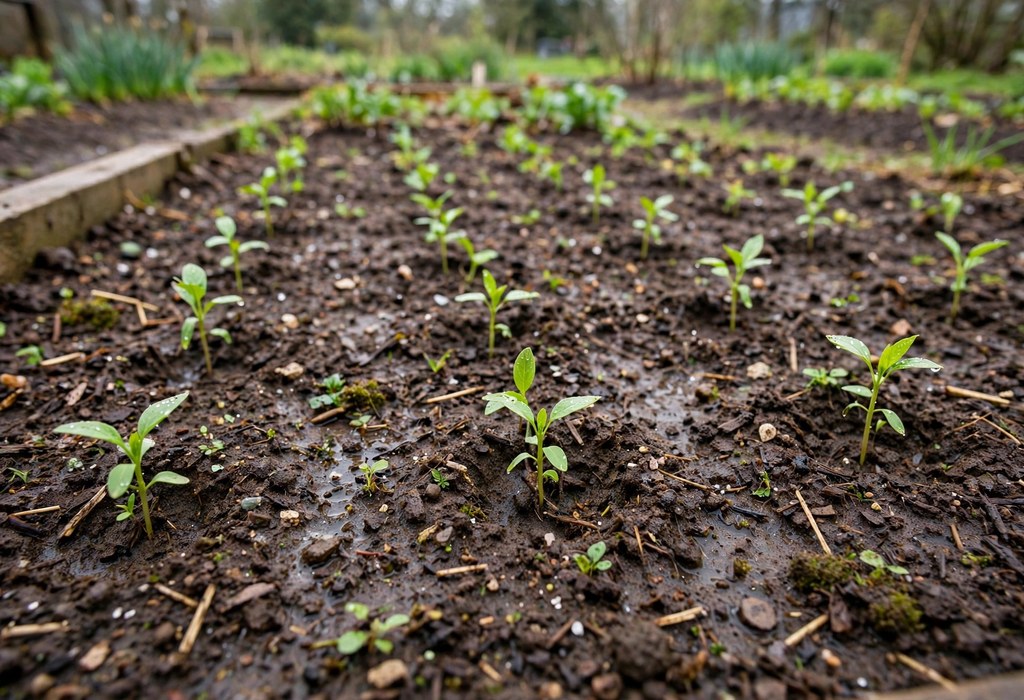
Water the bed thoroughly on planting day. Soak the soil until moisture reaches several inches below the surface. Then water lightly each morning during the first few days. This steady start helps roots settle into loose, fresh soil. Adjust watering new garden bed schedules as plants grow stronger.
Check the bed again each afternoon during hot or windy weather. Add a second light watering only when the surface feels dry. Avoid flooding the bed, since standing water suffocates young roots. Meanwhile, watch seedlings for drooping leaves each evening.
Seeds Versus Transplants
Watering New Seeds
Seeds need constant surface moisture until germination finishes. Water gently once or twice daily during warm, dry weather. Use a fine spray so strong streams cannot wash seeds away. However, stop watering when puddles form on the surface.
Keep the top inch damp, not soggy, through sprouting. Then reduce watering gradually after seedlings show true leaves. This gradual shift encourages roots to grow downward for moisture.
Cover newly sown rows with a thin layer of fine soil. Thin cover retains moisture without blocking emerging sprouts. Then mist the surface gently after covering each row.
Watering New Transplants
Transplants need a deep soak at planting time. Water around each root ball until the surrounding soil feels damp. Then water daily for the first week in mild weather. Additionally, water twice daily during heat waves or strong wind.
Watch transplants closely for wilting during the first days. Wilting in morning heat signals an urgent need for water. However, afternoon wilting sometimes reflects heat stress alone. Therefore, always check soil moisture before adding more water.
How to Check Soil Moisture
Push one finger two inches into the soil near plants. Water only when soil feels dry at that depth. Skip watering when soil still feels cool and damp. This simple finger test prevents most watering guesswork.
First, test several spots across the bed each time. Sunny edges dry faster than shaded, sheltered corners. Next, dig a small hole after watering to confirm depth. Moisture should reach well below the shallow surface layer.
Additionally, a moisture meter offers a helpful second opinion. Push the probe near roots, not just into loose topsoil. Compare meter readings with finger tests during the first week. Soon you will recognize your bed’s normal damp feel.
Deep Versus Shallow Watering New Garden Bed Methods
Deep watering sends moisture down toward developing roots. Shallow sprinkling wets only the surface and encourages weak roots. Gardeners who follow how to start a garden bed guidance also plan watering depth early. Therefore, water slowly until moisture reaches six to eight inches.
Slow watering gives soil time to absorb each drop. Fast streams often run off dry, crusty soil surfaces. Use a soaker hose or gentle watering can for control. Then pause briefly and check depth before watering again.
Measure depth with a trowel after your first deep watering. Wet soil should feel damp well below the surface layer. Then adjust watering time until moisture reaches target depth.
How Mulch Helps a New Bed
Mulch slows evaporation and keeps soil moisture steadier. Spread two to three inches of organic mulch around plants. Keep mulch away from stems to prevent rot problems. Additionally, mulch suppresses weeds that compete for water.
Soak the soil thoroughly before spreading fresh mulch. Dry soil under mulch gains little benefit from covering. Next, check moisture beneath mulch every few days. Mulch can hide dry soil, so never skip these checks.
Refresh mulch layers when thin spots appear during the season. Thin mulch loses moisture protection quickly in summer heat. Additionally, pull mulch back slightly from young stems.
Adjusting for Heat, Rain, and Soil Type
Heat and wind dry new beds much faster than calm weather. Water earlier in the morning during hot spells. Morning watering reduces evaporation and lets leaves dry. Additionally, check soil twice daily during extreme heat.
Skip watering after steady rain soaks the bed. Then check soil moisture the next morning before resuming. Light showers often wet only the surface layer. Therefore, never assume a brief shower replaced deep watering.
Sandy soil drains quickly and needs more frequent watering. Clay soil holds moisture longer between waterings. Loamy soil offers a balanced middle ground for beginners. Meanwhile, raised beds dry faster than ground level beds.
Cool, cloudy days slow evaporation from new beds. Water less often during cool spells and check soil first. Similarly, sheltered beds retain moisture longer than exposed beds.
Common Watering New Garden Bed Mistakes
Many new gardeners water on a fixed calendar schedule. Fixed schedules ignore rain, soil type, and plant growth. Therefore, always let soil moisture guide your watering decisions.
- Daily sprinkling: Shallow water encourages weak surface roots.
- Evening soaking: Wet leaves overnight increase disease risk.
- Ignoring drainage: Soggy soil suffocates roots and invites rot.
- Watering leaves: Wet foliage wastes water and spreads disease.
First, fix one mistake at a time for clearer results. Then track soil moisture daily until a routine feels natural. Soon consistent habits will support stronger root growth.
Frequently Asked Questions
How often should I water a new garden bed?
Water daily during the first week, then water deeply every two to three days.
Should I water seeds or transplants more often?
Seeds need more frequent watering, since shallow seeds dry out faster than transplants.
How do I know when my new bed needs water?
Push a finger two inches deep and water only when soil feels dry.
Can I water a new garden bed in the evening?
Water in the morning instead, since morning watering reduces evaporation and disease risk.
Does mulch reduce how often I water?
Yes, mulch slows evaporation and helps soil retain moisture longer between waterings.
Conclusion
Consistent moisture gives a new bed its best start. Check soil daily, water deeply, and adjust for weather changes. Finally, start your watering routine today and watch young plants establish strong roots.
Keep a simple watering log during the first month. Notes help you spot patterns in weather and soil drying. Finally, adjust your routine as plants grow stronger each week.