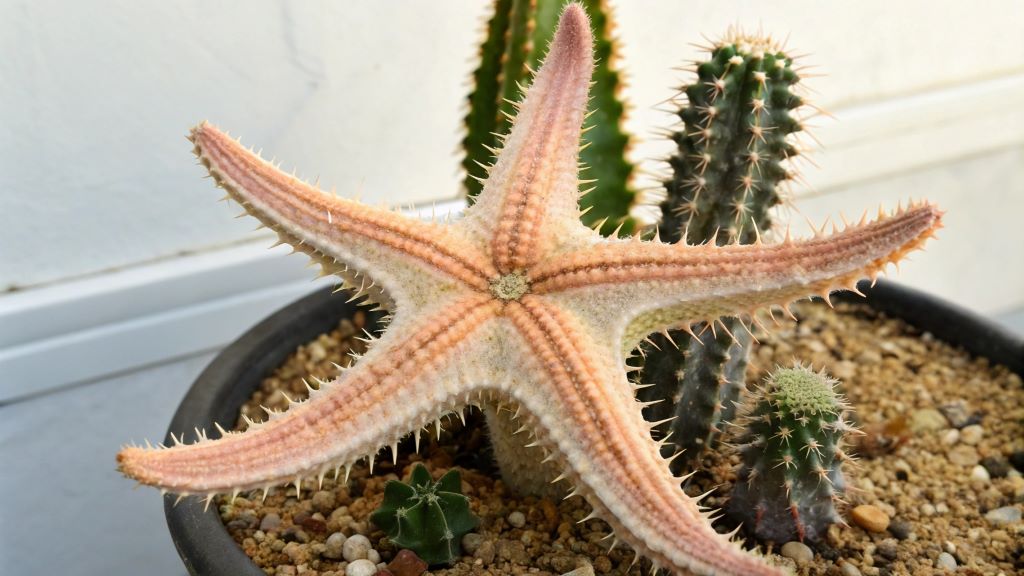
In the vast and wondrous world of succulents, where unique forms and fascinating adaptations abound, one plant consistently captures attention with its otherworldly appearance and intriguing characteristics: the Starfish Cactus. Despite its common name, Stapelia grandiflora (and its close relatives like Stapelia gigantea and Orbea variegata) isn’t a true cactus at all, but rather a succulent belonging to the Apocynaceae family, commonly known as the milkweed family. This delightful deception, coupled with its remarkable star-shaped flowers, makes it a truly captivating specimen for both seasoned plant enthusiasts and curious beginners.
Often referred to as the “Carrion Flower” due to the distinctive (and sometimes surprisingly strong) scent of its blooms, the Starfish Cactus is a master of mimicry, evolving to attract specific pollinators – typically flies – that are drawn to the scent of decaying matter. While this aroma might be a minor drawback for some, the sheer beauty and unusual nature of its flowers more than compensate, offering a truly unique horticultural experience.
What Makes the Starfish Cactus So Special?
The allure of the Starfish Cactus lies in several key features:
- Striking Star-Shaped Flowers: The most prominent feature, of course, is its namesake flowers. These five-lobed blooms emerge in shades of yellow, cream, brown, or maroon, often adorned with intricate patterns, hairs, and textures that mimic rotting flesh. Sizes can vary significantly depending on the species, with some Stapelia gigantea producing flowers up to 18 inches in diameter – a truly breathtaking sight!
- Unique Scent (and Its Purpose): As mentioned, the carrion scent is a fascinating evolutionary adaptation. While not always pleasant for humans, it’s a powerful attractant for its primary pollinators, ensuring successful reproduction in its native habitats.
- Fleshy, Four-Angled Stems: The stems themselves are also interesting, typically green to reddish-brown, segmented, and four-angled with soft teeth along the edges. These stems can sprawl or grow upright, forming attractive clumps over time.
- Easy to Grow: Despite its exotic appearance, the Starfish Cactus is remarkably forgiving and relatively easy to care for, making it an excellent choice for those new to succulents.
- Drought Tolerant: Like most succulents, it’s highly adapted to arid conditions, requiring minimal watering once established.
A Deeper Dive into Species and Varieties
While Stapelia grandiflora is commonly known as the Starfish Cactus, it’s worth exploring some of its close relatives that share similar characteristics and are often grouped under this umbrella term:
- Stapelia gigantea: As its name suggests, this species boasts some of the largest flowers in the genus, often reaching impressive diameters. Its blooms are typically pale yellow with reddish-brown cross-markings and fine hairs.
- Orbea variegata (formerly Stapelia variegata): This popular species features smaller, more intricately patterned flowers with a cream or yellowish base heavily marked with irregular purple-brown blotches. It’s often one of the first stapeliads that beginners encounter.
- Huernia species: While generally having smaller, more bell-shaped flowers, many Huernia species also exhibit the characteristic star-like form and are often grouped with stapeliads. They can offer a wonderful diversity of patterns and colors.
- Hoodia gordonii: While not typically called a “Starfish Cactus,” this well-known succulent from the same family also produces star-shaped flowers, though its primary claim to fame is its appetite-suppressing properties.
Understanding these distinctions can help you choose the perfect Starfish Cactus for your collection, adding variety and intrigue.
Cultivating Your Own Starfish Cactus: A Comprehensive Care Guide
Growing a Starfish Cactus is a rewarding experience. Here’s a detailed guide to ensure your plant thrives:
-
Light Requirements: Sunshine is Key!
Starfish Cacti flourish in bright light. Aim for at least 6 hours of direct sunlight per day. In hotter climates, some afternoon shade can be beneficial to prevent scorching, especially during the peak of summer. If growing indoors, a south-facing window is ideal. Grow lights can supplement natural light, especially during shorter winter days. Insufficient light can lead to leggy growth and inhibit flowering.
-
Watering: Less is More
As succulents, Starfish Cacti are highly susceptible to overwatering, which can quickly lead to root rot.
- The “Soak and Dry” Method: Water thoroughly when the soil is completely dry to the touch, and then allow the pot to drain completely.
- Seasonal Adjustments: During their active growing season (spring and summer), they will require more frequent watering. In their dormant period (fall and winter), significantly reduce watering, perhaps once a month or even less, ensuring the soil remains dry.
- Never let the plant sit in standing water. Good drainage is paramount.
-
Soil: Well-Draining is Non-Negotiable
A well-draining potting mix is crucial for the health of your Starfish Cactus. A standard succulent or cactus mix is an excellent starting point. You can enhance drainage further by adding:
- Perlite
- Pumice
- Coarse sand
- Small gravel
The goal is a gritty, airy mix that allows water to pass through quickly, preventing soggy roots.
-
Temperature and Humidity: Warm and Dry Preferred
Starfish Cacti prefer warm temperatures, ideally between 65°F and 85°F (18°C – 29°C). They can tolerate slightly cooler temperatures but should be protected from frost, as they are not cold-hardy. If temperatures consistently drop below 50°F (10°C), bring them indoors.
Humidity is generally not a concern, as they thrive in dry air.
-
Fertilizing: Light Feeds
Starfish Cacti are not heavy feeders. A light application of a balanced, diluted liquid fertilizer (half-strength) once or twice during their active growing season (spring and summer) is sufficient. Avoid fertilizing during their dormant period.
-
Potting and Repotting: Room to Grow (but not too much)
Choose a pot with drainage holes – terracotta pots are often preferred as they promote airflow and help evaporate excess moisture. Repotting is generally only necessary every 2-3 years, or when the plant outgrows its current container. When repotting, refresh the soil and choose a pot only slightly larger than the previous one. Over-potting can lead to the soil staying wet for too long.
-
Pruning: Shaping and Encouraging Growth
Pruning is usually not essential for the health of the plant but can be done for aesthetic reasons or to encourage bushier growth. You can trim back leggy or unwanted stems. Always use clean, sharp tools to prevent disease.
-
Pest and Disease Management: Watchful Eye
Starfish Cacti are generally robust but can occasionally encounter issues:
- Mealybugs and Scale Insects: These are the most common pests. Inspect your plant regularly, especially in crevices. Treat with insecticidal soap or rubbing alcohol on a cotton swab for small infestations.
- Root Rot: The most prevalent disease, almost always caused by overwatering. Prevent it by ensuring excellent drainage and proper watering practices.
- Fungal Spots: Can occur in overly humid conditions or with poor air circulation. Ensure good airflow around your plant.
Propagation: Sharing the Starfish Love

Propagating Starfish Cactus is relatively straightforward, allowing you to easily expand your collection or share with friends.
-
Stem Cuttings: The Easiest Method
- Preparation: Using a clean, sharp knife or shears, cut a healthy stem section that is at least 3-4 inches long.
- Callusing: Allow the cutting to “callus” (dry and form a protective seal) for a few days to a week in a dry, shaded area. This prevents rot.
- Planting: Once callused, insert the cut end into a well-draining succulent potting mix.
- Watering: Do not water immediately. Wait a week or two, then lightly mist the soil every few days until roots develop (usually within a few weeks). Roots will typically form from the base of the cutting.
-
Seeds: A Longer but Rewarding Process
Growing from seed is possible but takes longer and requires more specific conditions, including consistent warmth and humidity. Seeds are available from specialized succulent nurseries.
Appreciating the Carrion Flower’s Charm (and Smell)
While the scent of the Starfish Cactus flower can be off-putting to some, it’s important to appreciate its role in the plant’s survival. The intensity of the smell varies between species and even individual plants, and it’s often more noticeable on warm, still days. Many growers simply move their flowering plants outdoors during bloom time or place them in a well-ventilated area. The unique beauty of the flower often outweighs the temporary olfactory inconvenience!
Starfish Cactus in Your Home and Garden
The Starfish Cactus makes an excellent addition to:
- Succulent Collections: A must-have for any succulent enthusiast seeking something truly unique.
- Container Gardens: Its spreading habit makes it ideal for wider, shallow pots, especially when allowed to trail.
- Xeriscaping: In appropriate climates, it can be a striking addition to water-wise garden designs.
- Indoor Display: A fascinating conversation starter when placed in a sunny window.
Common Questions About Starfish Cactus
- Why isn’t my Starfish Cactus flowering? Lack of sufficient light is the most common reason. Ensure it receives at least 6 hours of bright, direct sunlight. Other factors include insufficient warmth, overwatering, or lack of proper dormancy.
- Is Starfish Cactus toxic? While not considered highly toxic, it’s always best to keep plants out of reach of pets and small children who might be tempted to chew on them. The sap can cause mild irritation in some individuals.
- How often do Starfish Cacti bloom? With proper care, they can bloom multiple times during their active growing season (spring through fall), especially as they mature.
- What if the smell is too much? Place the plant outdoors while it’s flowering, or in a very well-ventilated room. The scent typically dissipates quickly after the flower fades.
Embrace the Unconventional Beauty
The Starfish Cactus is more than just a pretty face; it’s a testament to the incredible diversity and adaptive power of the plant kingdom. Its unusual flowers, intriguing scent, and surprisingly easy care make it a truly rewarding plant to cultivate. By providing the right conditions – plenty of sun, well-draining soil, and judicious watering – you can enjoy the captivating charm of this unique succulent for years to come. So, embrace the unconventional, and let the Starfish Cactus add a touch of the extraordinary to your botanical collection.
Read More: