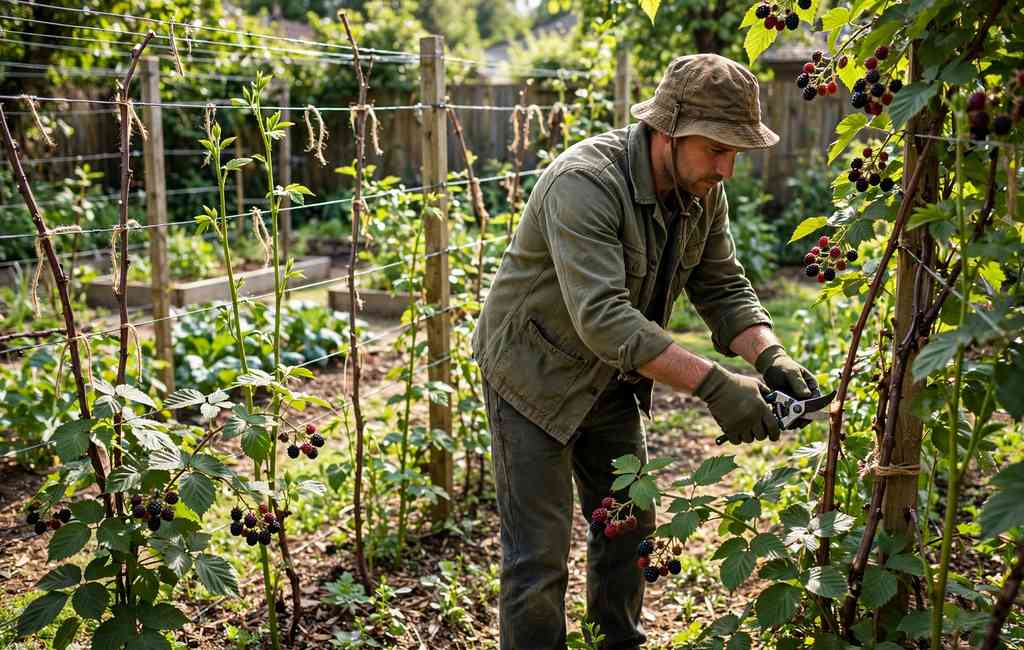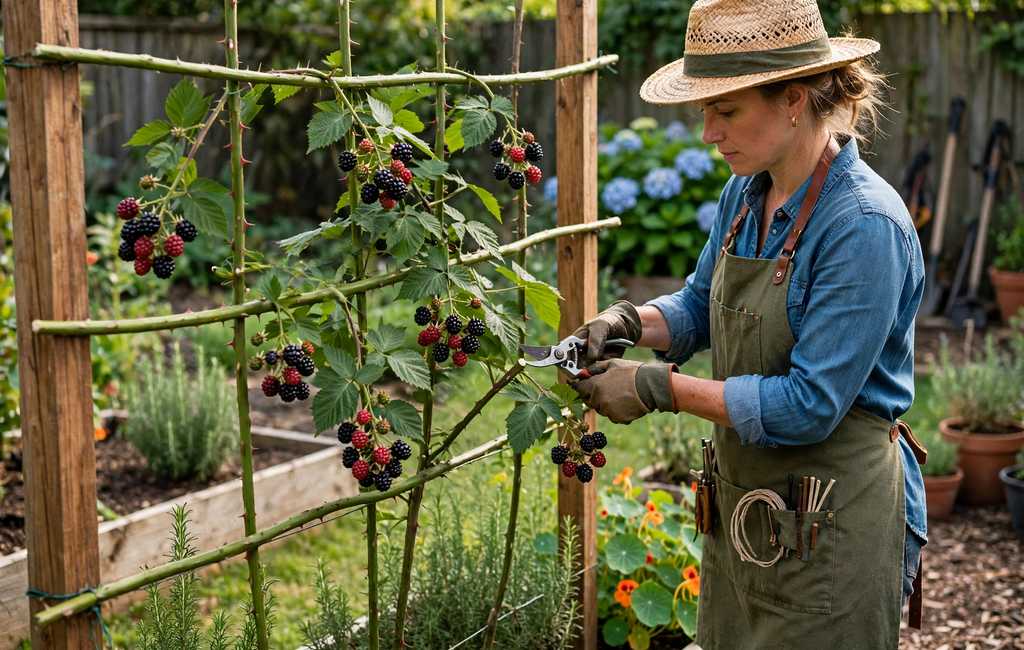
Thornless blackberry pruning follows the same seasonal rhythm as thorny varieties. First, you tip new canes in summer and shorten laterals in late winter. Then, you train those long canes onto wires for orderly growth.
However, smooth stems only make handling easier, not timing different. Understanding when to prune blackberries helps you time each cut without harming productive wood. For example, Triple Crown, Chester, and Natchez all follow this same floricane pattern.
Meanwhile, untipped canes often reach eight to twelve feet during one season. Consequently, planning cuts and training together keeps every productive cane accessible.
Thornless Blackberry Pruning Starts With Cane Types
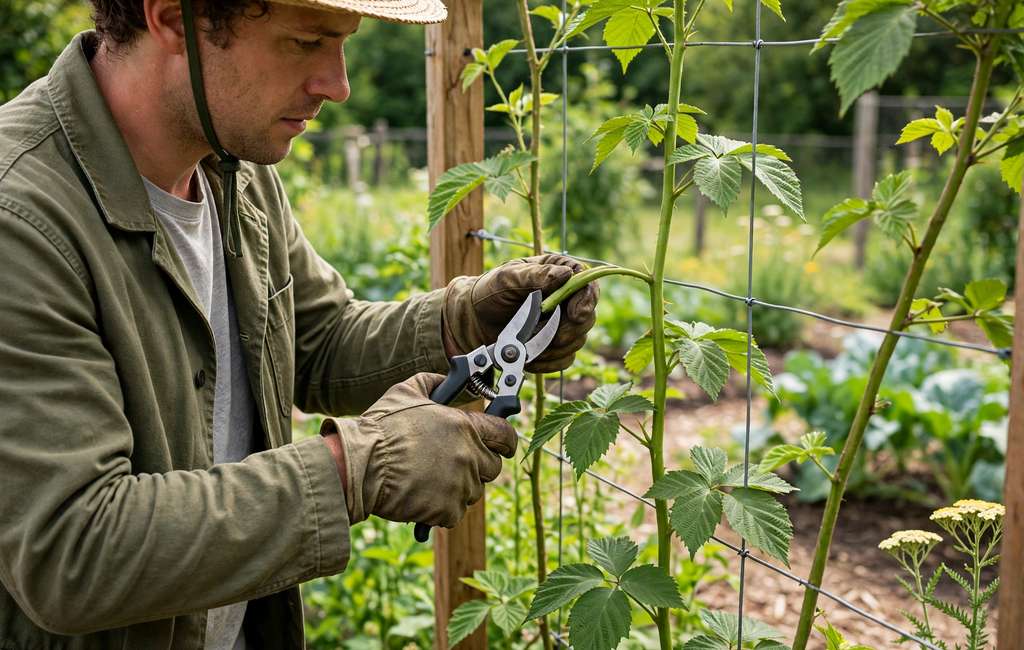
First, primocanes emerge green and flexible during spring and summer growth. Next, those same canes overwinter and become fruiting floricanes next season. Afterward, floricanes fruit once, decline quickly, and never fruit again.
In contrast, dead canes look dry, brittle, and dull brown overall. Still, living floricanes carry plump buds along sturdy brown stems. So, checking bud health helps you separate keepers from spent wood.
Recognize Semi-Erect and Trailing Growth
Importantly, many thornless varieties grow semi-erect and produce thick, arching canes. Meanwhile, trailing types send out thinner canes along the ground naturally. For example, vigorous plants quickly outgrow weak stakes and crowded corners.
Without support, long canes touch soil and root at tips. Likewise, tangled canes shade fruit and slow drying after rain. Ultimately, habit tells you how much trellis each plant needs. Thornless blackberry pruning starts with knowing both cane types well.
Gather Tools Before You Start
First, you choose bypass pruners for laterals and young tip growth. Next, you choose loppers for thick floricanes near the crown base. Also, you bring soft ties, gloves, and a tarp along.
Even without thorns, rough bark and hidden debris scratch bare hands. So, you wear gloves and sleeves during long training sessions anyway. Before starting, you disinfect blades after cutting any diseased cane sections.
Tip Primocanes During Thornless Blackberry Pruning
During summer, you build the next fruiting framework through careful tipping. Specifically, you remove small tip sections and prompt sturdy lateral branching.
Time Each Tip Cut Carefully
First, you wait until primocanes pass three to four feet tall. Then, you allow a few extra inches before cutting the tip. Repeatedly, you revisit fast plants because canes reach height at different times.
- Cut position: Cut just above a healthy outward facing bud.
- Cut amount: Remove only the soft tip and a short section below.
- Tool choice: Use clean bypass pruners for these slender summer tips.
- Timing check: Tip each cane individually as it reaches target height.
After tipping, laterals push out along the main cane below cuts. Over time, those laterals become the wood that carries most fruit. Summer tipping shapes thornless blackberry pruning more than any cut.
Remove Floricanes in Thornless Blackberry Pruning
Immediately after harvest, you remove every floricane that just fruited. First, you cut each spent cane at its base near soil. Then, you pull the smooth cane free without tearing neighboring primocanes.
Because thornless stems slide out easily, you finish cleanup faster here. Still, you inspect bases carefully and remove broken stubs completely. Finally, you haul prunings away and keep the crown area open.
Thin the Remaining Canes Selectively
After cleanup, you count primocanes and keep only the strongest stems. Commonly, guides suggest four to six strong canes per plant. Alternatively, row growers sometimes keep four to six per foot. In practice, you adjust numbers for vigor, spacing, and trellis capacity.
First, you remove thin, damaged, and badly crossing canes at ground level. Then, you space keepers evenly so light reaches every lateral. Otherwise, crowded crowns produce weak laterals and smaller, shaded fruit clusters. Thornless blackberry pruning removes spent floricanes right after harvest.
Thornless Blackberry Pruning Shortens Winter Laterals
In late winter, you revisit dormant canes before buds swell noticeably. Then, you shorten most laterals to about twelve to eighteen inches. Also, you remove laterals growing very low near the soil line.
First, you keep strong, well placed laterals along the upper cane. Next, you trim weak laterals back harder or remove them entirely. Consequently, each remaining lateral holds fewer buds and focuses growth better.
Clean Cuts in Thornless Blackberry Pruning
Before cutting, you clean blades and check edges for sharpness carefully. During pruning, you cut just above healthy buds without crushing bark. For thicker floricanes, loppers give you leverage and cleaner cuts overall. Clean cuts keep thornless blackberry pruning safe for healthy canes.
Train Long Canes Onto Trellis Wires
After winter pruning, you train keepers before spring growth hardens them. First, you spread canes in a fan across available wires evenly. Then, you loop soft ties loosely around canes and wires together.
For trailing types, you wind long canes horizontally along wires carefully. Meanwhile, semi-erect plants often need only upper wires for arching canes. Gentle handling still matters because thornless canes bruise and crack easily.
Throughout summer, you guide new primocanes upward without tangling fruiting wood. Similarly, you lift trailing tips before they touch soil and root. Regularly, you loosen ties that tighten around thickening canes during growth.
Check Plants After Thornless Blackberry Pruning
After pruning, you inspect cuts and buds during the following weeks. Promptly, you remove any cane sections that dry, split, or blacken. Throughout spring, you watch laterals leaf out and adjust ties gently.
Meanwhile, good airflow from thinning helps foliage dry after rain. Similarly, open centers let you spot damaged canes much earlier. As a result, you correct small problems before they spread widely.
Avoid Thornless Blackberry Pruning Mistakes
Commonly, gardeners cut all canes flat after harvest and lose the next crop. Instead, you tag fruiting canes during harvest and protect green primocanes carefully. Also, you avoid leaving every cane because crowding invites disease problems.
However, you also avoid removing too many strong canes during thinning. In fact, balanced thinning keeps enough wood for a full harvest. Finally, you never drag cut canes across tender primocane bark roughly. Regular thornless blackberry pruning keeps long canes productive yearly.
Frequently Asked Questions
When should you prune thornless blackberry bushes?
You prune mainly after harvest and again in late winter dormancy.
Do thornless blackberries need different pruning than thorny types?
No, you follow the same floricane calendar and enjoy easier handling only.
How many canes should you leave on a blackberry plant?
Typically, you keep four to six strongest canes per plant after thinning.
How long should blackberry laterals be after pruning?
In late winter, you shorten most laterals to twelve to eighteen inches.
Can you prune blackberry bushes in the summer?
Yes, you tip primocanes in summer after they exceed target height slightly.
Conclusion
Overall, careful tipping, thinning, and training keep thornless plants productive and tidy. Today, walk your row, tag spent floricanes, and schedule each seasonal cut. Then, train one plant completely and repeat that same sequence confidently.