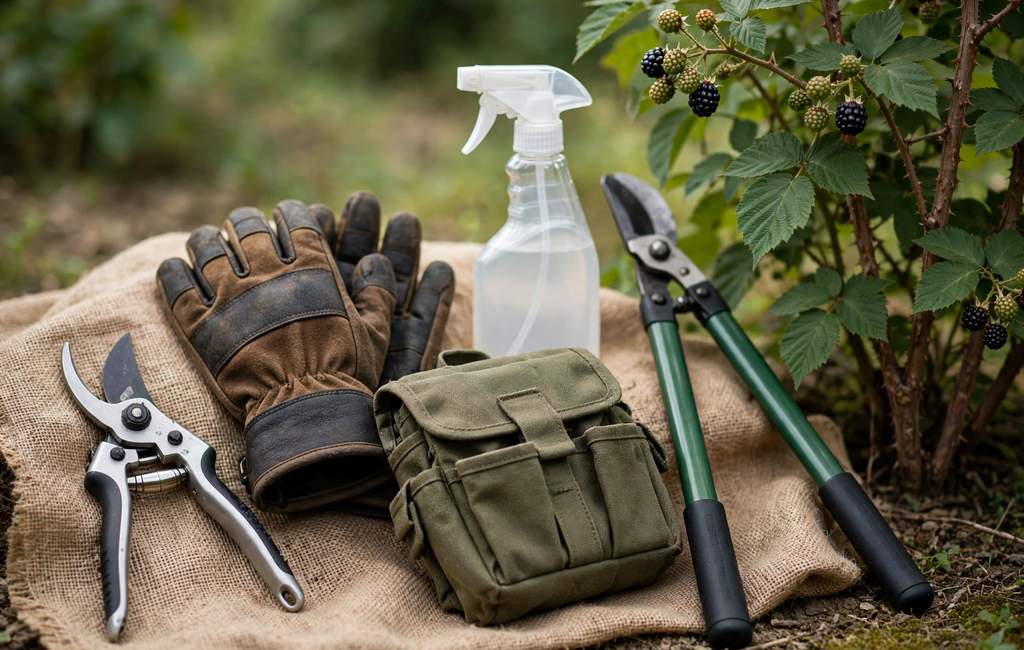
The right blackberry pruning tools include bypass pruners, loppers, gloves, and disinfectant. Together, these tools handle thin shoots, thick floricanes, and thorny growth safely. Meanwhile, a pruning saw helps only with the oldest, thickest crowns.
Choosing by cane thickness prevents crushed tissue and ragged cuts. Instead, many gardeners grab one tool and force every cut. Fortunately, a small kit covers nearly every pruning task well.
First, match each tool to live, dead, or woody growth. Then, you protect your hands and clean blades between plants. This guide explains each choice without brands or rankings.
Match Blackberry Pruning Tools to the Cane
Before you choose tools, you should confirm when to prune blackberries for your plant type. Timing shapes whether you cut green tips or dormant wood. Consequently, thickness and growth stage should guide every tool choice.
Thin green shoots need a clean, scissor like slicing action. In contrast, old floricanes need leverage and long handles. Likewise, dead wood tolerates a crushing cut without harming living tissue.
For example, tipping a green primocane tip demands precision, not power. Removing a spent floricane, however, demands leverage and reach.
Blackberry Pruning Tools for Thin Growth
Bypass Pruners for Live Canes
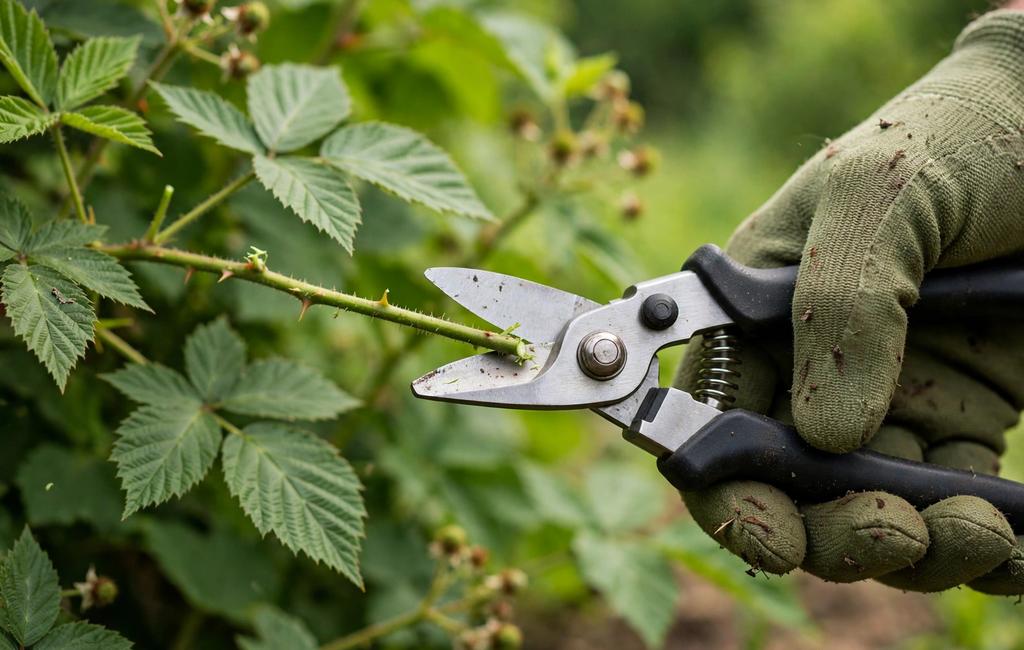
Bypass pruners pass two curved blades past each other cleanly. Gardeners use them for tipping primocanes and trimming laterals. Typically, they cut live canes up to about three quarters of an inch.
Sharp bypass blades slice tissue instead of squeezing it flat. As a result, wounds close faster and resist disease better.
- Cutting action: Confirm both blades meet cleanly without gaps.
- Blade quality: Pick hardened steel blades that hold an edge.
- Replaceable parts: Select designs with replaceable blades and springs.
- Grip comfort: Test handles that fit your hand without slipping.
When Anvil Pruners Fit
Anvil pruners press one straight blade onto a flat pad. That pressing action crushes soft, living tissue quite badly. So, reserve anvil pruners strictly for dry, dead wood.
Dead canes lack living cells, so crushing causes no harm. Still, gardeners rarely need anvil pruners in healthy patches. Indeed, bypass pruners handle almost every live cut better. Basic blackberry pruning tools cover thin shoots and green growth.
Pruning Tools for Thick Blackberry Canes
Loppers for Old Floricanes
Loppers extend your reach with two long handles. Their leverage multiplies hand strength at the cutting head. Usually, loppers cut canes about one and a half to two inches thick.
Gardeners remove spent floricanes flush at the crown with loppers. Long handles also keep hands away from thorny bases. However, loppers feel clumsy among tight, thin laterals.
- Handle length: Choose longer handles for deeper, thorny patches.
- Cutting head: Pick bypass heads for live, thick canes.
- Weight balance: Lift several models before you commit.
A Pruning Saw for the Thickest Crowns
Sometimes, neglected crowns grow thicker than loppers can handle. A pruning saw then removes those oversized, woody sections. Curved blades cut smoothly on the pull stroke alone.
Gardeners choose folding saws for safer storage and transport. Fixed saws, meanwhile, suit prolonged renovation work on old plantings. Either way, saw teeth demand slow, controlled strokes near crowns.
Before sawing, gardeners clear smaller canes blocking the crown. Next, they brace the cane and saw with steady strokes. This control prevents torn bark around the crown base. Thick floricanes demand stronger blackberry pruning tools like loppers.
Protection While Using Blackberry Pruning Tools
Thorny canes punish bare hands and thin gloves quickly. Gauntlet gloves shield hands, wrists, and forearms from thorns. Specifically, leather gauntlets block punctures during deep reaches.
Thornless types still scratch skin with rough, woody bark. Eye protection guards against springing canes and flying debris. Long sleeves also protect forearms above the glove cuff.
- Cuff length: Choose gauntlets reaching midway up your forearm.
- Palm material: Pick thick leather palms for puncture resistance.
- Fit check: Confirm fingers flex fully while gripping handles.
Gardeners also inspect gloves for worn spots before starting. Worn leather, in fact, lets sharp thorns penetrate surprisingly easily. Clean blackberry pruning tools prevent disease moving between plants.
Cleaning Blackberry Pruning Tools Protects Plants
Dirty blades carry disease organisms between canes and plants. Gardeners, notably, wipe blades with alcohol between diseased cuts. Alternatively, diluted bleach solutions disinfect blades quite effectively.
Bleach corrodes metal, so users rinse and dry blades afterward. Alcohol, by contrast, evaporates quickly and spares blade finishes. Finally, a sharpening stone restores clean cutting edges regularly.
Sharpen and Store Blackberry Pruning Tools
Dull blades tear canes instead of slicing them cleanly. Regularly, gardeners hone edges and tighten loose pivot bolts. In the end, they oil blades lightly and store tools dry. Sharp blackberry pruning tools make cleaner cuts that heal faster.
Choose Blackberry Pruning Tools That Fit
Comfort matters because blackberry pruning involves hundreds of cuts. Small hands grip compact pruners more securely and comfortably. Larger hands, conversely, control full size pruners without cramping.
Rotating handles reduce strain during long, repetitive cutting sessions. Left handed gardeners should seek reversible or dedicated designs. Ultimately, your strongest grip should close blades without forcing.
- Handle coating: Choose cushioned grips for wet, slippery conditions.
- Tool weight: Pick lighter tools for overhead lateral work.
- Spare parts: Confirm suppliers stock blades, springs, and bolts.
Start with bypass pruners, loppers, gloves, and disinfectant supplies. Afterwards, add a saw only when crowns outgrow loppers. This staged approach prevents clutter and unnecessary duplicate tools. Well-kept blackberry pruning tools last through many dormant seasons.
Frequently Asked Questions
What tools do you need to prune blackberries?
You need bypass pruners, loppers, gauntlet gloves, and disinfectant.
Can you use anvil pruners on blackberries?
Use anvil pruners only on dead wood, never live canes.
How thick can bypass pruners cut?
Bypass pruners typically cut live canes up to about three quarters of an inch thick.
How do you disinfect pruning tools between cuts?
Wipe blades with alcohol or diluted bleach between cuts on diseased canes.
Do thornless blackberries still require gloves?
Yes, gloves still protect skin from rough bark and hidden prickles.
Conclusion
In short, cane thickness should drive every tool decision. Bypass pruners handle live growth, while loppers tackle woody floricanes. Gloves, eye protection, and disinfectant complete a safe kit.
Now, check your current tools against each cane type today. Replace dull or crushing tools before your next pruning session. Then, prune confidently with clean cuts and protected hands.