

Blackberry trellis training ties each cane generation separately onto sturdy horizontal wires. Next, you keep second-season fruiting canes clearly apart from fresh first-season growth all season. Consequently, air moves freely, fruit stays reachable, and later pruning stays straightforward.
Before tying anything, you match the training pattern to your plant habit. Likewise, learning when to prune blackberries helps you time tying and retraining correctly. Then you follow one clear system instead of improvising around a growing tangle. Over time, this simple discipline turns a sprawling berry patch into an orderly, productive row.
Start Blackberry Trellis Training With Two Wires
Typically, you build the trellis from sturdy posts and horizontal wires. Then you stretch the wires tightly between end posts and brace the ends firmly. Indeed, strong end posts carry the load when heavy canes pull sideways.
Set Trellis Wires for Blackberry Training
Initially, you place one wire around knee height, roughly three feet up. Next, you add a second wire around chest height, roughly five feet up. Still, you treat these heights as flexible guidance rather than fixed guarantees.
Space Plants Along the Row
Along the row, you allow roughly three to four feet between erect plants. Trailing plants need roughly six to eight feet because their canes travel farther. Either way, you leave yourself walking room for picking and pruning work. Blackberry trellis training starts with two sturdy horizontal wires.
Fan Blackberry Trellis Training for Floricanes
For instance, you spread fruiting canes outward like the ribs of a fan. Specifically, you tie some canes toward the left and others toward the right. As a result, each fruiting cane gets light, space, and moving air.
During picking, you reach berries easily because canes spread across one plane. You also spot ripe fruit faster without parting a dense thicket. After picking, you leave the fan undisturbed until the harvest ends.
Choose Strong Canes for the Fan
To begin, you inspect each primocane and keep the thickest, healthiest ones. You remove weak, damaged, or badly crowded canes at the base. An open fan then carries fewer canes but gives each cane more light.
Grow New Canes Up the Middle
Meanwhile, you guide fresh primocanes straight upward through the open center space. You keep these young canes narrow and central while floricanes occupy the sides. In turn, this central lane protects new growth from harvest traffic.
Reset the Fan After Harvest
After harvest, you cut spent floricanes out completely at ground level. Then you untie the central primocanes and fan them outward instead. Finally, you tie the newly fanned canes onto both wires for the coming season. Fan-style blackberry trellis training separates fruiting and growing canes.
Weaving Suits Trailing Blackberry Trellis Training
By contrast, trailing types grow long, flexible canes and sprawl without firm support. Instead, you weave canes in and out along both horizontal wires. Alternatively, you bundle several canes together and run the bundle horizontally.
During their first season, many growers leave trailing primocanes along the ground. Later, you lift the bundles onto the wires before spring growth resumes. In practice, this ground stage keeps tender growth clear of the busy fruiting wires.
Unlike erect canes, trailing canes keep lengthening and rarely need summer tipping. In this way, you guide extra length up, down, and back up between the wires. Together, these passes fill the space between plants without piling canes together. Blackberry trellis training keeps trailing canes woven along wires.
Erect Types Need Only Light Support
Unlike trailing types, erect plants grow stiff canes and hold themselves upright. So you add only a single wire or a few loose ties. Even so, you still give erect canes room and remove crowded growth.
Tip Erect Primocanes to Encourage Branching
In summer, you tip erect primocanes once they reach roughly three to four feet. Tipping removes the growing point and pushes energy into side branches. Those branches carry much of next season’s fruit along the wires.
Tie Canes in Blackberry Trellis Training All Season
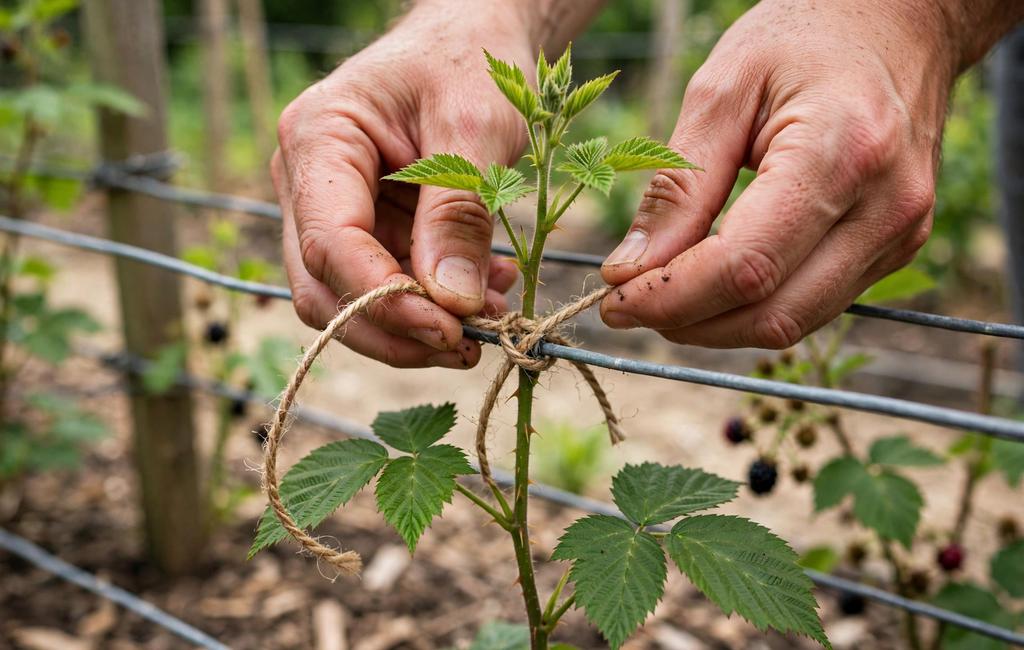
Throughout growth, you tie primocanes loosely as they lengthen each week. Soft ties protect bark because canes thicken steadily through the season. Conversely, tight wire or string cuts into swelling canes and weakens them. You also replace frayed ties before they fail under a heavy crop.
- Soft twine: Wrap it loosely and leave room for each cane to thicken.
- Reusable clips: Move them easily as canes grow longer and heavier.
- Cloth strips: Tie them gently and replace them once they weather badly.
Regularly, you check that floricanes and primocanes stay clearly separated. When canes cross, you move ties and restore each cane’s own lane. After the post-harvest cleanup, you retrain the remaining primocanes into place. Soon the row looks open again, with every cane easy to inspect. Season-long blackberry trellis training prevents tangles before harvest.
- Spring checks: Check wires and tighten any loose runs before growth starts.
- Summer tying: Add ties gradually as primocanes lengthen beside the fruiting canes.
- Dormant care: Shorten overlong laterals and replace worn ties before spring growth.
Avoid Blackberry Trellis Training Tangles
Commonly, gardeners wait too long and then wrestle stiff, woody canes. Young green canes bend easily, yet mature canes snap under force. Similarly, you lift trailing tips promptly because grounded tips root readily. A rooted tip creates an unwanted plant outside your planned row. Consistent blackberry trellis training makes pruning and picking easier.
Frequently Asked Questions
How do you train blackberry canes on a trellis?
Generally, you tie primocanes loosely upward and fan or weave floricanes along the horizontal wires.
What is the best way to train blackberries?
Usually, you succeed by separating cane generations and keeping every cane in its own lane.
When should you tie blackberry canes to a trellis?
You add ties gradually through spring and summer as each primocane lengthens.
Do erect blackberries need a trellis?
Erect plants often stand alone, although a single wire adds welcome steadiness.
How often should you retrain blackberry canes?
You retrain the row after every harvest cleanup and adjust ties all season.
Conclusion
In short, you train the trellis by generation, habit, and season. Choose your system today, set your wires, and tie your first primocanes this week. Your future self will thank you at every picking and pruning session.


