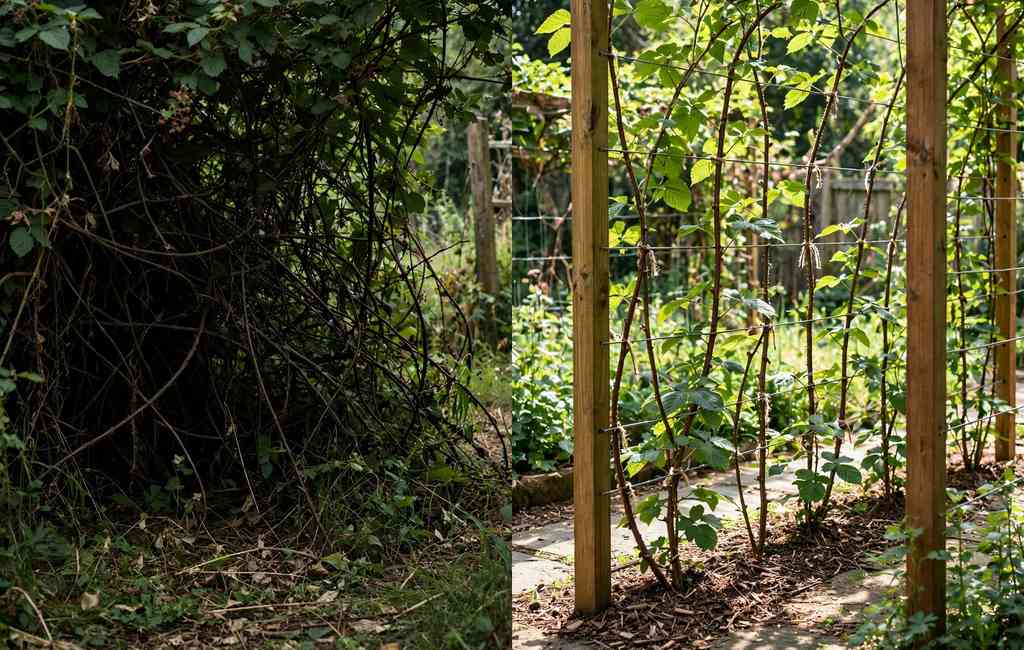
You can reclaim an overgrown blackberry bush by pruning it hard in late winter. First, remove dead and weak canes, then keep only the strongest few primocanes. That staged approach restores airflow, sunlight, and reachable fruit without killing the plant.
Overgrown bushes usually hide several seasons of spent, tangled, and crossing wood inside. Consequently, berries shrink, disease spreads easily, and picking becomes a painful reach. Instead of ripping everything out, work through the tangle in a deliberate order. This guide gives you that order, plus a reset option for truly feral patches.
Start Overgrown Blackberry Pruning With Assessment
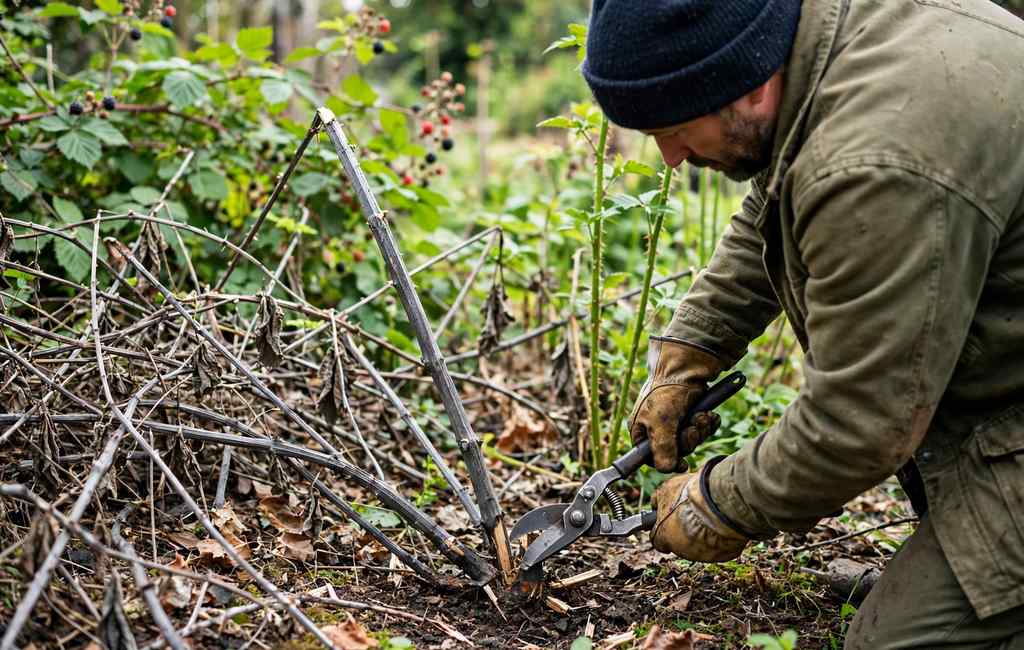
Before cutting, review when to prune blackberries so your timing matches the dormant season. Renovation works best in late winter, while plants rest and leaves stay off. Then, leafless canes expose dead wood, crossings, and crowding at a glance.
Walk around each plant slowly and study its shape from every side. Next, count roughly how many thick, healthy canes rise from each crown. Also, note any canes rooting where they touch soil outside the row.
Tell Dead Canes in Overgrown Blackberry Pruning
Dead canes look dry, brittle, and gray, and they snap cleanly when bent. Live canes feel firm and flexible, and their bark often shows brown or purple. When doubt remains, scratch a thumbnail lightly across the bark near mid-cane. Green tissue underneath means life, while brown, dry tissue confirms a dead cane.
Gather Protective Gear and Sharp Tools
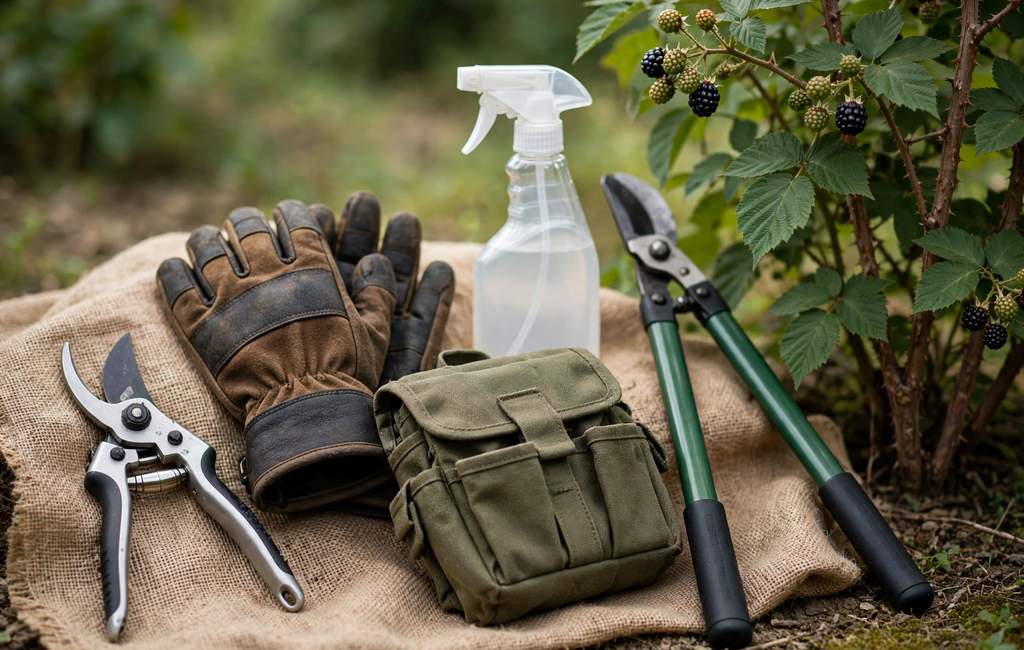
Thorns punish rushed work, especially on older varieties with dense, hooked growth. So, dress defensively and choose tools that cut thick wood without tearing. Overgrown blackberry pruning begins with a careful cane assessment.
- Thick gloves and eye protection: Wear both before reaching inside any thorny tangle.
- Bypass loppers: Cut old, thick canes cleanly at the crown with these.
- Hand pruners: Trim laterals and thin, weak growth precisely with these afterward.
- Disinfectant for blades: Clean blades between diseased canes to avoid spreading infection onward.
Clear the Worst Wood in Overgrown Blackberry Pruning
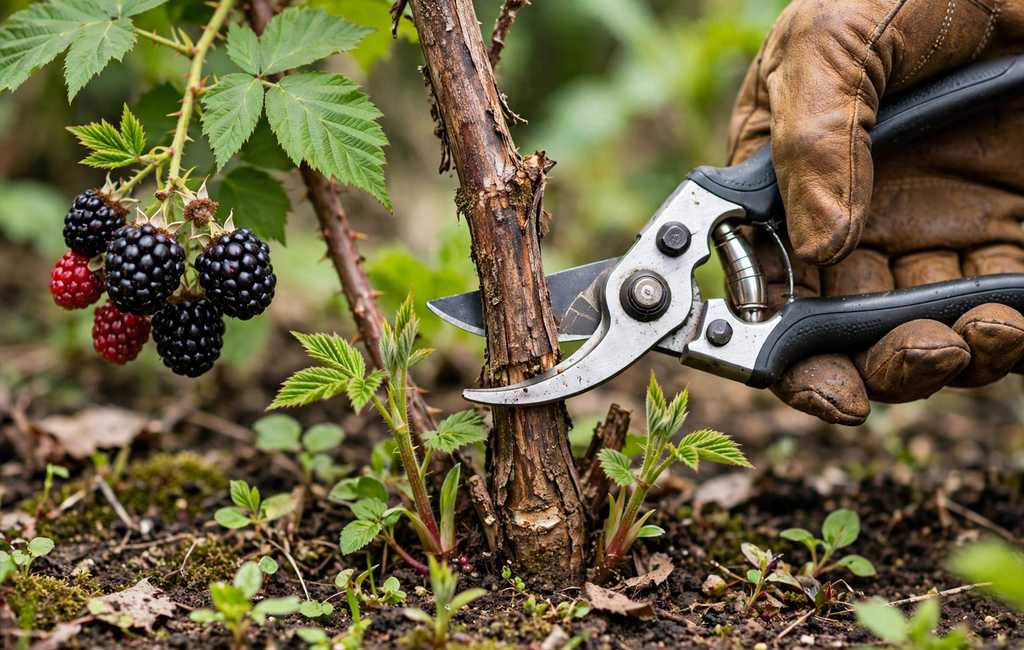
First, cut every dead, damaged, and diseased cane at its base. Remove cracked, broken, and cankered sections completely, even when they still carry leaves. Afterward, drag each cut cane out slowly so thorns catch nothing else.
Next, pull out weak, thin, and crossing canes throughout the whole plant. Thin canes thinner than a pencil rarely support strong laterals or quality fruit. Similarly, crossing canes rub bark open, and those wounds invite pests and disease. Cut each unwanted cane flush at ground level, leaving no tall stubs. Thick gloves make overgrown blackberry pruning safer around thorny wood.
Thin Primocanes During Overgrown Blackberry Pruning
Once the worst wood disappears, choose the strongest primocanes and remove the rest. Keep four to six vigorous canes per plant, favoring thickness, height, and health. In rows, space kept canes evenly so each one receives direct light.
Admittedly, removing half the plant feels drastic after seasons of neglect. However, crowded canes share water and nutrients, so fewer canes grow stronger. Open spacing also lets air move freely and dry wet foliage quickly.
Shorten Laterals and Untangle Carefully
Next, shorten long lateral branches on each kept cane to sturdy buds. Side branches around twelve to eighteen inches long balance fruit load and reachability. Meanwhile, extremely long laterals tangle quickly and pull whole canes toward the ground.
Work from the outside inward, freeing one cane at a time patiently. For example, follow a trapped cane backward before cutting anything that holds it. Then, lift freed canes onto a trellis or tie them loosely upright. Finally, step back often and check that no kept cane crosses another. Overgrown blackberry pruning removes dead canes before live ones.
Hard Reset Cuts for Overgrown Blackberry Pruning
Sometimes a patch grows so wild that selective pruning cannot untangle it. In that case, cut every cane to the ground in late winter. Afterward, the crown survives below ground and pushes fresh primocanes in spring.
For primocane-fruiting types, this reset still preserves a fall crop that season. For floricane-fruiting types, however, the reset sacrifices one full season of fruit. Plainly, new floricane canes must grow one season before bearing the next. So, choose the reset only when tangle and disease defeat selective work.
Manage the Regrowth After a Reset
Fresh shoots emerge crowded, so thin them early to the strongest few. Then, tie selected canes upright before wind and fruit weight bend them. Also, remove suckers outside the row promptly, before their roots establish firmly. Patient overgrown blackberry pruning stages cuts across several sessions.
Support and Clean Up the Finished Plant
After thinning, spread kept canes across their support like an open fan. Fanned canes catch more light and let pickers reach berries without squeezing inside. Secure each cane loosely, because tight ties cut bark as canes thicken.
Next, haul every pruning away and dispose of diseased material promptly. Never compost diseased canes at home, since most piles stay too cool. Finally, mulch the crown lightly and water during prolonged dry spells afterward.
Keep Overgrown Blackberry Pruning Under Control
After renovation, remove each spent floricane right after it finishes fruiting. That single habit prevents dead wood from rebuilding the original tangle. In summer, tip tall primocanes to encourage branching and sturdier, shorter growth.
Each late winter, repeat the same thinning and keep canes evenly spaced. Besides that, clear fallen leaves and prunings away from the crown area. Debris shelters fungal spores and insects, so clean ground supports healthier regrowth. Yearly overgrown blackberry pruning prevents another feral thicket forming.
Frequently Asked Questions
Can you cut blackberry bushes all the way down?
Yes, you can cut everything down in late winter, but floricane types lose one season.
How do you prune a blackberry bush that is overgrown?
First, remove dead wood, then thin weak canes and keep four to six primocanes.
How can you tell if a blackberry cane is dead?
Scratch the bark gently; green tissue means life, while brown tissue means death.
When is the best time to prune overgrown blackberries?
Late winter works best, because dormant, leafless plants reveal every cane clearly.
Will an overgrown blackberry bush recover after hard pruning?
Usually, healthy crowns regrow vigorously and produce stronger canes after careful thinning.
Conclusion
An overgrown blackberry bush looks hopeless, yet its crowns usually remain productive underneath. By working in order, you convert chaos into spaced, sunlit, manageable canes. Pick a dry late-winter day, gear up, and start your rescue pruning today.