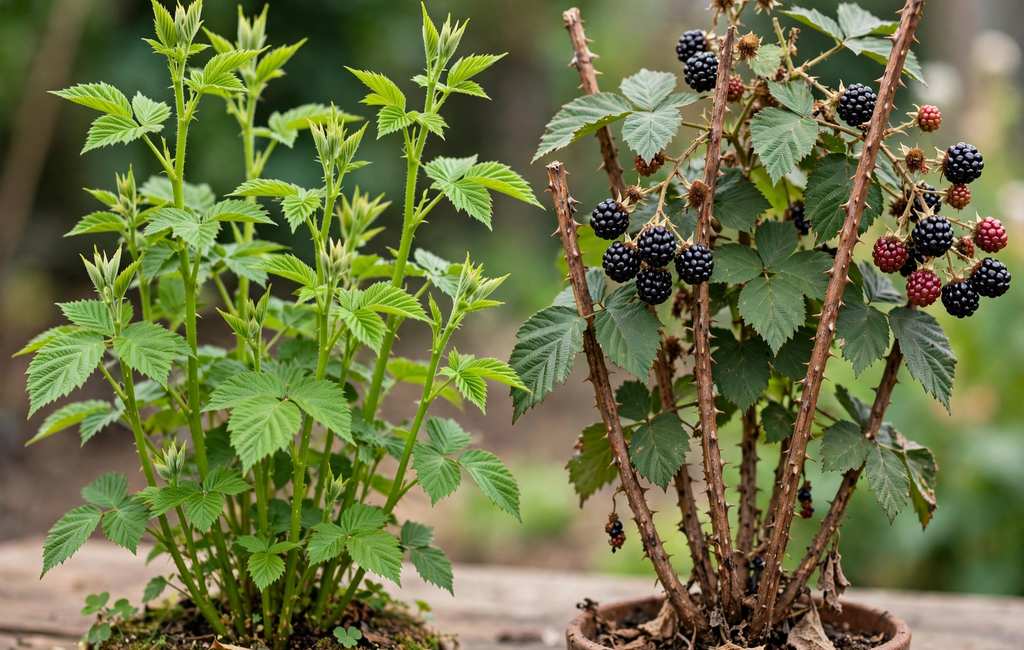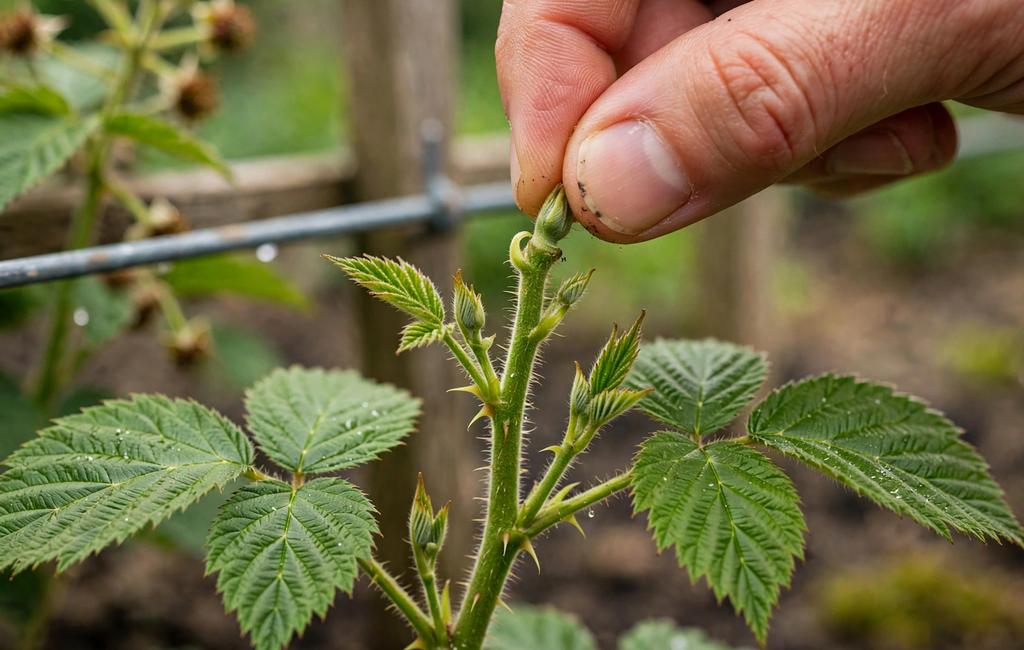
Blackberry cane tipping in summer turns one tall cane into several fruiting branches. Then pinch or cut away the top two to three inches. Promptly, the cane pushes lateral branches that carry the following crop.
However, height matters more than any fixed calendar date here. For example, fast canes may need tipping weeks before slower canes. Meanwhile, growth habit changes the target height for each plant.
Still, one simple check keeps your timing consistent across the patch. Simply measure the cane, check its soft tip, and act quickly. In short, timely tipping turns one tall cane into several fruiting branches.
Why Blackberry Cane Tipping Creates Fruiting Wood
Understanding when to prune blackberries places tipping inside a simple seasonal routine. Essentially, an untipped cane keeps growing upward from its single tip. Instead, a tipped cane redirects energy into side buds below the cut.
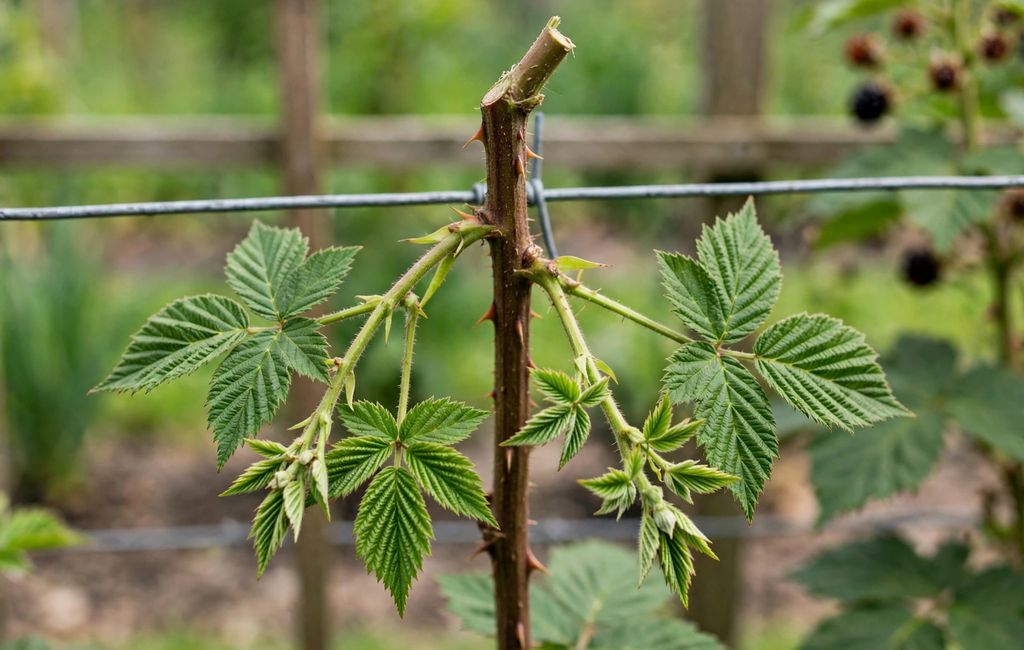
First, those side buds wake and push out lateral branches. Next, each lateral adds buds, flowers, and fruiting sites later. Consequently, one tipped cane often carries far more fruit than one straight cane.
How Blackberry Cane Tipping Changes Growth
Specifically, the growing tip suppresses lower buds through apical dominance. Once you remove that tip, you release those buds from control. Afterward, the cane builds a branched framework instead of one stem.
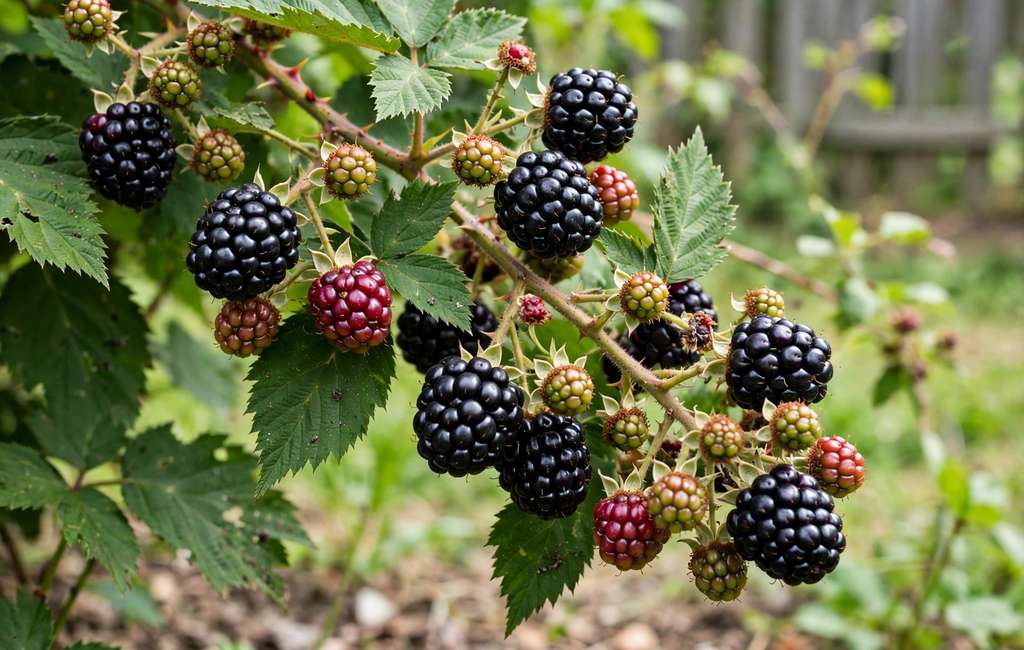
For floricane types, laterals carry the main crop next season. For primocane types, laterals support the fall crop on new growth. Either way, branching multiplies productive wood without adding extra plants.
Similarly, a branched cane stands more firmly in wind and rain. Branches also spread leaves toward sunlight across a wider canopy. Overall, tipping builds structure first and fruiting potential second.
When Blackberry Cane Tipping Suits Cane Height
Crucially, you should tip by height rather than by date alone. Indeed, weather and soil shift growth speed from patch to patch. So walk the row weekly and tip each cane individually.
Before tipping, confirm the cane shows fresh green growth. Notably, primocanes look green and flexible beside older woody fruiting canes. In contrast, floricanes look brown and carry the current crop.
Erect Canes Need the Earliest Tipping
Typically, erect primocanes reach tipping height at three to four feet. At that point, you remove the top two to three inches. Then the cane branches while it still stands upright without support.
- Erect canes: First, tip canes near three feet for compact, sturdy branching.
- Semi-erect canes: Next, let canes reach four to five feet before tipping.
- Trailing canes: Instead, skip routine tipping and train long canes along wires.
Semi-Erect and Trailing Canes Differ
In contrast, semi-erect canes grow taller before they need tipping. Typically, gardeners tip them between four and five feet tall. Meanwhile, trailing canes follow a completely different training approach altogether. Rather, growers train trailing canes horizontally and tip only overlong ends. Blackberry cane tipping works best once primocanes pass three feet.
How Much Blackberry Cane Tipping Removes
Generally, removing two to three inches suits most home plantings. Occasionally, guides suggest removing four to six inches from vigorous canes. Still, you should cut just above a healthy leaf node.
When tips feel soft, your fingers pinch them cleanly off. Later, thicker tips need sharp pruners for a clean cut. Always cut dry canes and avoid spreading disease between plants.
If growth looks vigorous, you can remove slightly more tip. If growth looks weak, you should remove slightly less tip. Above all, keep cuts small and leave healthy buds below. Gardeners repeat blackberry cane tipping as new growth keeps rising.
Blackberry Cane Tipping, Step by Step
- Measure first: Check each primocane against your target height before cutting.
- Pinch soft tips: Then squeeze the tender tip between thumbnail and fingertip firmly.
- Snip firm tips: Alternatively, use clean pruners and cut just above a node.
- Recheck weekly: Finally, return often because canes reach height at different times.
After each pass, step back and inspect the whole row. From there, you will spot missed canes hiding behind fruiting canes. Eventually, repeated passes keep every primocane near your chosen height. Blackberry cane tipping trades one tall stem for many fruiting laterals.
Mistakes That Reduce the Benefit
Fortunately, two timing errors explain most disappointing tipping results. In both cases, errors reduce lateral quality rather than quantity alone. Luckily, a tape measure prevents both errors quite reliably.
Blackberry Cane Tipping Too Early Wastes Regrowth
If you tip a short cane, it branches too low. Then it spends energy regrowing height instead of building strength. Even worse, low laterals crowd the base and complicate later training.
Blackberry Cane Tipping Too Late Weakens Laterals
Conversely, late tipping leaves laterals little time to mature. As a result, such laterals stay short and produce fewer fruiting buds. Also, tender late growth faces greater winter injury risk ahead. Careful blackberry cane tipping avoids tearing soft summer tissue.
After Blackberry Cane Tipping, Watch Laterals Grow
Once laterals lengthen, you simply let them grow through summer. Then, in late winter, you shorten those laterals before spring growth. Typically, most gardeners leave laterals about twelve to eighteen inches long.
Importantly, that winter cut concentrates energy into fewer, stronger buds. It also keeps fruit within easy reach during harvest time. Finally, remove spent fruiting canes right after harvest ends.
For primocane types, tipping also delays and spreads fall fruiting. At the same time, that delay helps growers avoid peak summer heat. Still, growers in short seasons should tip earlier for safety.
For instance, imagine one erect cane reaching forty inches in June. Next, you pinch three inches, and three laterals emerge below the cut. By late winter, you shorten each lateral to fifteen inches. Blackberry cane tipping finishes before laterals harden for winter.
Frequently Asked Questions
When should you tip blackberry primocanes?
In summer, tip primocanes once they reach roughly three to four feet.
How much of the tip should you remove?
Usually, you remove two to three inches from the growing tip.
Do trailing blackberries need tipping?
Generally, growers skip routine tipping and train trailing canes along wires.
What happens if you tip blackberries too late?
Instead, late tipping produces short laterals facing greater winter injury risk.
When do you prune blackberry laterals after tipping?
In late winter, you shorten laterals to about twelve to eighteen inches.
Conclusion
In short, tip primocanes at the right height all summer. Then measure your canes this week and tip every qualifying primocane. Soon, those new laterals will reward you with heavier harvests.