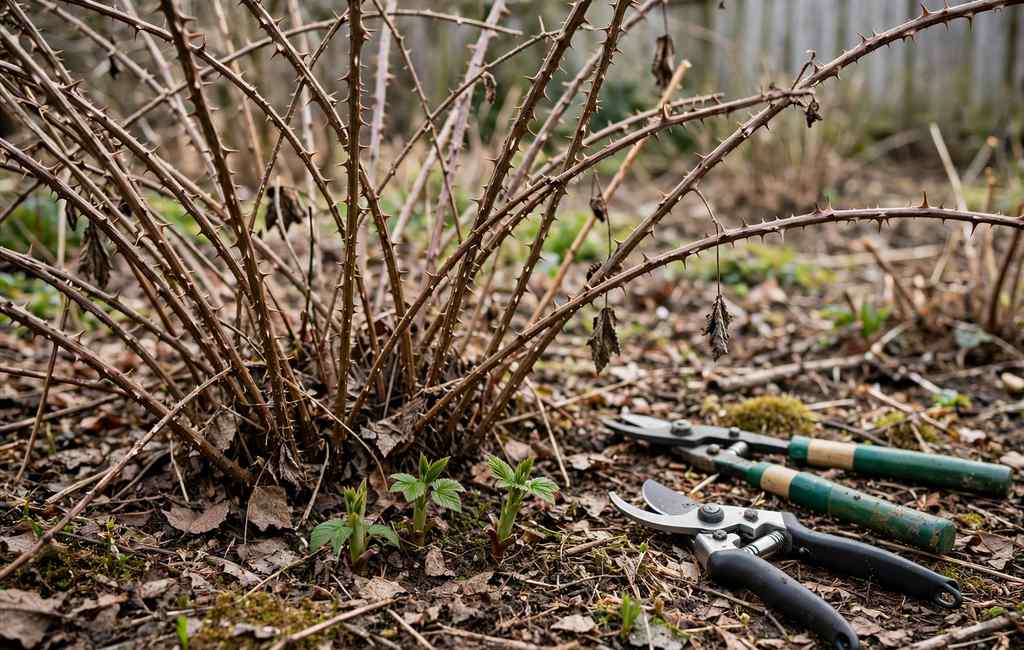
Choosing the right blackberry pruning month protects buds and improves every later cut. During mild winters, southern gardeners start weeks before northern gardeners do. Meanwhile, northern gardeners wait for deeper cold to pass before cutting.
Weather and cane type shift that window by several weeks. Before you choose a date, check when to prune blackberries against local frost and bud stage. Once you match month, region, and cane type, pruning feels straightforward.
After the deepest cold passes, dormant canes show winter damage clearly. Then bare branches and tight buds help you judge timing without guessing.
Start With Dormancy, Not the Blackberry Pruning Month
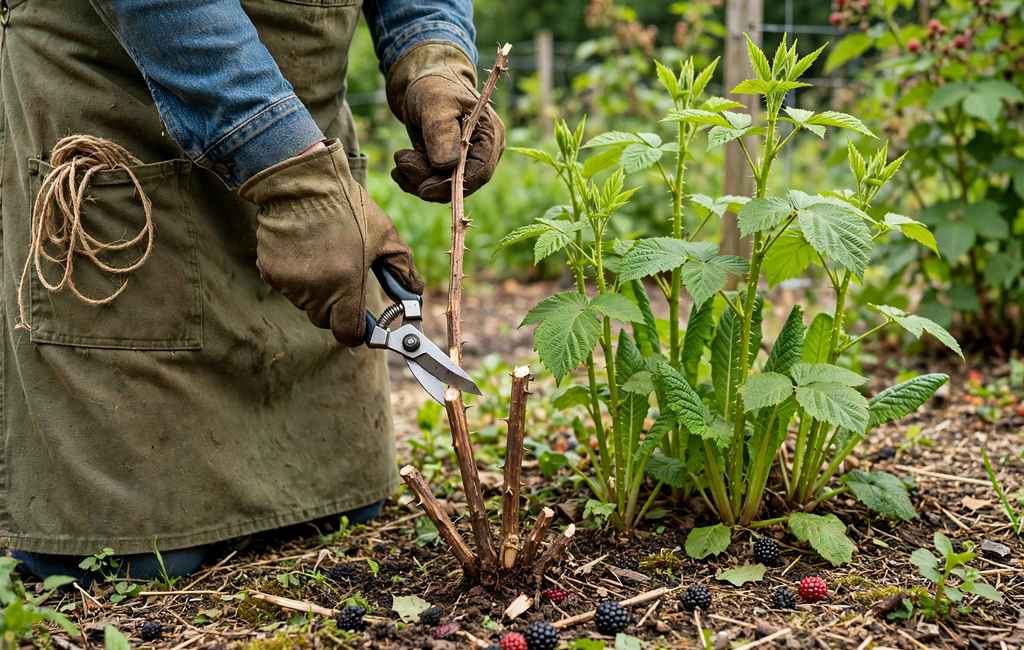
First, dormancy matters more than any single date on the calendar. During dormancy, leafless canes expose cracks, dead tips, and crowded growth clearly. You prune before buds break and fresh growth demands plant energy.
When you prune too early, later hard freezes can injure exposed cuts. When you prune too late, you remove swollen buds and young shoots. So gardeners watch dormancy and bud stage alongside the month.
Northern Gardens Choose a Later Blackberry Pruning Month
In cold northern gardens, March and early April suit dormant pruning best. Before then, severe cold can still damage canes and hide winter injury. Gardeners in places like Minnesota often wait for the harshest cold to pass.
After a late thaw, you can see which cane tips survived winter. Then you remove only truly dead wood and keep healthy fruiting canes. Meanwhile, many cold-climate gardeners cut primocane types completely to the ground.
Temperate Gardens Target the Blackberry Pruning Month
Ohio extension guidance points gardeners toward late March or early April. Because blackberries tolerate cold poorly, that delay reveals winter damage accurately first. Still, gardeners finish before buds swell and new leaves open.
During a mild temperate winter, you can start a few weeks earlier. When a harsh winter lingers, you shift the same work later instead. Local frost dates guide that call better than any fixed date.
Southern Gardens Start the Blackberry Pruning Month Earliest
In warm southern gardens, January and early February often suit dormant pruning. Mild winters bring earlier bud activity, so waiting risks cutting new growth. Also, humid air rewards open growth and prompt removal of diseased wood.
Before pruning, southern gardeners check forecasts for rare sharp cold snaps. A sudden freeze after pruning can still stress freshly cut canes. Once nights stay mild, gardeners finish early and watch growth closely.
Cane Type Changes Your Blackberry Pruning Month
First, identify whether your variety fruits on primocanes or floricanes. Primocanes grow during the current season and carry no fruit on most varieties. Floricanes grow one season, then flower and fruit during the next. Your blackberry pruning month shifts with climate, cane type, and severity.
Floricane Types Need Two Timed Passes
After harvest ends in summer, cut spent floricanes at ground level. Those canes never fruit again, so prompt removal opens light and airflow. Then keep strong new primocanes, because they carry the next crop.
Primocane Types Fruit on New Growth
Primocane varieties fruit in late summer and fall on current-season canes. For one fall crop, gardeners cut all canes down in late winter. Alternatively, gardeners keep canes for a smaller earlier crop before removal. Gardeners mark their blackberry pruning month before buds begin swelling.
Summer Tipping Sits Between Main Prunes
During late June and July, gardeners tip new primocanes near forty-eight inches. Tipping encourages lateral shoots, and those laterals produce much future fruit. In late winter, gardeners shorten healthy laterals to about eighteen inches.
Also, gardeners keep roughly four to six strong canes per foot of row. That spacing improves airflow and makes picking far easier later. When canes lean heavily, gardeners tie remaining canes to supports neatly. A late blackberry pruning month risks cutting into active spring growth.
Weather Signals That Move Your Blackberry Pruning Month
When snow melts and soil thaws, northern gardeners start checking buds closely. Dry weather suits pruning better because wet conditions spread cane diseases. So gardeners pick a dry, calm day for major dormant work. Each blackberry pruning month suits either dormant cuts or summer tipping.
- Bud swell: Postpone heavy cuts once buds swell and leaves begin emerging.
- Hard freeze forecast: Delay pruning when a severe freeze approaches within days.
- Saturated soil: Wait after heavy rain, because soggy ground compacts underfoot easily.
- Warm spell trap: Distrust brief warm spells during deep winter in cold gardens.
Common Blackberry Pruning Month Mistakes
First, many gardeners prune every variety on one identical weekend date. That habit ignores cane type, local frost patterns, and winter damage. Instead, careful gardeners match each bush to its own pruning window.
Another common error removes healthy floricanes before they fruit in summer. That single mistake deletes the entire crop those canes would carry. Still, diseased or broken canes always justify prompt removal anytime.
A Simple Blackberry Pruning Month Check
First, check whether buds still sit tight and fully dormant. Next, scan canes for cracked bark, blackened tips, and brittle wood. Then schedule pruning within the dormant window your region allows. Check the blackberry pruning month again whenever winters turn unusually mild.
Frequently Asked Questions
What is the best time to prune blackberry bushes?
Most gardeners prune during late winter dormancy, just before buds break.
Can I prune my blackberry bushes in the summer?
Yes, you can remove spent floricanes and tip primocanes during summer.
What month do you prune blackberries in cold climates?
Cold-climate gardeners usually prune in March or early April after severe cold.
Should I prune blackberries before or after winter?
You should prune after the harshest winter cold and before spring growth.
Do primocane blackberries need different pruning months?
Primocane gardeners often cut every cane down during late winter dormancy.
Conclusion
Before you prune, confirm your region, cane type, and local bud stage. Then pick the late winter month your climate supports and prune confidently. Check your bushes this week, mark a dry date, and prune on schedule.
Next, clean your pruners and walk the row before that date arrives. Sharp, clean tools make tidy cuts and limit disease spread between canes. Start with the most crowded bush and work along the row.