

Gardening is a journey – a rewarding, sometimes challenging, but ultimately fulfilling connection with nature. Whether you’re sowing your first seed, nurturing a budding rose bush, or harvesting your own vegetables, the right tools are more than just implements; they are extensions of your hands, making the tasks easier, more efficient, and ultimately, more enjoyable.
Imagine trying to dig a hole with your bare hands, trim a thick branch with kitchen scissors, or move a pile of compost one handful at a time. It’s inefficient, potentially harmful, and incredibly frustrating. This is where the gardener’s arsenal comes in. Having the correct tools, understanding their purpose, and knowing how to use and care for them is fundamental to successful and satisfying gardening.
But with shelves groaning under the weight of countless spades, trowels, pruners, and gadgets, where do you even begin? What are the truly essential tools, and what are the specialized helpers? This article will guide you through the world of gardening tools, exploring the fundamental pieces of equipment that form the backbone of any gardener’s kit, and delve into some specialized items that can elevate your gardening game.
We’ll break down the tools by their primary function, discuss what makes a good quality tool, and even touch upon basic care to ensure your trusty companions last season after season. So, let’s dig in!
The Groundbreakers: Tools for Soil Preparation and Digging
Before any planting can happen, you often need to prepare the soil. This involves turning, breaking up compacted earth, removing debris, and leveling the ground.
-
The Shovel:
Arguably the most iconic gardening tool.
- Purpose: Ideal for digging larger holes, moving significant amounts of soil, sand, mulch, or compost, and turning over garden beds.
- Variations:
- Round Point Shovel: Has a curved, pointed blade. Excellent for digging into tough or rocky soil and general scooping.
- Square Point Shovel: Has a flat, straight edge. Best for moving loose materials, scraping, and edging.
- Choosing & Using: Look for a sturdy handle (wood or fiberglass) and a strong blade (steel is common). Ensure the handle length is comfortable for your height to avoid back strain. Use your foot to push the blade into the ground for leverage.
-
The Spade:
Similar to a shovel but typically has a flatter, straighter, and sometimes narrower blade.
- Purpose: Primarily used for digging straight-sided holes, transplanting shrubs or small trees, cutting through roots, and edging garden beds. Its flat edge makes it perfect for lifting and turning sod.
- Choosing & Using: A good spade should have a strong, sharp blade and a comfortable “D” or “T” handle for pushing and leverage. Keep the edge sharp for easier cutting.
-
The Garden Fork (Digging Fork):
Not to be confused with a pitchfork (which has thinner, often curved tines for moving loose materials like hay). A garden fork has thick, strong tines.
- Purpose: Perfect for breaking up compacted soil, aerating the ground, lifting root vegetables, dividing perennials, and turning compost piles. Its tines allow it to penetrate soil where a solid blade might struggle.
- Choosing & Using: Look for strong, forged steel tines that won’t bend easily. Use your weight and leverage to push the tines into the soil and gently lever it upwards to break it apart without completely inverting layers like a shovel does.
-
The Rake:
Comes in many forms, each with a specific job.
- Purpose: Bow rakes (with short, stiff metal tines) are used for leveling soil, breaking up clumps, and removing small stones or debris from beds. Leaf rakes (with long, flexible tines, often plastic or bamboo) are for gathering leaves and light garden debris.
- Choosing & Using: Choose a rake appropriate for the task. A sturdy bow rake is essential for soil prep. Use a sweeping motion to level or gather material.
Precision & Placement: Tools for Planting
Once the soil is ready, these tools help you get your seeds, seedlings, and plants into the ground correctly.
- The Hand Trowel: This is arguably the most essential hand tool for any gardener. You’ll reach for it constantly.
- Purpose: Digging small holes for planting seeds and seedlings, transplanting small plants, scooping soil or fertilizer, mixing soil in containers, and removing small weeds.
- Variations: Blades can be wide or narrow, pointed or rounded. Handles can be wood, plastic, or rubberized.
- Choosing & Using: Invest in a quality trowel with a sturdy handle attached securely to a strong metal blade (stainless steel resists rust). A trowel with depth markings can be helpful for consistent planting depth.
- The Transplanter Trowel: A specialized type of hand trowel.
- Purpose: Designed with a narrower blade, often with concave sides and sometimes depth markings. Ideal for digging precise holes for transplanting seedlings from trays or pots without disturbing the root ball too much.
- Choosing & Using: Choose one that feels comfortable in your hand. The narrow blade allows you to work carefully around existing plants.
- The Dibber (or Dibble): A pointed tool, usually made of wood or metal.
- Purpose: Used to make neat, consistent holes in the soil for planting seeds, bulbs, or small seedlings. Some dibbers have measurements marked on them for precise depth.
- Choosing & Using: Simply push the pointed end into the prepared soil to the desired depth. Twist slightly to create a clean hole.
The Constant Battle: Tools for Weeding and Cultivating
Weeds are the uninvited guests in any garden. These tools help you remove them and keep the soil surface healthy.
- The Hand Cultivator: Often looks like a small claw with three or four tines.
- Purpose: Excellent for loosening soil in small areas, working amendments into the top few inches of soil, and scratching out small weeds just breaking the surface.
- Choosing & Using: A comfortable handle and strong tines are key. Use a scratching or pulling motion to break up the soil crust and dislodge weeds.
- The Garden Hoe: Another classic tool with many variations.
- Purpose: Primarily used for weeding by slicing weeds off at the root just below the soil surface, cultivating the top layer of soil, and creating furrows for planting.
- Variations:
- Traditional (Draw) Hoe: Heavy, broad blade perpendicular to the handle. Used with a chopping and pulling motion.
- Collinear Hoe (Action Hoe, Oscillating Hoe, Stirrup Hoe): Features a sharp blade that pivots. You push and pull it just below the surface, cutting weeds from both directions. Very efficient for large areas.
- Dutch Hoe: Pushed or scaped along the surface.
- Choosing & Using: The best hoe for you depends on your garden size and preferred weeding style. Collinear hoes are often favored for efficiency in larger beds. Keep the blade sharp for effective cutting.
- The Weeder (Dandelion Weeder): Specialized tools designed to tackle weeds with deep taproots, like dandelions.
- Purpose: These tools typically have a forked or notched end that you push down next to the weed’s root to help leverage it out of the ground.
- Variations: Some are short-handled, others have long handles allowing you to weed while standing.
- Choosing & Using: Push the forked end close to the base of the weed, angling towards the root. Use the handle for leverage to lift the root out.
Shaping & Maintaining: Tools for Pruning and Cutting
Keeping plants healthy, shapely, and productive often requires trimming, cutting, and shaping.
-
Hand Pruners (Secateurs):
Another indispensable tool for almost any gardener.
- Purpose: Used for cutting smaller branches, stems, and twigs, typically up to 1 inch in diameter, depending on the tool. Essential for deadheading, shaping, and taking cuttings.
- Variations:
- Bypass Pruners: Have two blades that slide past each other like scissors. Best for making clean cuts on live green wood, causing less damage to the stem.
- Anvil Pruners: Have a straight blade that closes onto a flat surface (the anvil). Better for cutting dead or dry wood. Can crush stems if used on live wood.
- Choosing & Using: Invest in a good quality pair that fits comfortably in your hand. Bypass pruners are generally preferred for most living plant material. Keep them sharp and clean to prevent disease spread.
-
Loppers:
Larger versions of pruners with long handles.
- Purpose: Used for cutting thicker branches than hand pruners can handle, usually up to 1.5 or 2 inches in diameter. The long handles provide leverage.
- Choosing & Using: Choose a size appropriate for the branches you’ll be cutting. Bypass loppers are best for live branches. Use both hands for control and leverage.
-
Hedge Shears:
Look like large, long scissors.
- Purpose: Designed for trimming and shaping hedges and shrubs, as well as cutting back large clumps of perennials. Not for thick branches.
- Choosing & Using: Manual hedge shears require physical effort but offer precision. Use smooth, sweeping motions.
- Garden Knife (Hori Hori Knife): A versatile Japanese gardening knife.
- Purpose: Highly multi-functional – can be used for digging, weeding, transplanting, cutting roots, dividing perennials, measuring planting depth (often marked on the blade), and even as a small saw (some have serrated edges).
- Choosing & Using: Look for a full tang (blade extends through the handle) for durability. The sharp edge and pointed tip make it incredibly useful for many tasks.
Related: Edging vs. Trenching: Unearthing the Differences for a Perfect Landscape
The Lifeline: Tools for Watering
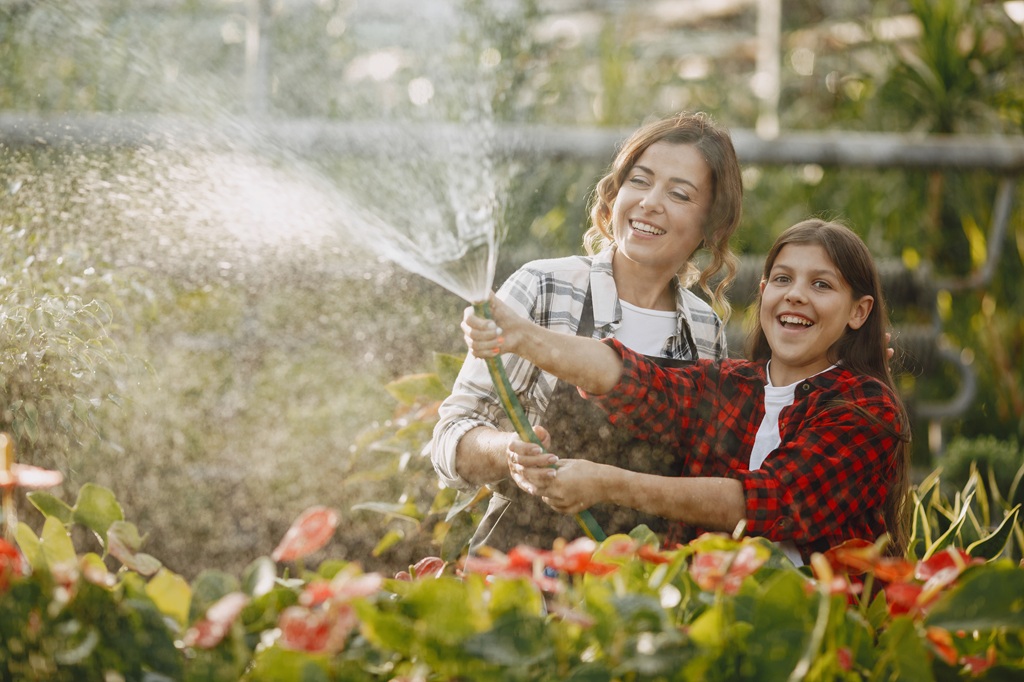
Plants need water! Getting it to them effectively is key.
- Watering Can: A classic for a reason.
- Purpose: Ideal for watering seedlings, container plants, or specific areas with precision. The “rose” (sprinkler head) attachment allows for gentle watering of delicate plants.
- Variations: Come in various sizes and materials (plastic, metal).
- Choosing & Using: Choose a size you can comfortably lift when full. A long spout helps reach into dense foliage. The rose attachment disperses water, preventing soil erosion around seedlings.
- Garden Hose & Nozzle: For larger areas or established plants.
- Purpose: Provides a convenient way to deliver larger volumes of water. Different nozzles allow you to adjust the water flow from a gentle shower to a powerful jet.
- Choosing & Using: Choose a hose length appropriate for your garden size. A good quality, flexible hose that doesn’t kink easily is worth the investment. Adjustable nozzles offer versatility.
Heavy Lifters: Tools for Carrying and Transporting
Moving materials around the garden is often necessary.
- Wheelbarrow: A true workhorse for larger gardens.
- Purpose: Indispensable for moving soil, compost, mulch, heavy bags of amendments, plants, stones, tools, and garden debris.
- Choosing & Using: Consider the capacity and material (steel is durable but heavy, plastic is lighter but less robust). One-wheeled wheelbarrows are more maneuverable, while two-wheeled versions are more stable. Balance the load evenly.
- Garden Cart: Similar to a wheelbarrow but often has four wheels and a flat bed or a bin.
- Purpose: Can be easier to push than a wheelbarrow, especially for heavy or awkward loads. More stable for carrying multiple items or tools.
- Choosing & Using: Choose one with sturdy wheels and a durable bed.
Related: How to Grow Houseplants in Low Light Conditions
Comfort & Safety: The Gardener’s Protection
Protecting yourself while you work is just as important as the tools you use for the plants.
- Gardening Gloves: Non-negotiable for most tasks.
- Purpose: Protect your hands from dirt, thorns, blisters, cuts, scrapes, and potential contact with irritants or chemicals.
- Variations: Materials range from thin cotton for dexterity to thick leather or synthetic for heavy-duty protection against thorns. Waterproof options are available.
- Choosing & Using: Find a pair that fits well and offers appropriate protection for the task. Keep different types on hand.
- Kneeling Pad or Garden Kneeler Seat: Save your knees!
- Purpose: Provides cushioning and support for your knees when working close to the ground. Kneeler seats often have handles to help you stand up.
- Choosing & Using: Choose a thick, comfortable pad or a sturdy kneeler seat. Your knees will thank you.
Beyond the Basics: Choosing and Caring for Your Tools
Having the right tools is one thing; keeping them in good working order is another.
- Choosing Quality: While tempting, the cheapest tools often aren’t the best value in the long run. Look for sturdy construction, durable materials (like forged steel or stainless steel blades, strong wooden or fiberglass handles), and comfortable, ergonomic designs. A well-made tool will perform better, last longer, and reduce strain.
- Tool Maintenance: A little care goes a long way.
- Cleaning: After each use, remove soil and debris. This prevents rust and the spread of plant diseases. A stiff brush and water usually suffice.
- Drying: Always dry metal tools thoroughly before storing.
- Oiling/Sharpening: Periodically oil metal parts to prevent rust. Sharpen blades (shovels, spades, hoes, pruners, loppers) regularly; sharp tools require less effort and make cleaner cuts, which is healthier for plants.
- Storage: Store tools in a dry place, preferably hung up to keep them off the ground and organized.
The Right Tool for the Job
It’s important to remember that you don’t need every tool listed here to start gardening. A beginner can get by with a good hand trowel, hand pruners, gardening gloves, and perhaps a hand cultivator or small hoe. As your garden grows and your ambitions expand, you can gradually add more specialized tools to your collection.
Understanding the purpose of each tool allows you to select the most efficient and effective one for the task at hand, saving you time, effort, and potential frustration. Using the right tool also helps prevent damage to your plants and minimizes strain on your body.
Related: How to Get Rid of Fruit Flies: Effective Pest Control Methods
Conclusion
Gardening tools are far more than just metal and wood; they are indispensable partners in cultivating beauty and bounty. From the humble hand trowel that helps nestle a seed into the soil to the mighty shovel that turns the earth, each tool plays a vital role in the gardening process.
By investing in quality tools, understanding how to use them correctly, and taking the time to care for them, you equip yourself for success and ensure that your gardening efforts are as productive and enjoyable as possible. So, build your arsenal wisely, keep your tools sharp and clean, and enjoy the incredible satisfaction that comes from working the earth with the right implements by your side. Happy gardening!


