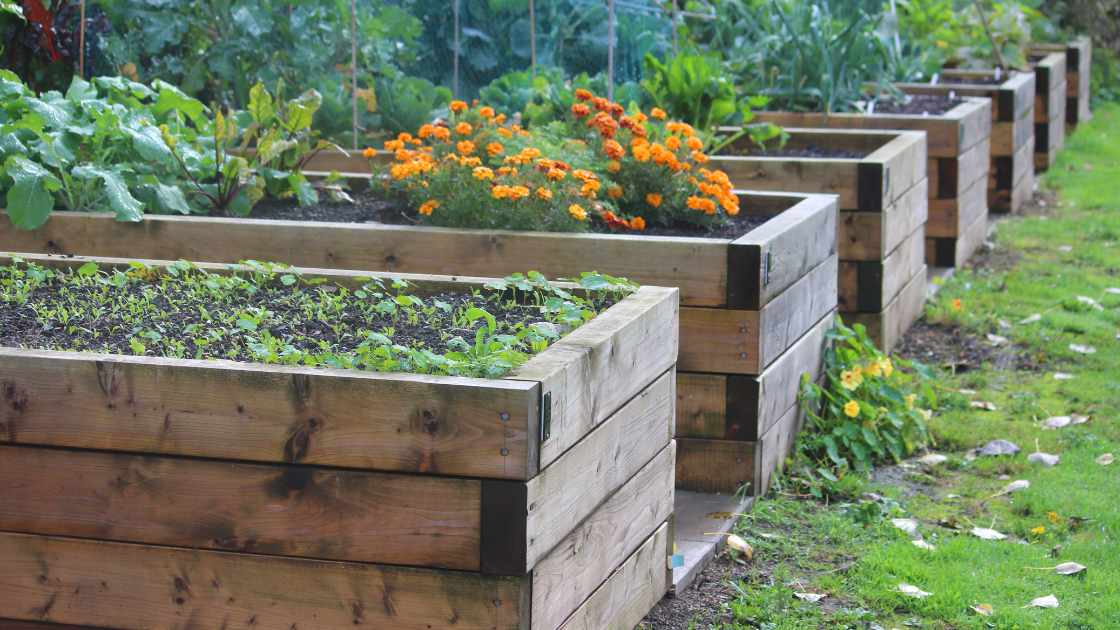
Weeds invade gardens quickly and steal nutrients from your plants. Many homeowners reach for chemical herbicides, yet these products raise serious concerns. Herbicides make up the largest share of pesticides used in home and garden settings, and runoff often harms waterways and wildlife. Manual weeding offers a safe, effective alternative that protects your health and the environment.
Gardeners achieve over 90% weed control with consistent hand weeding, according to university research. You build healthier soil and enjoy the satisfaction of hands-on work. Plus, you avoid exposure to potentially harmful substances. Check out Manual Weed Removal Tool for an excellent option that slices through weeds with ease.
This guide walks you through everything you need to succeed. You learn the best tools, proper techniques, and smart strategies to keep weeds under control all season.
Why Choose Natural Weed Removal with Manual Tools?
Chemical herbicides seem convenient, but they come with drawbacks. Runoff pollutes streams and affects beneficial insects. Manual methods eliminate those risks completely.
You improve soil structure when you weed by hand. Tools loosen the earth and let air, water, and microbes reach plant roots. Over time, your garden soil becomes richer and more fertile.
Manual weeding also gives you exercise and stress relief. Many gardeners find the rhythmic motion calming. Moreover, you spot pest problems or nutrient issues early while working close to the plants.
Natural approaches prevent herbicide resistance in weeds. Some species now shrug off common chemicals. Physical removal stops that cycle in its tracks.
Finally, you save money in the long run. Good manual tools last decades with basic care.
Benefits of Manual Weeding You Will Notice Quickly
Gardeners see clear advantages right away. First, plants grow stronger without competition for light and nutrients.
You preserve beneficial organisms in the soil. Earthworms and microbes thrive when you avoid chemicals. Healthy soil supports vigorous plant growth.
Manual methods work precisely. You remove weeds without damaging nearby flowers or vegetables. That accuracy matters in tight spaces.
Additionally, you control weeds at any stage. Young seedlings come out easily, while mature plants require the right tool and technique.
Families with children and pets appreciate the safety. No worrying about toxic residues on grass or soil.
Essential Manual Garden Tools for Effective Weed Removal
Quality tools make the job faster and less tiring. Choose sturdy options with comfortable handles.
The Scuffle Hoe (Stirrup Hoe)
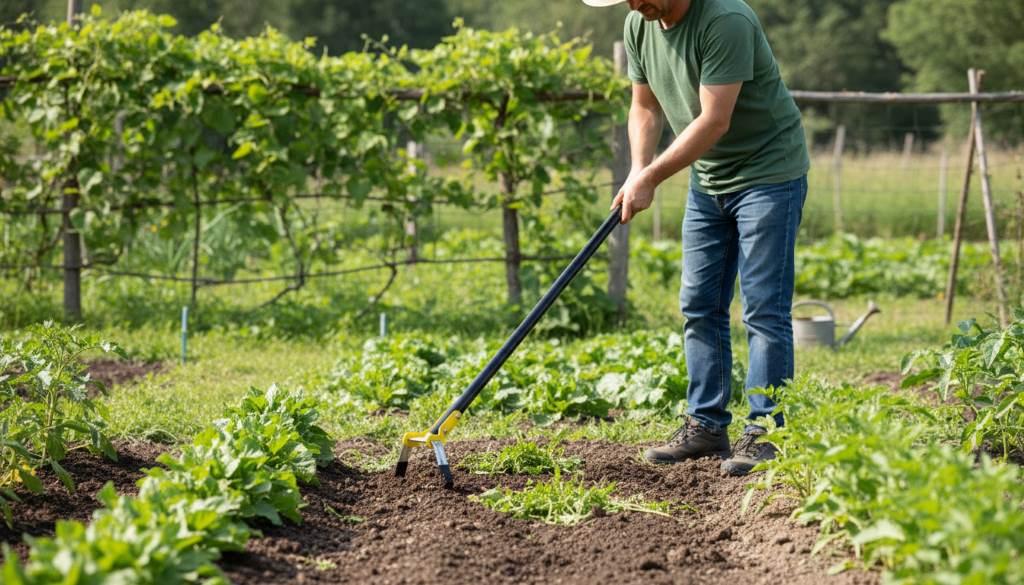
This tool features a sharp, oscillating blade that moves back and forth. You push and pull it just under the soil surface to cut weed roots.
It excels on paths and between rows. The design lets you work standing up, which saves your back.
Hand Weeder or Dandelion Digger
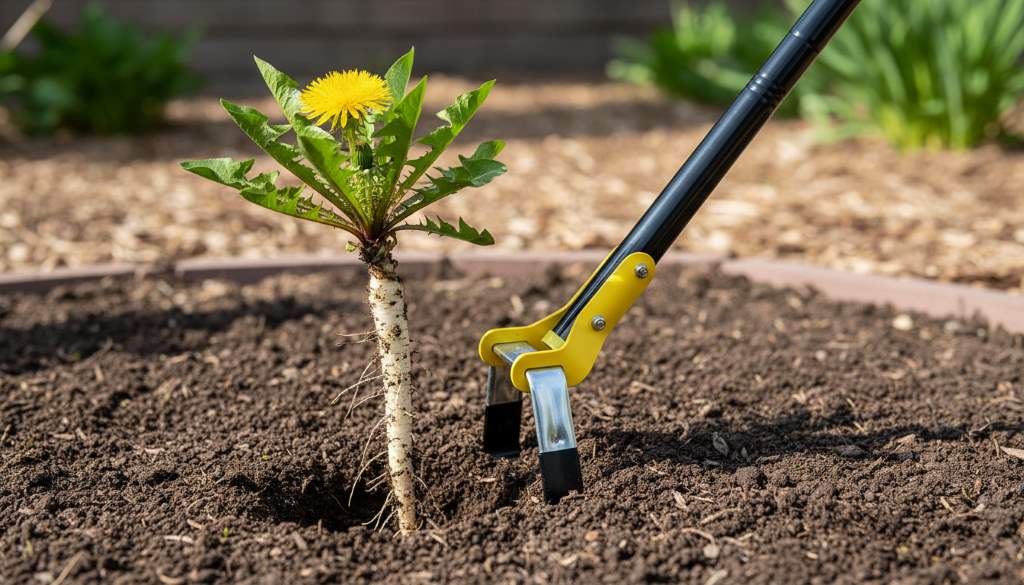
A narrow, forked blade pulls deep taproots intact. You twist and lever out dandelions, thistles, and dock without leaving fragments behind.
Look for ergonomic handles that reduce hand strain.
Garden Hoe
Traditional draw hoes chop and pull soil toward you. They handle tough, established weeds and loosen compacted ground.
Choose a lightweight model for extended use.
Cape Cod Weeder
This angled blade slices weeds on the pull stroke. It works well in tight spots and around delicate plants.
Stand-Up Weed Puller
Claws grip the weed crown, and a foot pedal extracts the entire root. Perfect for larger areas when bending feels uncomfortable.
Hori Hori Knife
This Japanese tool combines a knife and trowel. Serrated edges saw through tough roots, and depth markings help with planting.
Cultivator or Three-Pronged Rake
These tools break soil crust and uproot tiny seedlings. They prepare beds while removing emerging weeds.
How to Choose the Right Tool for Your Garden
Match the tool to the weed type and garden layout. Shallow-rooted annuals like chickweed die quickly from surface cutting.
Deep-rooted perennials demand tools that extract the entire root system. Otherwise, they regrow stronger.
Soft, moist soil makes every job easier. Hard, dry ground requires sharper, heavier tools.
Large vegetable plots benefit from long-handled hoes. Flower beds need precise hand tools.
Ergonomics matter. Test grip comfort before committing to long sessions.
Step-by-Step Guide to Manual Weeding Success
Follow these steps for best results.
- Time your sessions after rain or thorough watering. Soft soil releases roots easily.
- Clear large debris and cut tall weeds first. This prevents seed spread.
- Work systematically in sections. Start at one end and move across the bed.
- Use the correct motion for each tool. Push and pull scuffle hoes; twist and lever hand weeders.
- Remove weeds completely. Shake off soil and place them in a bucket to prevent re-rooting.
- Disturb the soil minimally around desired plants. Keep their roots intact.
- Finish by smoothing the surface and adding mulch if desired.
- Clean tools immediately. Remove soil and dry them to prevent rust.
Related:
Fixing Stunted Growth in Zinnias Outdoors
Safe Plants for Cats: A Complete Guide for Pet-Friendly Homes
Mastering the Scuffle Hoe Technique
Stand comfortably with feet shoulder-width apart. Hold the handle at waist height.
Push the blade forward just below the soil surface. The sharp edge severs roots.
Pull back gently. The oscillating action cuts on both motions.
Keep the blade shallow. You target weed roots while sparing deeper plant roots.
Work in overlapping rows. This ensures no weeds escape.
Move steadily but not hastily. Rushing causes fatigue and missed spots.
Practice on open paths first. You quickly gain confidence and speed.
Perfecting Hand Weeding for Deep Roots
Insert the forked blade next to the weed crown. Angle it toward the root.
Rock the handle gently to loosen soil. Apply steady leverage upward.
Twist slightly if resistance builds. The root usually releases with a satisfying pop.
Inspect the hole. Remove any broken root pieces that remain.
Fill the gap lightly with soil. This prevents new weeds from establishing quickly.
Work from kneeling pads to protect your knees during long sessions.
Timing Your Weeding Sessions for Maximum Impact
Weed little and often. Weekly checks prevent overwhelming infestations.
Early spring offers prime conditions. Young weeds pull out effortlessly.
Summer heat stresses weeds after root disturbance. They struggle to recover.
Fall removal stops seed production. Many weeds set seed in autumn.
Morning sessions work best. Dew softens soil, and cooler temperatures feel comfortable.
Avoid weeding during heavy seed set. You risk spreading seeds further.
Preventing Future Weed Growth Naturally
Healthy plants outcompete weeds. Dense planting shades soil and blocks germination.
Mulch suppresses emerging seedlings. Organic options like straw or wood chips work well.
Regular cultivation disrupts weed life cycles. Surface scratching prevents establishment.
Crop rotation confuses weed patterns. Different plants host different weed species.
Encourage ground covers in bare spots. They fill space and block invaders.
Common Manual Weeding Mistakes and Fixes
Gardeners often weed too deeply. This damages shallow plant roots and brings buried seeds to the surface.
Leaving root fragments behind invites regrowth. Always extract complete roots from perennials.
Working in dry soil frustrates everyone. Wait for moisture or water deeply first.
Overworking areas compacts soil. Light, frequent passes maintain structure.
Ignoring ergonomics leads to strain. Use proper posture and take regular breaks.
Forgetting tool maintenance shortens lifespan. Clean and sharpen regularly.
Maintaining Your Manual Garden Tools for Years of Service
Clean tools after every use. Remove soil with a stiff brush and rinse if needed.
Dry thoroughly to prevent rust. Store under cover.
Sharpen blades regularly. A sharp edge cuts cleaner and requires less effort.
Oil metal parts lightly. This protects against corrosion.
Check wooden handles for splinters. Sand smooth and apply linseed oil annually.
Tighten loose fittings promptly. Secure heads prevent accidents.
Store tools hanging or upright. This preserves shape and prevents damage.
Seasonal Strategies for Year-Round Weed Control
Spring focuses on early intervention. Remove overwintered weeds before they flower.
Summer demands vigilance. Heat stresses disturbed weeds permanently.
Fall cleanup targets seed producers. Remove flower heads first.
Winter offers opportunities in mild climates. Clear beds during dormant periods.
Plan ahead each season. Prepare tools and schedule regular sessions.
Building Long-Term Weed Resistance in Your Garden
Strong soil health forms the foundation. Add compost annually to feed beneficial microbes.
Diverse planting confuses weeds. Mix flowers, vegetables, and herbs together.
Observe patterns yearly. Note which weeds appear where and adjust strategies.
Patience pays off. Consistent manual effort reduces weed pressure over time.
Celebrate progress. A weed-free garden reflects your care and knowledge.
Conclusion
Manual weeding transforms your garden naturally and sustainably. You protect the environment, improve soil health, and grow stronger plants without chemicals.
Choose quality tools that fit your needs. Practice proper techniques and stay consistent. Results compound quickly.
Start today with the right equipment and smart habits. Your garden will thank you with beauty and bounty for years to come. Grab your tools and begin creating the healthy, vibrant space you deserve.
Frequently Asked Questions
Is manual weeding really effective compared to herbicides?
Yes, dedicated gardeners achieve over 90% control through regular hand weeding. It removes roots completely and prevents resistance issues common with chemicals.
How often should I weed my garden manually?
Weed weekly during peak growing season. Light, frequent sessions prevent weeds from establishing and spreading seeds.
What is the best manual tool for beginners?
A scuffle hoe offers ease and efficiency. You work standing up and cover ground quickly while learning proper technique.
Can manual weeding damage my plants?
Proper technique avoids harm. Stay shallow around desired plants and use precision tools in crowded beds.
Does manual weeding improve soil health?
Absolutely. You aerate soil gently, preserve beneficial organisms, and add organic matter when you compost pulled weeds.
References
- Royal Horticultural Society: Non-chemical weed control guide – https://www.rhs.org.uk/prevention-protection/weeds-non-chemical-control
- University of California Agriculture and Natural Resources: Role of hand weeding – https://ucanr.edu/blog/uc-weed-science-weed-control-management-ecology-and-minutia/article/role-hand-weeding-weed
- Beyond Pesticides: Lawn pesticide facts – https://www.beyondpesticides.org/assets/media/documents/lawn/factsheets/LAWNFACTS&FIGURES_8_05.pdf
- National Wildlife Federation: Dangers of lawn chemicals – https://blog.nwf.org/2024/08/dangers-of-lawn-chemicals-impacts-and-alternatives