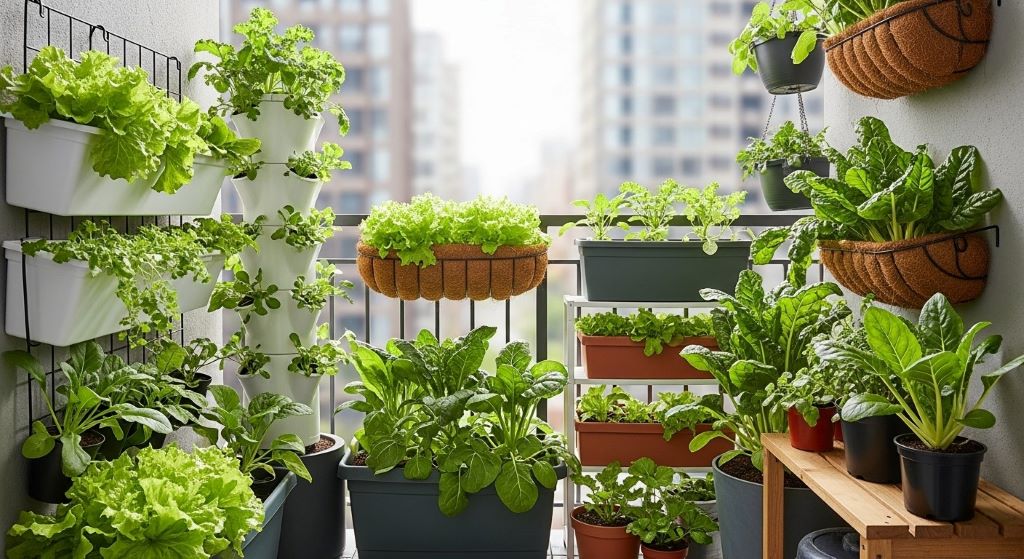
Growing your own food doesn’t require a sprawling backyard. Even the smallest balcony can become a productive garden for fresh, nutritious leafy greens. With the right approach, you can harvest spinach, lettuce, kale, and more right outside your door. This guide will show you exactly how to transform your compact outdoor space into a thriving green haven.
Why Leafy Greens Are Perfect for Balconies
Leafy greens offer unique advantages for small-space gardening. They have shallow root systems, which means they don’t need deep containers. Additionally, most varieties grow quickly, giving you results in just a few weeks. Unlike fruiting plants that demand full sun, many leafy greens tolerate partial shade. Therefore, they work well even on balconies with limited direct sunlight.
Furthermore, these vegetables are cut-and-come-again crops. You can harvest outer leaves while the plant continues producing. This feature maximizes your yield from minimal space. Fresh greens also provide exceptional nutritional value, making your balcony garden both practical and health-promoting.
Assessing Your Balcony Conditions
Before planting anything, evaluate your balcony’s specific conditions. Start by observing sunlight patterns throughout the day. Most leafy greens need at least three to four hours of sunlight daily. However, varieties like lettuce and spinach can manage with less.
Check your balcony’s weight capacity, especially if you live in an apartment. Containers filled with soil and water become quite heavy. Consequently, you may need to distribute weight evenly or choose lighter container materials. Also, consider wind exposure. Upper-floor balconies often experience strong gusts that can damage delicate leaves. Installing a windbreak or choosing sturdy varieties helps address this challenge.
Temperature matters too. According to The Old Farmer’s Almanac, most leafy greens are cool-season crops that thrive in temperatures between 60 and 70 degrees Fahrenheit. They may bolt or turn bitter in extreme heat.
Choosing the Right Containers
Container selection significantly impacts your gardening success. For leafy greens, choose containers that are at least six to eight inches deep. Width matters more than depth since these plants spread horizontally rather than vertically.
Drainage is absolutely essential. Every container must have holes in the bottom to prevent waterlogging, which causes root rot. Additionally, placing saucers underneath catches excess water and protects your balcony surface.
Material choices include plastic, ceramic, fabric, and wood. Plastic containers are lightweight and affordable. Fabric grow bags offer excellent drainage and air circulation. Ceramic pots look attractive but weigh more. Whatever you choose, ensure it suits your balcony’s weight restrictions and aesthetic preferences.
Vertical planters and hanging baskets maximize space efficiently. Wall-mounted pocket planters or tiered shelving systems let you grow more in the same footprint. Therefore, thinking vertically multiplies your growing area without consuming additional floor space.
Selecting the Best Leafy Greens
Not all greens perform equally well in containers. Some varieties specifically excel in small spaces. Lettuce tops the list with countless varieties including butterhead, romaine, and loose-leaf types. It grows quickly and tolerates partial shade beautifully.
Spinach is another excellent choice. It matures rapidly and produces abundantly in cooler weather. Arugula offers a peppery flavor and grows so fast you’ll have harvests in just three weeks. Kale withstands various conditions and continues producing for months. Swiss chard adds vibrant color with its rainbow stems while providing nutritious greens.
Mesclun mixes combine multiple greens in one packet. These blends offer variety and visual interest. Moreover, they allow you to taste different flavors without committing to separate plants. Asian greens like bok choy, mizuna, and tatsoi also thrive in containers and bring exciting flavors to your table.
Preparing Quality Potting Mix
Never use garden soil in containers. It compacts too much and drains poorly. Instead, invest in high-quality potting mix specifically formulated for containers. These mixes contain ingredients like peat moss, coconut coir, perlite, and vermiculite that ensure proper drainage and aeration.
Leafy greens are heavy feeders, so enriching your potting mix helps. Mix in compost or worm castings before planting. Additionally, you can add a slow-release organic fertilizer to provide steady nutrition. Good soil structure supports healthy root development, which directly translates to vigorous leaf growth.

Planting Your Greens
You can start from seeds or transplants. Seeds cost less and offer more variety. However, transplants give you a head start. For continuous harvests, practice succession planting by sowing new seeds every two weeks.
Plant seeds at the depth recommended on the packet, usually about a quarter inch deep. Space them according to package directions, though you can plant slightly closer in containers. Thin seedlings once they develop true leaves to prevent overcrowding.
Water gently after planting to settle the soil. Keep the surface consistently moist until seeds germinate. Subsequently, adjust watering as plants establish themselves.
Watering Strategies for Container Greens
Container plants dry out faster than garden beds. Therefore, consistent watering becomes crucial. Check soil moisture daily by inserting your finger an inch deep. If it feels dry, water thoroughly until liquid drains from the bottom.
Morning watering works best. It allows leaves to dry before evening, reducing disease risk. Additionally, avoid overhead watering when possible. Direct water at the soil level to keep foliage dry.
Containers on hot, sunny balconies may need watering twice daily during summer. Conversely, shaded balconies in cool weather require less frequent watering. Self-watering containers help maintain consistent moisture and reduce your workload.
Fertilizing for Lush Growth
Container plants need regular feeding since nutrients wash away with each watering. Start fertilizing two weeks after planting. Use a balanced liquid fertilizer diluted to half strength every two weeks.
Organic options include fish emulsion, compost tea, or seaweed extract. These provide nutrients while improving soil health. However, avoid over-fertilizing, which can cause rapid, weak growth or bitter flavors.
Yellowing leaves often indicate nitrogen deficiency, common in leafy greens. Addressing this promptly with appropriate fertilizer restores healthy green color.
Managing Pests and Diseases
Container gardens typically face fewer pest problems than ground gardens. Nevertheless, stay vigilant. Aphids, slugs, and caterpillars occasionally appear. Inspect plants regularly and remove pests by hand when possible.
For persistent problems, use organic solutions. Neem oil spray addresses many insect issues safely. Diatomaceous earth deters slugs effectively. Additionally, companion planting with herbs like basil or cilantro can repel certain pests naturally.
Prevent diseases by ensuring good air circulation between plants. Avoid overcrowding and remove any yellowing or damaged leaves promptly. Proper watering techniques that keep foliage dry also minimize fungal problems.
Harvesting Your Balcony Greens
Harvest leafy greens when they reach usable size, usually four to six weeks after planting. For continuous production, pick outer leaves while leaving the center intact. This method, called cut-and-come-again harvesting, extends your harvest for weeks or months.
Harvest in the morning when leaves are crisp and full of moisture. Use clean scissors or simply pinch off leaves with your fingers. Take no more than one-third of the plant at once to maintain its vigor.
Fresh-picked greens taste dramatically better than store-bought varieties. Additionally, homegrown greens contain peak nutrition since they go from plant to plate within minutes.
Extending Your Growing Season
In mild climates, you can grow leafy greens year-round. In colder regions, extend your season with simple protection. Row covers or plastic sheeting create a mini greenhouse effect on your balcony. These barriers trap heat and shield plants from light frost.
Cool-season greens actually taste sweeter after light frost exposure. Therefore, fall growing often produces the best flavors. Conversely, summer heat challenges these crops. Provide afternoon shade using screens or shade cloth during hot months.
Moving containers to shadier spots during heat waves helps plants survive. Similarly, bringing them closer to walls on cold nights provides some temperature moderation.
Conclusion
Growing leafy greens in small balcony spaces is both achievable and rewarding. By understanding your balcony conditions, choosing appropriate containers and varieties, and providing consistent care, you’ll enjoy fresh, nutritious greens throughout the growing season. This productive use of limited space transforms your balcony into a valuable food source while connecting you with the satisfaction of growing your own food. Start with easy varieties like lettuce or spinach, learn as you grow, and soon you’ll wonder how you ever managed without your balcony garden.
Frequently Asked Questions
How much sunlight do leafy greens need on a balcony?
Most leafy greens need three to four hours of direct sunlight daily, though some varieties like lettuce and spinach tolerate partial shade. Observe your balcony’s light patterns throughout the day to determine which areas receive adequate sun.
Can I grow leafy greens on a shaded balcony?
Yes, certain varieties thrive in partial shade. Lettuce, spinach, arugula, and Asian greens perform well with limited sunlight. These shade-tolerant options make balcony gardening possible even without full sun exposure.
What’s the best container size for growing leafy greens?
Choose containers at least six to eight inches deep and as wide as possible. Leafy greens have shallow roots but spread horizontally. Wider containers accommodate more plants and provide better moisture retention than narrow, deep pots.
How often should I water container-grown leafy greens?
Check soil moisture daily and water when the top inch feels dry. Container plants typically need watering once daily, sometimes twice in hot weather. Consistent moisture prevents bitter flavors and encourages tender, succulent leaves.
When is the best time to start growing leafy greens on my balcony?
Plant leafy greens in early spring or fall when temperatures stay between 60 and 70 degrees Fahrenheit. These cool-season crops struggle in summer heat but tolerate light frost, making spring and fall ideal growing periods in most climates.
Related Topics:
Unveiling the Sun-Kissed Side of Hostas: Thriving Foliage Beyond the Shade
How To Dry And Preserve Herbs: A Complete Guide for Fresh Flavor All Year