In the intricate world of landscape design and maintenance, terms can often be confusing, leading to misunderstandings that can impact the beauty and functionality of your outdoor space. Two such terms that frequently cause head-scratching among homeowners and even some greenhorns in the industry are “edging” and “trenching.” While both involve digging into the earth and shaping the landscape, their purposes, methods, tools, and outcomes are distinctly different.
Misinterpreting one for the other can lead to wasted effort, suboptimal results, or even damage to existing infrastructure. Understanding the fundamental differences between edging and trenching is not just about mastering landscaping jargon; it’s about making informed decisions that save you time, money, and effort, ultimately contributing to a more efficient, aesthetically pleasing, and functional outdoor environment. This comprehensive guide will unearth the nuances of each practice, highlight their specific applications, and equip you with the knowledge to choose the right technique for your next landscaping project.
The Art of Edging: Defining Beauty and Order
At its core, edging is the practice of creating a clean, crisp, and defined boundary between two distinct landscape elements. Think of it as drawing a sharp line in your garden, separating areas like a lush green lawn from a vibrant flower bed, a gravel pathway from a manicured shrub border, or even a patio from the surrounding grass. It’s primarily an aesthetic endeavor, though it boasts significant practical benefits that contribute to the overall health and manageability of your landscape.
Purpose and Benefits of Edging:
- Aesthetic Enhancement: The most immediate and noticeable benefit of edging is the visual appeal it brings. A well-defined edge creates a sense of order, neatness, and professionalism. It makes your garden beds look intentional, your pathways inviting, and your lawn appear meticulously maintained, giving your entire property a “framed” and polished appearance.
- Preventing Encroachment: One of the most practical advantages of edging is its ability to act as a physical barrier. It prevents grass runners and weeds from creeping into your flower beds, vegetable patches, or pathways. This significantly reduces the time and effort needed for weeding and keeps your cultivated areas pristine.
- Containing Materials: Edging helps to keep mulch, gravel, or soil contained within their designated areas, preventing them from spilling onto lawns or pathways. This not only maintains cleanliness but also ensures that valuable amendments stay where they are most needed.
- Easier Maintenance: A defined edge provides a clear line for mowing, trimming, and weeding. It allows for more efficient and precise lawn care, reducing the chances of accidentally damaging plants in adjacent beds or creating uneven lines. It also makes it easier to apply herbicides or pre-emergents accurately.
- Defining Pathways and Features: Edging is crucial for delineating walkways, driveways, and other hardscape features, guiding foot traffic and enhancing the overall layout and flow of your outdoor space.
Common Edging Materials and Styles:
Edging can be achieved using various materials and techniques, each offering a different aesthetic and level of durability:
- Spade-Cut Edge (Natural Edge): This is perhaps the most traditional and cost-effective method, involving simply using a sharp spade or half-moon edger to create a V-shaped trench that forms a clean, natural separation. It requires regular maintenance to keep the line crisp.
- Plastic or Metal Edging: These are popular, durable options that come in rolls or strips. They are installed below ground level, with a small lip rising just above, providing a subtle yet effective barrier. Metal edging (steel, aluminum) is more expensive but offers superior longevity and a cleaner look.
- Brick, Stone, or Paver Edging: For a more formal and robust look, bricks, stones, or pavers can be laid end-to-end to create a decorative border. This option is highly durable and adds significant aesthetic value, often blending seamlessly with patios or walkways made of similar materials.
- Concrete Curbing: Poured-in-place concrete edging offers the most permanent and customizable solution. It can be colored, stamped, and shaped to match specific design preferences, providing a very strong and defined border.
Tools Used for Edging:
- Manual Edgers:
- Half-Moon Edger: A specialized tool with a semicircular blade and a long handle, designed for creating precise, clean cuts.
- Flat-Bladed Spade/Shovel: Can be used for basic edging, though less precise than a dedicated edger.
- Powered Edgers:
- Stick Edger: Resembles a string trimmer but has a small, vertically oriented blade designed specifically for cutting sharp edges along hard surfaces.
- Wheeled Edger: A heavier, more powerful machine with a larger blade, ideal for long stretches of lawn or tougher soil conditions.
- String Trimmer (with edging capability): Many modern string trimmers can be rotated to allow the cutting line to be used vertically for light edging tasks.
Edging is typically a routine maintenance task, performed as needed (e.g., monthly, bi-monthly) to maintain the crispness of the lines and prevent overgrowth. It’s an essential part of a well-groomed landscape, contributing significantly to its visual appeal and ease of upkeep.
The Functionality of Trenching: Laying the Groundwork
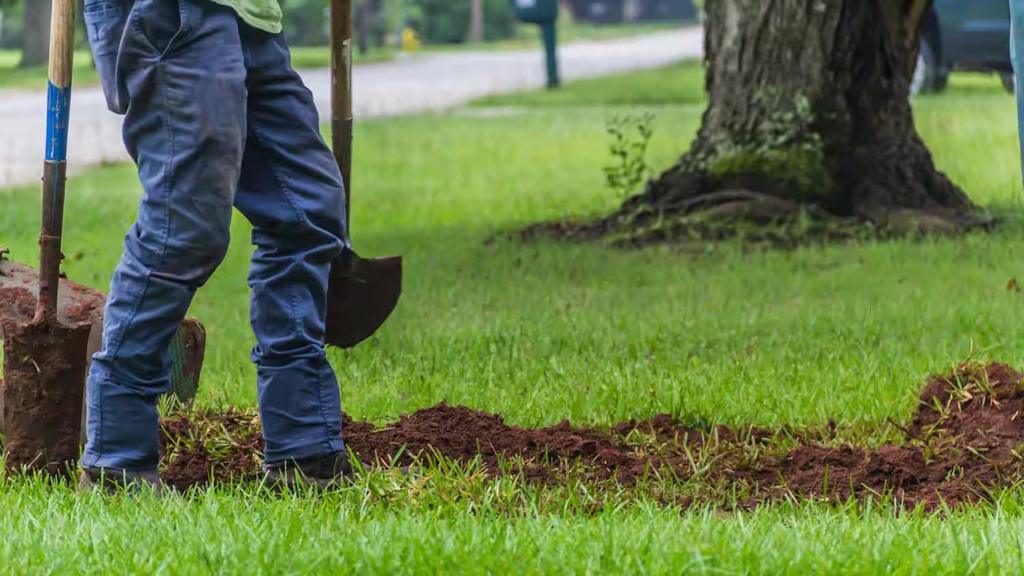
In stark contrast to the aesthetic focus of edging, trenching is a practice driven by pure functionality. It involves digging a narrow, relatively deep ditch or channel in the ground for the specific purpose of burying or installing something. While the visual outcome of a trench might be a temporary disturbance, its long-term impact on the utility and efficiency of your landscape is profound.
Purpose and Benefits of Trenching:
- Utility Installation: This is arguably the most common reason for trenching. It’s necessary for:
- Irrigation Systems: Burying water lines for sprinklers, drip irrigation, or hose bibs.
- Electrical Conduits: Laying wires for outdoor lighting, pond pumps, or other powered features.
- Communication Cables: Installing lines for internet, telephone, or security systems.
- Gas Lines: For outdoor kitchens, fire pits, or pool heaters (requires professional installation and adherence to strict codes).
- Drainage Solutions: Trenching is critical for solving water accumulation problems.
- French Drains: Trenches filled with gravel and a perforated pipe to collect and divert excess surface water away from foundations or soggy areas.
- Perimeter Drains: Trenches around foundations to prevent hydrostatic pressure and moisture penetration.
- Swales: Shallow, broad trenches designed to slow and channel rainwater across a landscape.
- Root Barriers: In some cases, a deep trench is dug to install a physical barrier that prevents aggressive tree or shrub roots from damaging foundations, underground pipes, driveways, or competing with other plants for nutrients and water.
- Foundation Work (Minor): For smaller structures like sheds, retaining walls, or fences, shallow trenches might be dug to create footings or provide a stable base for posts.
- Landscaping Features: Occasionally, trenching is used to create swales, dry creek beds, or other water management features that integrate into the landscape design.
Common Trenching Scenarios:
You’ll find trenching necessary when undertaking projects such as:
- Installing a new automatic sprinkler system in your lawn.
- Adding low-voltage pathway lighting or accent lights in your garden.
- Resolving persistent standing water issues near your house or in a particular area of the yard.
- Extending electrical power to a new shed or outdoor living space.
- Protecting your home’s foundation from a rapidly growing tree nearby.
Tools Used for Trenching:
The choice of trenching tool depends heavily on the depth, length, and width of the desired trench, as well as the soil conditions:
- Manual Tools:
- Trenching Spade/Shovel: A long, narrow spade specifically designed for digging trenches. Suitable for short, shallow trenches in soft soil.
- Pickaxe: Useful for breaking up compacted soil, rocks, or roots before using a spade.
- Post-Hole Digger: While primarily for posts, it can be adapted for very narrow, short trenches.
- Powered Tools (Trenchers):
- Walk-Behind Trencher: These are compact, self-propelled machines that use a rotating chain with digging teeth to excavate a continuous trench. Ideal for medium-sized projects. They come in various sizes, capable of digging trenches from a few inches to a foot wide and several feet deep.
- Ride-On Trencher: Larger, more powerful machines for extensive projects, often used in commercial or large residential installations.
- Mini-Excavator/Skid Steer with Trencher Attachment: For very large or complex trenching jobs, these heavy machines offer unparalleled power and efficiency.
Safety is paramount when trenching, especially when dealing with power tools or digging near existing utilities. Always call 811 (or your local equivalent) before you dig to have underground utility lines marked.
Related: How to Grow Houseplants in Low Light Conditions
Key Differences: Edging vs. Trenching at a Glance
To solidify your understanding, let’s directly compare the two practices:
| Feature | Edging | Trenching |
| Primary Purpose | Aesthetic definition, containment, neatness | Functional installation (utilities, drainage) |
| Depth | Shallow (1-6 inches, typically) | Deeper (6 inches to several feet) |
| Width | Very narrow (1-4 inches) | Narrow to moderately wide (4-12 inches, or more for heavy machinery) |
| Typical Tools | Manual: Spade, half-moon edger. Powered: Stick edger, wheeled edger, string trimmer. | Manual: Trenching spade, pickaxe. Powered: Walk-behind trencher, ride-on trencher, mini-excavator. |
| Frequency | Routine maintenance (monthly, seasonally) | Project-specific, one-time installation |
| Impact on Landscape | Enhances appearance, defines boundaries | Alters landscape for underlying infrastructure |
| Effort/Expertise | Generally less labor-intensive, basic skill. | Can be very labor-intensive, often requires specialized equipment/knowledge. |
| Safety Concerns | Minimal (sharp tools) | Significant (underground utilities, heavy machinery, collapse risk). Always call 811. |
Export to Sheets
When to Use Which (or Both)
Understanding the distinct purposes of edging and trenching clarifies when to apply each technique:
- Use Edging When:
- You want to create a clean, defined boundary between your lawn and garden beds.
- You need to prevent grass from invading mulched areas or pathways.
- You aim to give your landscape a polished, professional, and well-maintained look.
- You are installing new garden beds or refreshing existing ones.
- You are outlining walkways or patios.
- Use Trenching When:
- You are installing a new underground irrigation system.
- You plan to bury electrical conduits for outdoor lighting or other features.
- You need to install a drainage solution like a French drain to alleviate soggy areas.
- You are creating a root barrier to protect structures or other plants from aggressive tree roots.
- You are laying a new gas line or communication cable outdoors (often requires professional help).
It’s also important to note that edging and trenching can, and often do, coexist in a well-designed landscape. For instance, you might precisely edge around a garden bed for aesthetic appeal, and then within that same bed, you could have trenched and buried irrigation lines to keep your plants hydrated. The two practices complement each other, contributing to both the beauty and functionality of your outdoor space.
Related: How to Get Rid of Fruit Flies: Effective Pest Control Methods
Tips for Effective Edging and Trenching
For Edging:
- Start with a clear line: Use a garden hose or spray paint to mark your desired edge before you begin cutting.
- Use sharp tools: A sharp blade makes cleaner cuts and requires less effort.
- Consider your material: Choose an edging material that complements your landscape style and budget.
- Maintain consistency: Strive for a uniform depth and angle along the entire edge for a professional finish.
For Trenching:
- Call Before You Dig (811): This is non-negotiable. Always contact your local utility locating service several days before you plan to dig to prevent hitting underground lines.
- Plan Your Route: Mark the path of your trench carefully, considering existing landscape features, slopes, and the purpose of the trench.
- Assess Soil Conditions: Rocky or heavily compacted soil will require more robust tools, potentially even a powered trencher.
- Prioritize Safety: Wear appropriate personal protective equipment (gloves, sturdy footwear, eye protection). Be aware of your surroundings and any potential hazards, especially when operating machinery.
- Consider Professional Help: For deep trenches, complex utility installations, or large-scale projects, hiring a professional landscaping or excavation company can save you time, prevent errors, and ensure safety.
Related: How Old Should a Bonsai Tree Be Before Pruning?
Conclusion
While both edging and trenching involve disturbing the earth, they serve fundamentally different roles in landscape management. Edging is the art of defining and enhancing the visual appeal of your outdoor space, creating crisp lines and maintaining order. Trenching, on the other hand, is a functional necessity, providing the groundwork for essential underground infrastructure like irrigation, drainage, and utility lines.
Understanding these distinctions empowers you to approach your landscaping projects with clarity and confidence. By correctly identifying whether your task requires the refined precision of edging or the purposeful excavation of trenching, you can select the right tools, employ the appropriate techniques, and ultimately achieve a more efficient, beautiful, and highly functional outdoor environment that stands the test of time. So, the next time you step into your garden, you’ll know exactly whether to reach for the edger to perfect a boundary or the trencher to lay the groundwork for a thriving landscape.