Blackberry disease pruning removes infected canes before fungi reach healthy growth. Thinning also opens crowded growth, dries leaves faster, and reduces conditions fungi need most. However, pruning protects plants through prevention and sanitation, never through curing established infection. Instead, careful cuts remove disease sources while healthy canes keep growing strongly.
First, learn the visible signs that separate sick or damaged canes from healthy ones. Next, remove questionable growth promptly and disinfect your tools between every single cut. Then, clear every cutting away so lingering spores cannot threaten nearby healthy crowns. As a result, these steady habits stop small problems from becoming patch wide losses.
Spot Blackberry Disease Before Pruning
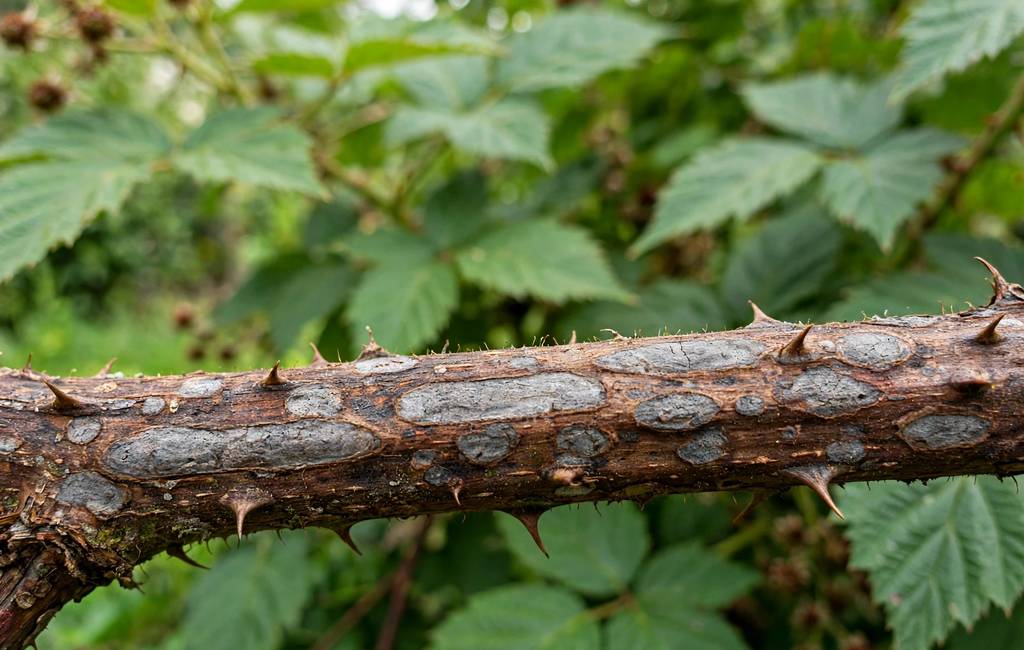
First, review when to prune blackberries before you cut any questionable cane growth. Meanwhile, walk each row slowly and inspect both sides of every cane. Also, look closely for cracked bark, sunken patches, wilting tips, and brittle wood.
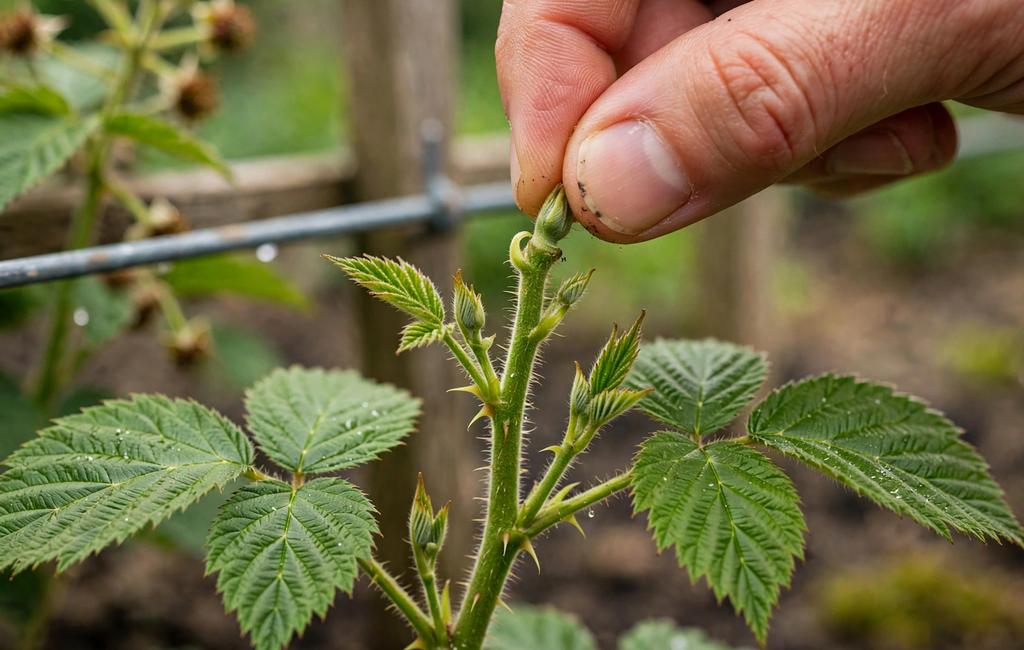
In contrast, healthy canes show firm bark, plump buds, and green tissue under scratches. Likewise, diseased canes often show discolored lesions, peeling bark, or dying side shoots. Still, winter damage and borers sometimes mimic disease on older canes. Consequently, home gardeners often cannot confirm a pathogen without laboratory testing.
Recognize Blackberry Disease During Pruning Season
Indeed, four cane diseases deserve special attention during every inspection round. Accordingly, careful observation guides a different response for each disease.
- Cane blight: Often, dark reddish purple lesions form near wounds and kill cane tissue.
- Anthracnose: Initially, small purple spots turn gray and keep distinctive purple margins.
- Spur blight: Typically, purple brown blotches form around buds and weaken laterals nearby.
- Orange rust: In spring, bright orange pustules coat leaf undersides and weaken growth.
However, similar spots sometimes signal stress rather than confirmed fungal infection. So treat uncertain cases cautiously and monitor plants closely after cutting.
Prioritize Which Canes Come Out First
Dead canes come out first because fungi overwinter within their tissues. Next, remove canes with spreading lesions, cracked bark, or wilting growth. Then, remove broken, rubbing, and crossing canes that wound neighboring stems.
Also, cut out weak, thin canes that crowd the plant center. Finally, remove spent fruiting canes promptly after harvest ends each season. Blackberry disease pruning removes infected canes before spores spread.
Remove Infected Canes in Blackberry Disease Pruning
In practice, careful removal stops spores from reaching healthy canes during pruning work. However, rushed cuts through infected wood scatter spores across clean tissue. So work slowly, cut deliberately, and keep infected material separate throughout.
Cut Well Below Visible Infection
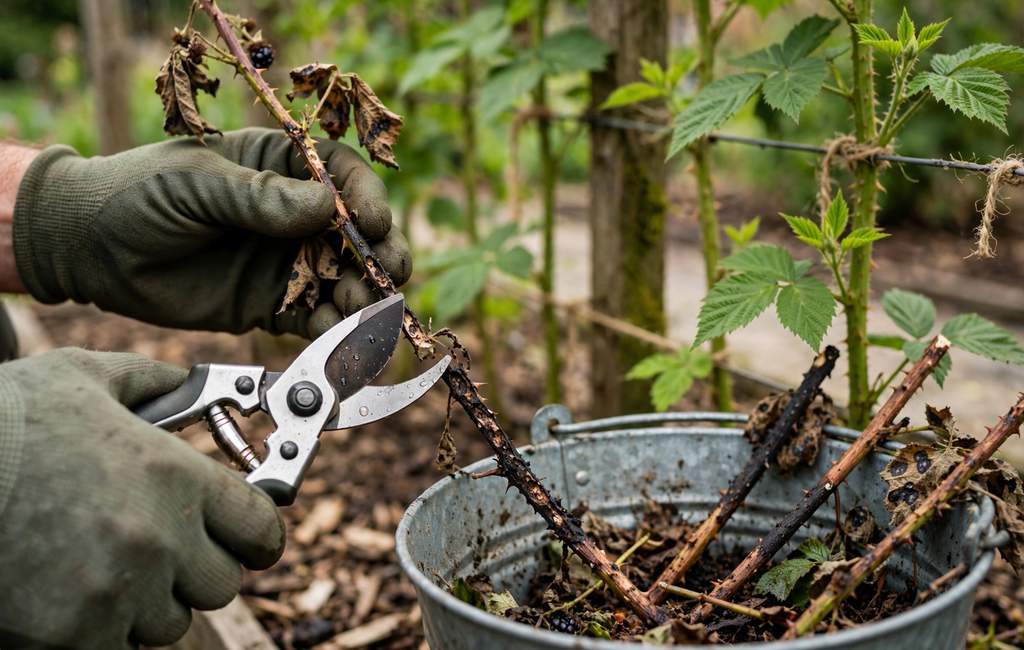
First, trace each lesion downward until you find clean, healthy wood. Next, cut several inches below that point into firm healthy tissue. Thus, this margin removes hidden fungal growth beyond the visible lesion edge.
Instead, cut heavily infected canes completely at ground level every time. Also, avoid leaving stubs, since stubs die back and harbor fungi. Then inspect the cut surface for streaking or discoloration inside wood. If discoloration remains, cut lower again until the wood looks clean.
Handle Orange Rust as a Systemic Infection
Orange rust behaves differently because the fungus lives throughout infected plants. In contrast, pruning single canes never cures orange rust infections. Instead, remove the whole plant, roots included, as soon as possible.
Meanwhile, check neighboring plants and nearby wild brambles for orange pustules. Also, watch new spring shoots for weak, spindly growth each week. Consequently, early removal protects the wider patch from windborne spores. Careful blackberry disease pruning cuts well below visible infection.
Sanitize Tools After Blackberry Disease Pruning
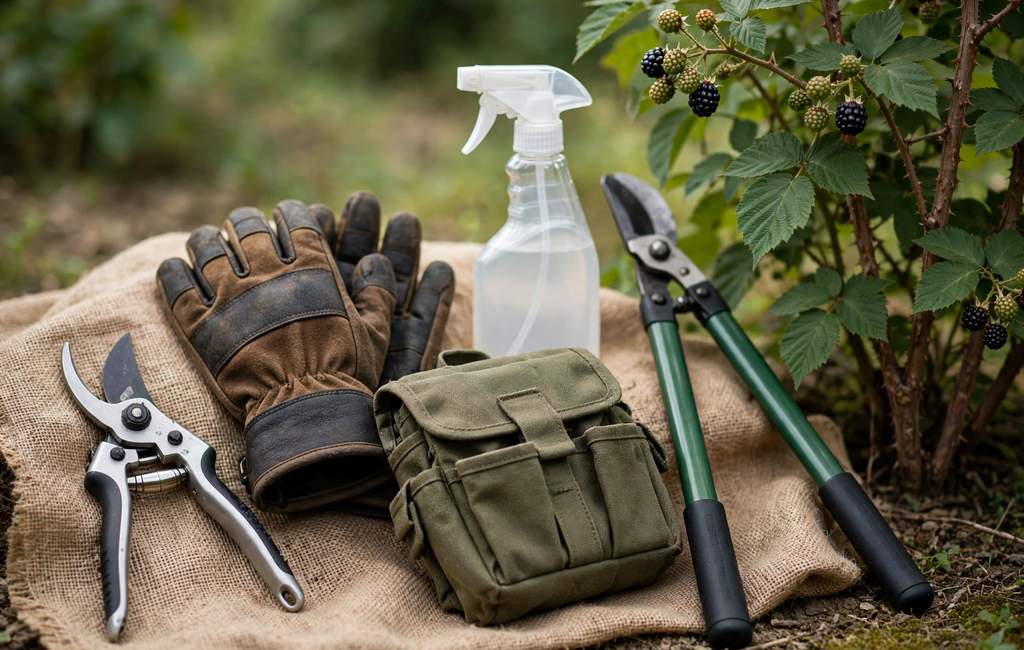
Otherwise, tools carry spores from diseased canes onto fresh healthy cuts. So disinfect blades between cuts whenever you work through diseased wood. Indeed, this simple habit sharply limits accidental spread within one plant.
- Bleach solution: First, mix one part bleach with nine parts water carefully.
- Alcohol option: Alternatively, wipe blades thoroughly with 70 percent alcohol between cuts.
- Dry weather timing: Always prune during dry spells and avoid cutting wet canes.
- Protective gloves: Wear sturdy gloves because thorns wound skin and canes alike.
Afterwards, rinse and dry bleach treated blades to limit corrosion damage. Then carry prunings out immediately instead of dropping them beside plants.
Never compost diseased canes, since infected wood survives most backyard piles. Instead, bag infected material or burn it where local rules allow. Also, wash hands and gloves after handling heavily infected cane material. Sanitizing tools keeps blackberry disease pruning from spreading fungi.
Thin Canes During Blackberry Disease Pruning
In fact, most fungal cane diseases need prolonged leaf wetness for infection. By contrast, dense thickets hold moisture for hours after rain. In turn, thinning changes that pattern by opening paths for air and sunlight.
Thin With a Clear Target in Mind
First, keep the strongest, well spaced canes and remove the weakest ones. Next, space remaining canes so leaves dry quickly after every rainfall. Also, clear weeds and fallen leaves from beneath plants each month.
Similarly, trellising lifts canes upward and speeds drying after wet weather. Besides, avoid overhead watering, since splashing water spreads spores onto canes. Instead, water at soil level and keep foliage as dry as possible. Thinning supports blackberry disease pruning by drying leaves faster.
Build a Blackberry Disease Pruning Routine
During dormancy, inspect every cane closely and remove dead wood first. After harvest, remove spent fruiting canes promptly and completely each time. Later, check new canes monthly for fresh lesions or orange pustules.
Still, routine checks matter more than one heavy annual cleanup alone. Ultimately, early action keeps infections small, localized, and far easier to remove. Regular blackberry disease pruning protects every healthy cane nearby.
Frequently Asked Questions
Should You Cut Off Diseased Blackberry Canes?
Yes, and you should remove diseased canes promptly and disinfect tools afterward.
Can Pruning Spread Blackberry Disease Between Plants?
Yes, but disinfecting blades between cuts greatly reduces that risk.
How Do You Disinfect Pruning Shears Between Cuts?
First, dip blades in 70 percent alcohol or a 10 percent bleach solution.
Can You Compost Diseased Blackberry Canes Safely?
No, and you should remove infected canes from the garden entirely instead.
Does Pruning Cure Orange Rust on Blackberries?
No, because orange rust infects the whole plant systemically and permanently.
Conclusion
In short, healthy blackberry patches reward gardeners who spot, remove, and sanitize consistently. Over time, each careful cut lowers disease pressure and protects future fruiting wood. Start your next inspection today and remove one questionable cane now.
Then disinfect your tools, clear every cutting, and recheck plants weekly. Finally, act now, and your patch will stay cleaner, airier, and healthier.