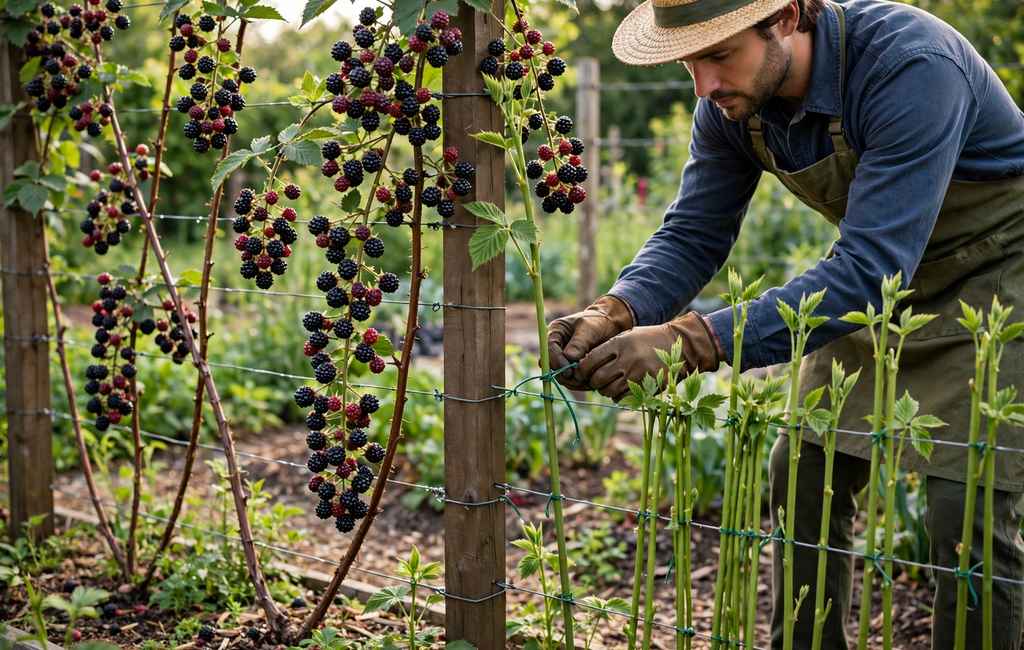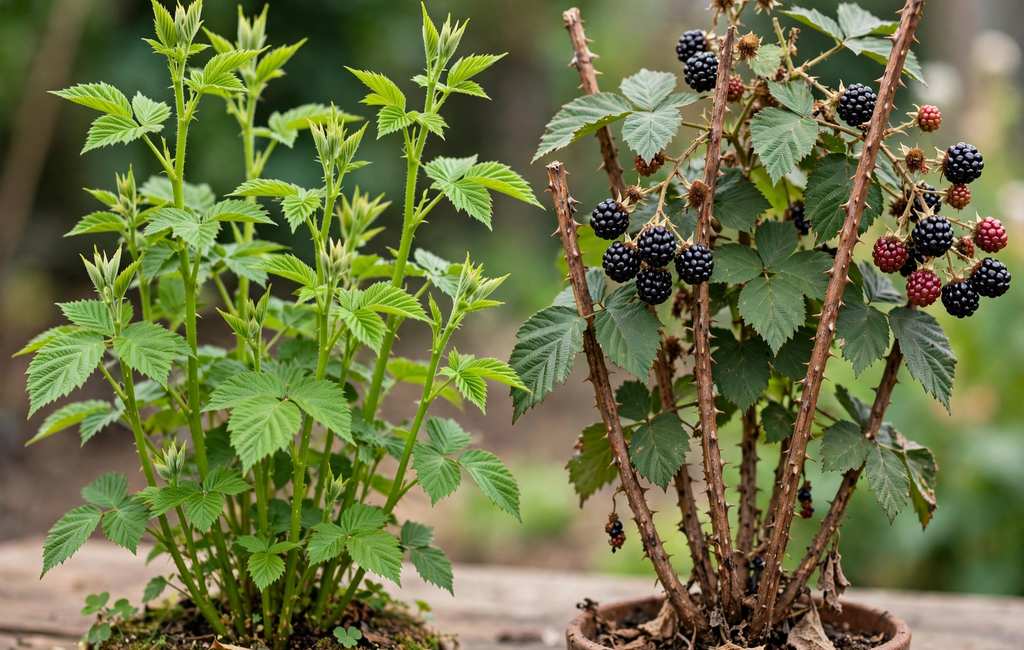
Primocane and floricane pruning follow opposite schedules because cane ages differ completely. Primocane types instead fruit on brand-new canes and tolerate complete late winter cutback yearly. Mixing those two schedules up removes the exact living canes carrying next fruit crop.
Indeed, cane age explains every correct cut once you learn the simple pattern. Primocanes are first-year canes, while floricanes are second-year canes by definition. Consequently, each variety follows its own fruiting wood, not a single shared calendar.
For example, Prime-Ark Freedom fruits in late summer and fall on current-season growth. Traditional floricane types, however, wait patiently and fruit on overwintered wood only.
Why Primocane and Floricane Pruning Differ by Cane Age
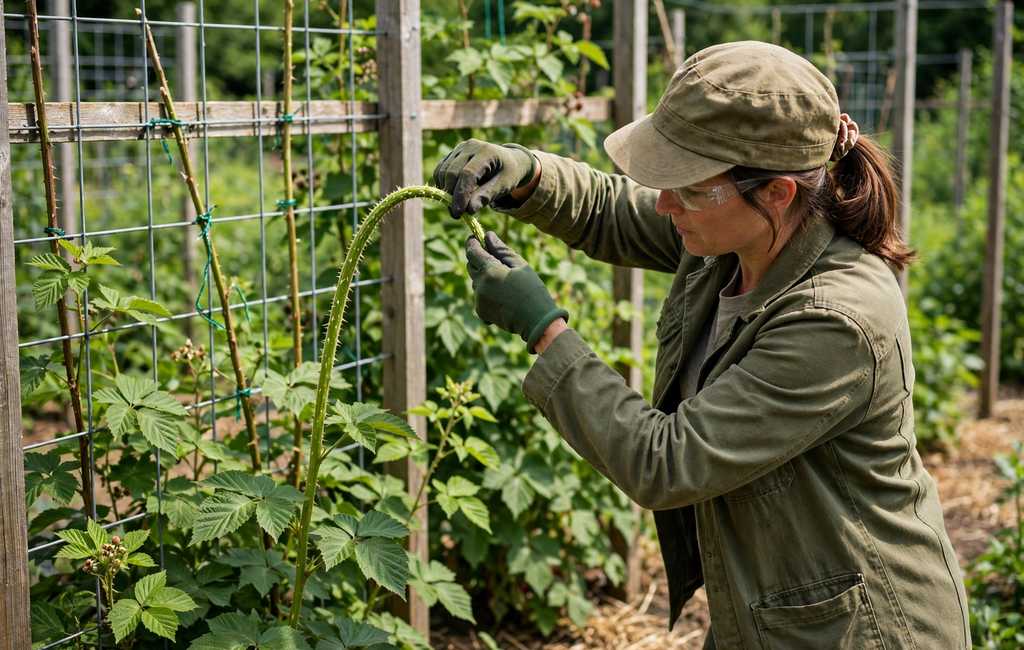
First, check when to prune blackberries against cane age before choosing any date. Meanwhile, crowns and roots live for years and keep sending fresh canes. Each individual cane, however, lives only through two growing seasons.
During spring, new green shoots emerge directly from the crown. Those flexible shoots meanwhile carry mostly leaves during their first growing season. Next, that same cane hardens, flowers, fruits, and then dies back. Primocane and floricane pruning differ mainly in which canes you remove.
Pruning Floricane-Fruiting Blackberries
Basically, floricane-fruiting plants fruit only on second-year canes in early summer. So growers must protect young primocanes all season for the next crop. In contrast, spent floricanes lose value immediately after harvest ends.
Primocane and Floricane Pruning Cuts After Harvest
Right after harvest, cut every spent floricane at ground level cleanly. Then remove those woody canes completely from the planting row area. Prompt removal, indeed, opens light and airflow for new primocanes.
During summer, tip vigorous primocanes once they reach chest height. Tipping thus encourages sturdy lateral branches that carry next summer fruit. Also thin crowded primocanes and keep only the strongest stems standing.
Thinning and Training Young Canes
Overall, keep four to six strong primocanes per plant during thinning. Remove thin, crooked, and rubbing stems at the crown instead. Spacing, as a result, improves airflow and reduces disease pressure noticeably.
Primocane and Floricane Pruning Cleanup Before Spring
In late winter, remove dead, damaged, and weak canes first. Next, shorten healthy laterals to roughly twelve to eighteen inches long. Finally, tie remaining canes loosely and check supports for stability again.
Pruning Primocane-Fruiting Blackberries
In contrast, primocane-fruiting plants fruit on first-year canes in fall. Because they fruit so early, they forgive far heavier cutting. Still, timing controls whether you harvest one crop or two crops.
Primocane and Floricane Pruning Tips for Fall Fruit
Once primocanes reach about three feet, tip them in summer promptly. That small cut indeed redirects energy into branching, fruiting side shoots. Later, tip strong laterals again if plants grow especially vigorously.
Each tipped cane, for instance, pushes several side branches within weeks. Those branches then carry flowers near their tips during late summer. Avoid tipping after flower buds appear on cane tips, though.
Choosing One Crop or Two Crops
For a single fall crop, mow all canes during late winter instead. Fresh primocanes then emerge, branch, flower, and fruit that fall season. This simple method likewise skips sorting old and new canes.
Alternatively, keep fruited primocanes standing through winter for two full crops. Those overwintered canes then fruit on lower sections next summer season. Afterward, remove them and let new primocanes carry fall fruit instead.
For two crops, trim only the spent fruited tip portion first. Cut just below dead tip tissue and preserve the lower cane. That lower section then fruits before you remove it completely afterward. Good primocane and floricane pruning starts with confident cane identification.
Primocane and Floricane Pruning Schedules Compared
Overall, the contrast becomes simple and surprisingly stark when compared directly. Both types also need tipping, thinning, and prompt deadwood removal yearly.
- Floricane harvest: Berries ripen first in early summer on second-year canes.
- Primocane harvest: Berries ripen later in fall on brand-new first-year canes.
- Floricane cleanup: Growers remove only spent canes and meanwhile protect young growth.
- Primocane cleanup: Growers may mow every cane down during late winter dormancy instead.
Above all, only primocane types survive a complete dormant cutback unharmed. Floricane types, meanwhile, need overwintered canes to produce any fruit whatsoever. Primocane and floricane pruning schedules never swap without losing fruit.
Shared Habits That Suit Both Types
Overall, start every session with clean, sharp bypass pruners ready nearby. Next, disinfect blades between diseased canes and healthy canes. Then carry every clipping away from the planting immediately after finishing.
Dead canes meanwhile shelter fungal disease and boring insects between seasons. Prompt cleanup consequently protects new growth and keeps crowns easier to inspect. Also wear gloves, since thorny varieties punish careless hands very quickly. Seasonal primocane and floricane pruning keeps both cane generations productive.
Tell Primocane From Floricane Before Pruning
First, watch when ripe fruit actually appears on your plants closely. Early summer fruit signals floricane types, while fall fruit signals primocane types. Also note whether fruit forms on green or woody canes.
Next, check plant tags, receipts, and nursery records for variety names. Names like Prime-Ark Freedom, for example, indicate primocane-fruiting habit clearly. Otherwise, observe one full season before making any heavy cuts.
Indeed, primocanes look green, flexible, and leafy during active growth periods. Floricanes, in contrast, look woody, darker, stiffer, and often peeling. Still, fruiting timing gives gardeners the most reliable identification clue.
During harvest, tie bright ribbon loosely around every fruiting cane instead. That marker later shows exactly which canes finished fruiting already. Photograph the planting too, because pictures preserve useful seasonal clues.
Swapping Primocane and Floricane Pruning Schedules
For example, mowing a floricane planting in late winter erases summer crop. In fact, you removed every floricane carrying flower buds for early fruit. New primocanes grow beautifully, yet they produce no fruit that season.
Conversely, sparing spent primocane canes forever creates crowded, tangled growth unnecessarily. Old wood also harbors disease and shades productive new canes below. So match every cut to cane age before you start pruning.
Recovery takes another full cycle because replacement canes must mature first. During that wait, plants still need watering, feeding, and trellising work. Overall, one mistaken afternoon can erase months of careful growth. Primocane and floricane pruning both rely on clean, sharp bypass pruners.
Frequently Asked Questions
What is the difference between primocanes and floricanes?
In contrast, primocanes are first-year canes and floricanes are second-year canes.
When should you prune primocane blackberries?
Tip primocanes during summer, then mow them optionally in late winter.
Can you cut primocane blackberries to the ground?
Yes, you can indeed mow primocane types completely without losing fall fruit.
What happens if you prune floricane blackberries wrong?
Cutting healthy floricanes before harvest removes that entire early summer crop instead.
How do you identify a primocane on a blackberry plant?
First, look for green, flexible, leafy growth emerging fresh from the crown.
Conclusion
In short, floricane types reward patience and primocane types reward boldness. Identify your type first, then follow its schedule without swapping steps. Check your tags today, mark fruiting canes, and prune with confidence.
Finally, revisit cane growth each season and adjust thinning as needed. Then book a reminder and prepare clean, sharp tools early.